New

Ladybird Plant Care

Codling Moth Nematodes | Biological Fruit Tree Pest Control

Biological mixed-species nematodes for codling moth and oriental fruit moth - the gentle answer to apple-tree caterpillars

£17.60

Save your fruit from caterpillar damage with autumn-applied biological control. Microscopic nematodes that target codling moth and oriental fruit moth larvae as they crawl down the trunk to overwinter - safe for everything else.

Choose option

Key features

  • Microscopic biological nematodes - targets codling moth & oriental fruit moth
  • Mixed-species formulation - effective against both common UK apple-tree pests
  • Apply September-October when larvae crawl down trunk to overwinter
  • Air temperature must be 14-30C for nematodes to work
  • Safe for bees, butterflies, ladybirds, earthworms, pets, children, garden plants
  • Live product - ordered fresh; not sold outside the autumn treatment window
Material Live beneficial nematodes (multitarget mix) in carrier
Coverage 60 sqm per pack (variants of 1, 2, or 3 packs)
Origin UK supplier (Ladybird Plant Care)
Trusted UK retailer Norfolk family farm

About this product

Full description

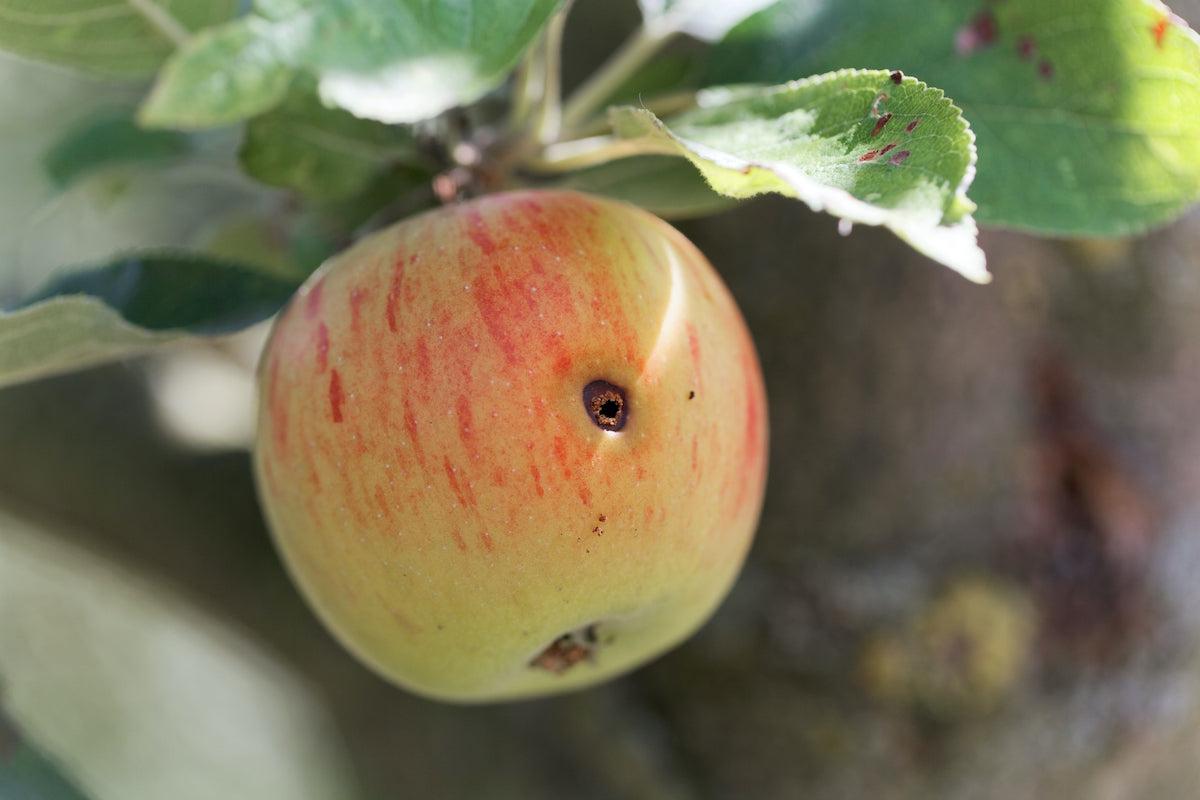
If you've ever bitten into a hopeful-looking apple from your own tree and found a small brown tunnel running through the core — or, worse, a small white maggot at the heart of it — you've already met the codling moth. It's the single most destructive pest of UK apple, pear and quince trees, capable of ruining a substantial proportion of a year's crop, and one that conventional chemical sprays struggle to control without harming everything else in the orchard.

This is the gentle, biological answer. Microscopic beneficial nematodes — naturally occurring soil organisms — that target the codling moth larvae as they crawl down the tree trunk in autumn to overwinter. From Ladybird Plant Care, our trusted suppliers of biological controls — chosen because they help us work with the garden rather than against it.

What codling moths do

The codling moth (Cydia pomonella) is a small, drab brown moth that lays its eggs on the developing fruitlets of apple, pear and quince trees in early summer. The hatched larvae — small pinkish-white caterpillars — bore directly into the young fruit, feed on the flesh and core, and gradually carve out the tunnels that ruin the apple from the inside.

By late summer and autumn the mature larvae crawl out of the fallen or ripening fruit and travel down the tree trunk, looking for sheltered crevices in the bark, in fallen leaves at the base, or in the surrounding soil. There they pupate and overwinter, ready to emerge as the next generation of moths the following spring.

That autumn migration is where biological control comes in. Treating the trunk and the ground beneath the tree in September and October — while the larvae are exposed and crawling — catches them at their most vulnerable, before they tuck themselves away for winter.

This product also targets the Oriental Fruit Moth (Grapholita molesta), a closely related pest of stone fruit and apples that has similar overwintering behaviour. The mixed-species formulation handles both.

How nematodes work

The nematodes in this pack are microscopic beneficial roundworms that target moth larvae specifically. Mixed with water and applied to the bark of the trunk, the larger limbs, and the ground at the base of the tree, they move through the moist surface to find the larvae as they crawl down to overwinter, infect them, and end that generation of the pest cycle.

Crucially, they're completely safe for everything else: bees, butterflies, ladybirds, earthworms, birds, pets, children, garden plants. The targeting is genuinely specific — these nematodes target only their host species and don't affect anything else living in the bark or the soil.

When to treat — timing matters

Codling moth treatment is a one-window-a-year proposition:

  • September to October — the only effective treatment window. The mature larvae crawl down the trunk to overwinter from late August into October, and that's the moment they're exposed to nematode infection. Miss it and you wait a whole year for the next chance

Air temperature must be between 14°C and 30°C for the nematodes to work effectively. UK autumns are usually fine; an Indian-summer September into a mild October is ideal. Cold snaps below 14°C send the nematodes into dormancy.

Worth combining the treatment with the other practical things that reduce codling moth populations: clearing up fallen fruit promptly, wrapping the trunks in corrugated cardboard bands in summer (which the larvae crawl into and can be removed), and pheromone traps to monitor adult moth flights so you know when the larvae are forming. Each of these makes the others more effective.

How to apply

Full instructions come with the pack — you can also read the application guide here. In short:

  • Choose a mild, overcast day in the September–October window — dry, sunny conditions and direct strong sunlight kill the nematodes
  • Wet the tree trunk and the ground beneath it in advance — nematodes need a moist surface to move through
  • Mix the nematodes with water following the pack guidance
  • Apply with a watering can (rose removed), a hand sprayer, or a backpack sprayer directly to the trunk, the lower limbs, and the soil at the base. Coat the bark properly — the larvae are travelling down it
  • Apply in the cool of evening rather than midday, to give the nematodes the longest active period before strong sun
  • Keep the trunk and surrounding ground moist for 1–2 weeks after treatment — this is the most important part. If the bark dries out, the nematodes can't work

Re-application a fortnight after the first treatment catches any later-crawling larvae and significantly improves overall control — which is why the 2-pack and 3-pack options exist.

Choosing your pack size

Each pack treats up to 60 square metres — enough for one substantial apple or pear tree, or several smaller trained trees in an orchard or kitchen garden. Pack sizes:

  • 1 × 60 sqm — for a single tree and one autumn application
  • 2 × 60 sqm — for a single tree with a follow-up treatment a fortnight later (the recommended approach for serious infestations), or two separate trees
  • 3 × 60 sqm — for a small home orchard, or three separate trees, or two trees with follow-up applications

Ordering and despatch

Because these are live biological controls, we don't keep them on standing stock — they're ordered in fresh from Ladybird Plant Care so they reach you as effective as possible.

  • Order well in advance of when you plan to apply — the September–October window is short
  • Not sold outside the treatment window — outside September and October the air temperatures are wrong and treatment won't work, so we pause supply rather than send a product that won't help
  • Once your order is despatched, apply within a few days — the live nematodes don't keep indefinitely even in the fridge

What else helps

Nematodes are one important intervention, but codling moth is best tackled with a combination of measures — integrated pest management, the proper way to garden organically:

  • Clear fallen fruit promptly — any maggots inside will continue developing and become next year's moths if you let them stay on the ground
  • Bands of corrugated cardboard wrapped around the trunk in mid-summer — the larvae crawl into the corrugations to pupate; you remove and burn the bands in autumn
  • Pheromone traps — not a control measure on their own, but useful for monitoring adult flight times so you know when to expect larvae
  • Encourage natural predators — tits and other small insectivorous birds eat codling moth larvae in the trunk; a bird feeder near your fruit trees in winter encourages them to return in spring
  • Plant a diverse understorey — flowering plants beneath fruit trees draw in parasitic wasps, hoverflies and lacewings that also help with caterpillar control
  • Don't panic over the odd maggoty apple — complete elimination isn't realistic in an organic system, and small numbers of damaged fruit are part of working with nature rather than against it

The combination of nematodes in autumn, cardboard bands in summer, fallen-fruit hygiene, and a wildlife-friendly orchard usually returns a heavily-affected tree to manageable codling moth levels within two seasons.

About Ladybird Plant Care

Ladybird Plant Care are specialists in biological pest controls — gentle, naturally-derived solutions for problems that have traditionally been tackled with chemicals. We stock their range because their approach mirrors our own: work with the garden, not against it, and trust the wider ecosystem to find its own balance.

A note on managing expectations: nematode treatment works gradually. You won't see anything happen at the time — the larvae are tiny, the nematodes are microscopic, and the effects show themselves the following year when noticeably fewer apples come down with maggot tunnels through them. The work happens quietly, beneath the bark, exactly as it should.

What's included
Live nematodes for biological codling moth & oriental fruit moth control.
Coverage as selected (1, 2, or 3 packs of 60 sqm each).
Application instructions included.
Care and use
- Use as soon as possible after receipt - live product
- Store in a cool place (~5C, fridge) if you must delay, but apply within days
- Apply in cool evening, never midday sun
- Keep treated bark and soil moist for 1-2 weeks after treatment
- Full mixing and application instructions in the pack (and linked PDF)