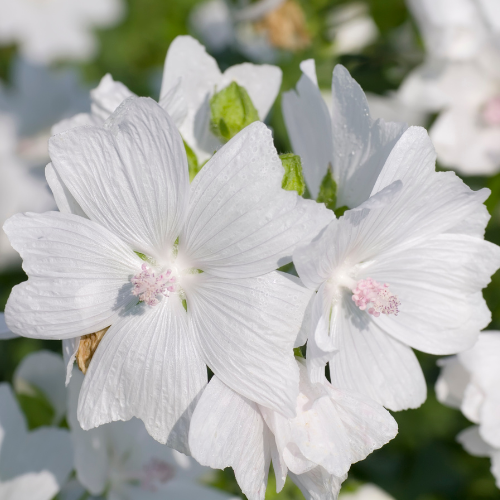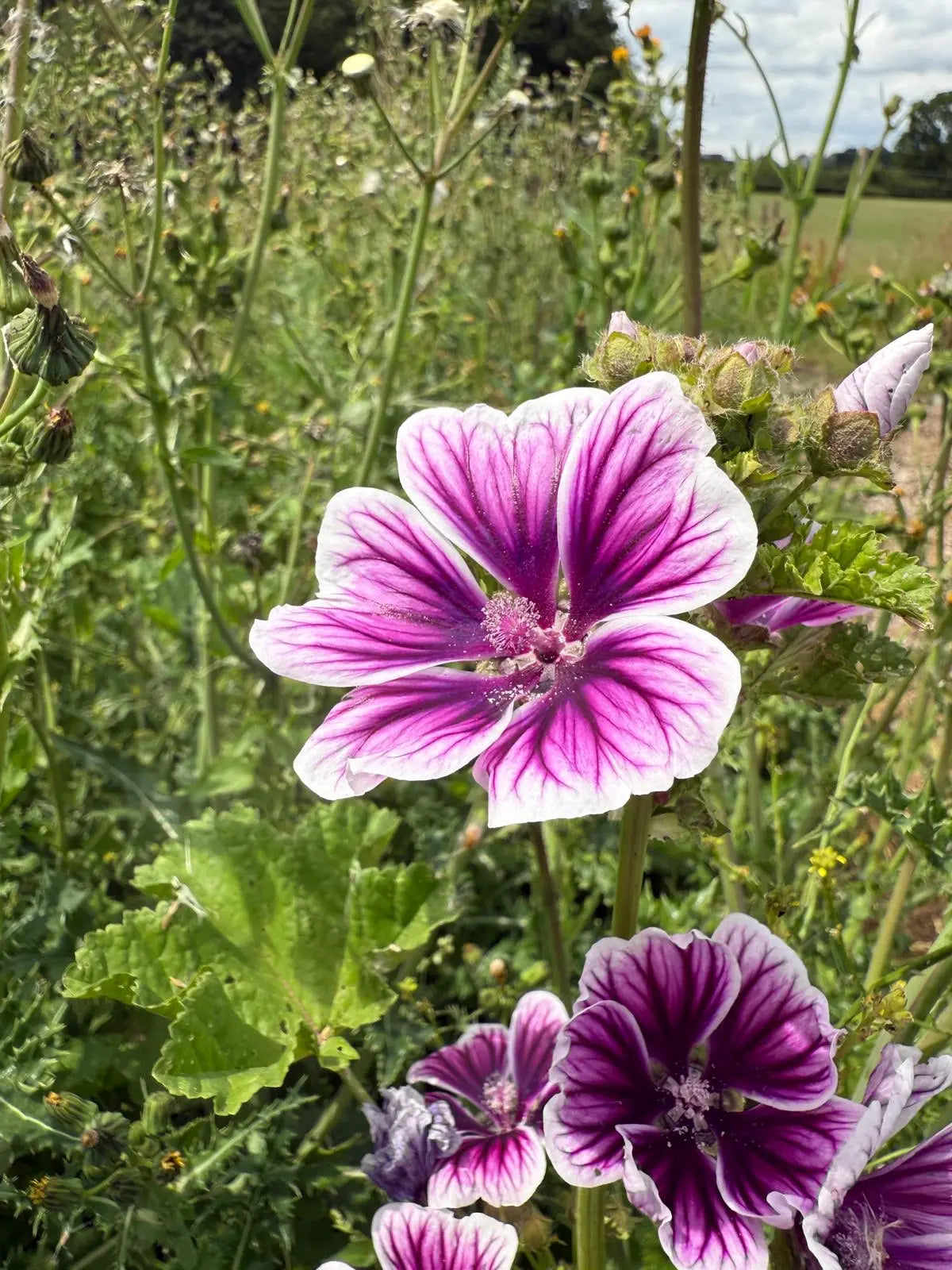
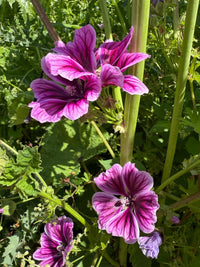
Malva Zebrina (Malva sylvestris) – purple and white striped flower among green stems in a sunny field

Malva Zebrina

£3.20
Skip to product information
Malva Zebrina (Malva sylvestris) – purple and white striped flower among green stems in a sunny field
RHS Plants for PollinatorsBeginner friendly

Malva Zebrina

Malva sylvestris var. mauritiana 'Zebrina' -- Zebra Mallow

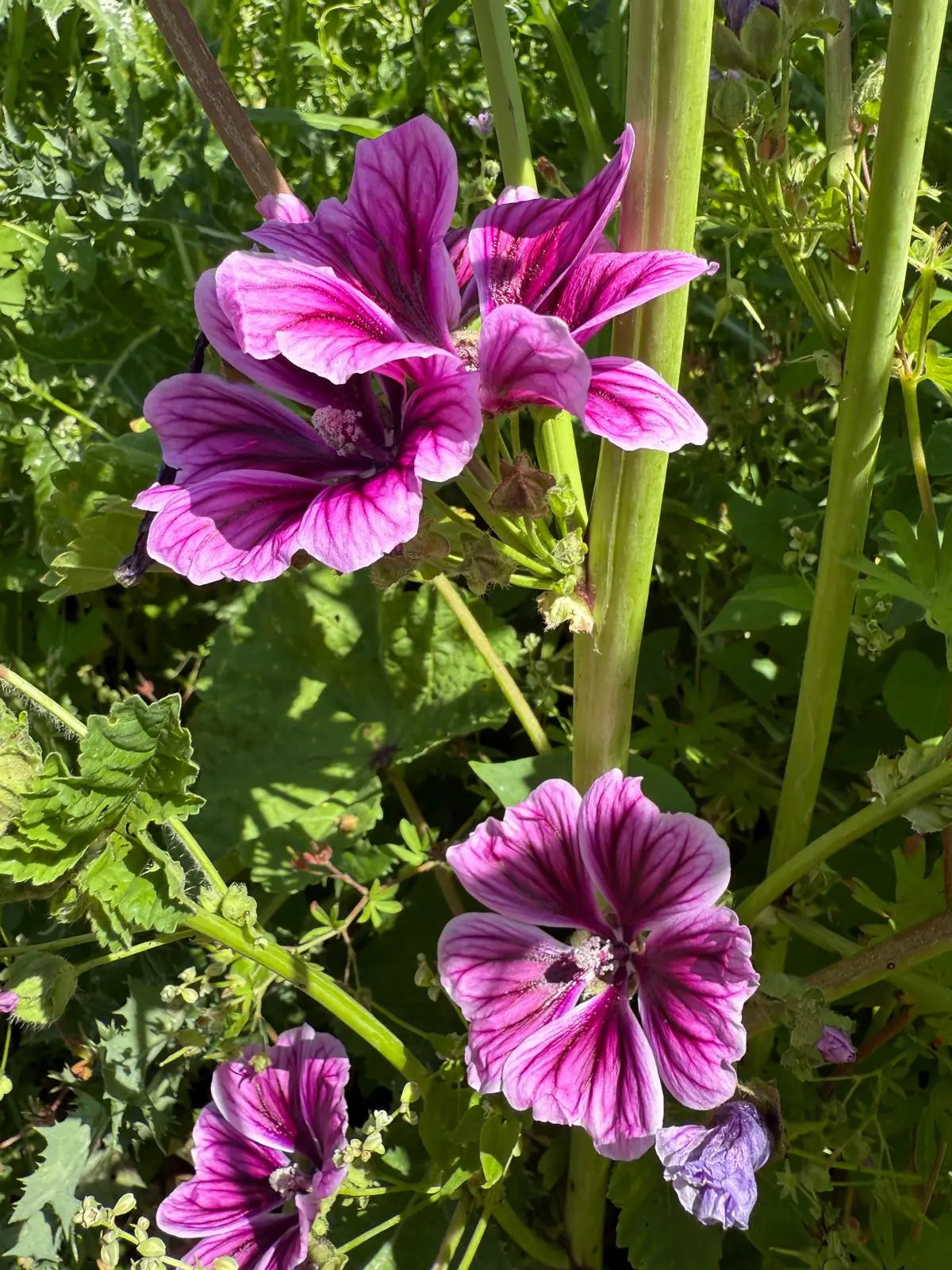
Soft lilac-pink saucer flowers painted with deep dark purple veins — the Zebra Mallow that flowers in its first summer from seed. Vintage cottage character, bee magnet.

£3.20

Free UK delivery on seed orders over £40

Dispatched from our Norfolk farm by Royal Mail, usually within one working day.

Your growing year

Sow, plant out and flowering months for this variety

Jan
Feb
Mar
Apr
May
Jun
Jul
Aug
Sep
Oct
Nov
Dec
Sow
Plant out
In flower
SowPlant outIn flower

At a glance

Height
60-90cm
Spread
60cm
Spacing
60cm
Position
Full sun
Colour
Pink, Purple
Seeds per packet
30
Soil
Well-drained soil
Grow guide How to grow Malva Zebrina Read the full guide →

About this variety

Soft lilac-pink saucers painted with deep purple veins striping outward from the centre, no two flowers marked the same. In a drift the pattern builds into something that reads as watercolour from a distance.

It is the one mallow that flowers in its first summer from an early spring sowing, which is unusual for the genus and the main practical reason to choose it. Bushy at 90 to 120cm, it goes on from early summer to the frosts, and the open flowers are among the better bumblebee plants in the garden. Flowers and young leaves are edible.

Two things. It is short-lived, two or three years, though it self-seeds so freely that a colony holds itself together and the volunteers largely keep the stripes. And it needs the midsummer chop like the rest of the family: when it goes leggy in July, cut it back by half and water it in for a second flush, because left alone it becomes woody and stops. It is genuinely unfussy about soil, taking heavy clay or dry sand so long as it drains.
Plant alongside

Chosen by us, not by an algorithm

RHS Plants for Pollinators

This plant has been assessed by the Royal Horticultural Society and recommended as especially beneficial to bees, butterflies and other pollinators. Growing plants like this directly supports UK pollinator populations — something close to our hearts at Salle Moor Hall Farm, where we see the difference a cottage garden full of the right plants can make.

Learn more at RHS.org.uk →