

Linum Blue Flax
Linum perenne -- Blue Flax; perennial flax
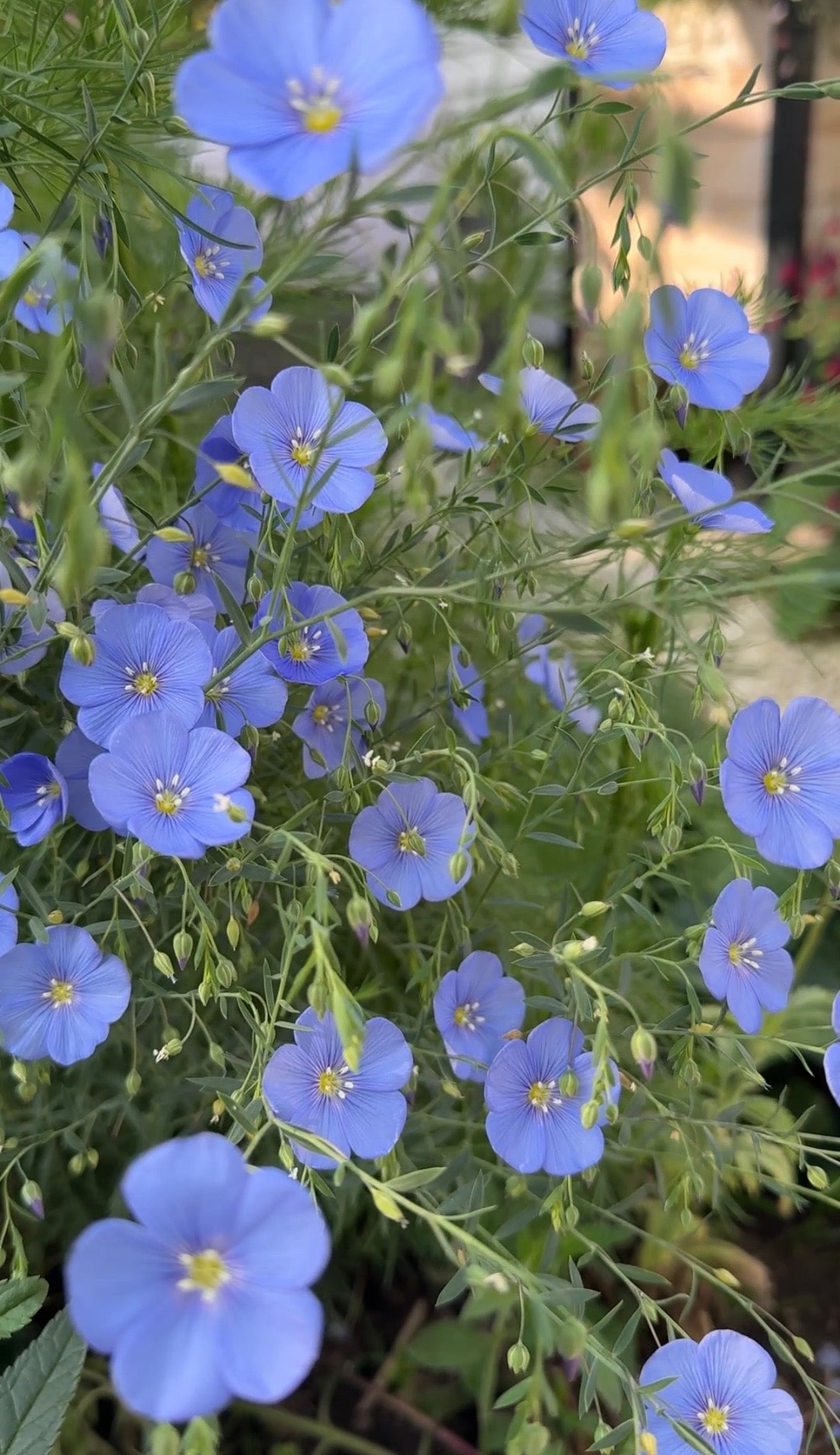
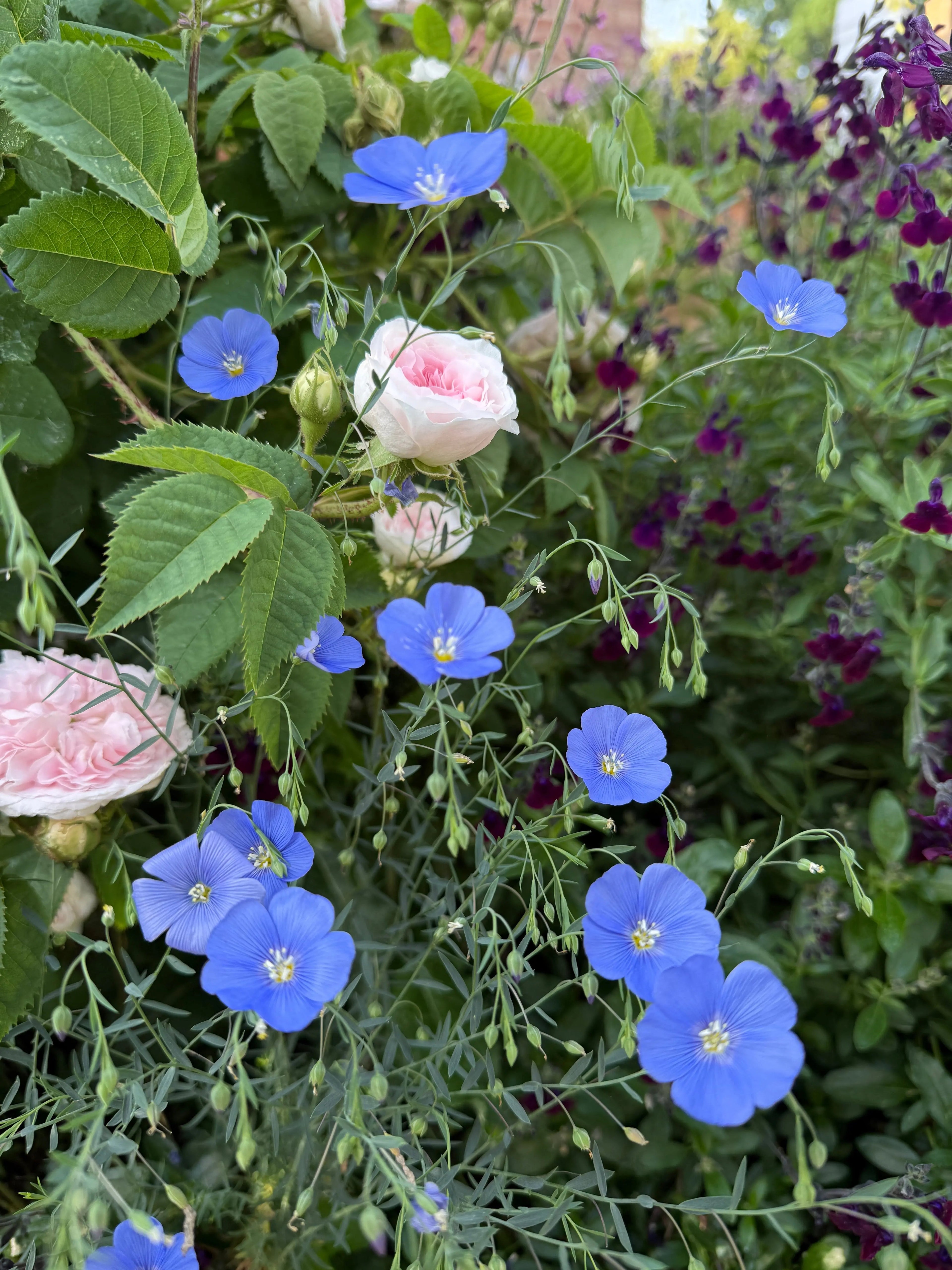
Slender arching stems carrying hundreds of pure sky-blue saucer flowers — the cottage garden's "shimmering river of blue". Flowers year one from seed, drought-tolerant.
About this variety
Linum perenne Blue Flax / Perennial Flax
Slender arching stems that sway in the slightest breeze, carrying hundreds of small saucer-shaped flowers in the truest, clearest shade of sky-blue available from any perennial — Linum perenne is the cottage garden's "shimmering river of blue", a drought-tolerant short-lived perennial that flowers in its first year from seed and self-seeds reliably to maintain its presence indefinitely.
This is a plant of movement and light. Linum perenne produces slender arching stems that sway in even the slightest breeze, carrying hundreds of small saucer-shaped flowers in a pure clear sky-blue that few other perennials can match. The plant has a genuinely magical daily rhythm: individual flowers open wide in the morning sun and drop their petals by late afternoon, creating a delicate carpet of blue confetti on the ground beneath — but by the next morning, a fresh flush of new buds has opened to take their place. The cycle continues throughout the summer flowering season (June through August), producing what gardeners describe as a "shimmering river of blue" weaving through the border. Hardy perennial (H6, surviving below -15°C). Often short-lived (3–4 years individual plants), but flowers in its first year from seed and is an excellent self-seeder, ensuring permanent garden presence once established. Height 30–45cm. RHS Plants for Pollinators recognised — particularly valuable for hoverflies and small solitary bees.
A note on growing
Linum is easy from seed but has one specific requirement: it hates root disturbance. Direct sowing into the final position produces the most reliable results. Direct sow outdoors in spring (March–May) or autumn (August–September). Scatter seeds onto finely raked soil and cover lightly with about 3mm of soil. If sowing indoors, use module trays so plugs can be transplanted without disturbing roots. Germination 14–21 days.
Plant out in full sun in well-drained soil — this is critical. Linum is genuinely drought-tolerant once established (the tough wiry root system allows survival in dry, sandy, stony soil where other plants fail), but it hates heavy wet clay in winter, which is the most common cause of failure. If you have heavy soil, add grit to the planting position, plant in raised beds, or grow in rockery conditions.
Maintenance: once established, ignore it. After the first flush of flowers in early summer, cut stems back by half to encourage a second flush later in the season.
Where it shines
In gravel gardens and Mediterranean-style plantings, where the drought-tolerance suits the conditions perfectly. As a "filler" weaving through cottage borders or naturalistic meadow plantings — Linum's airy habit means it doesn't compete with neighbours but adds movement and colour between them. In rockeries and dry sunny banks where many plants struggle. In wildlife gardens for the daily pollinator forage. As a self-seeding informal colony plant — once established, Linum renews itself reliably.
Plant alongside
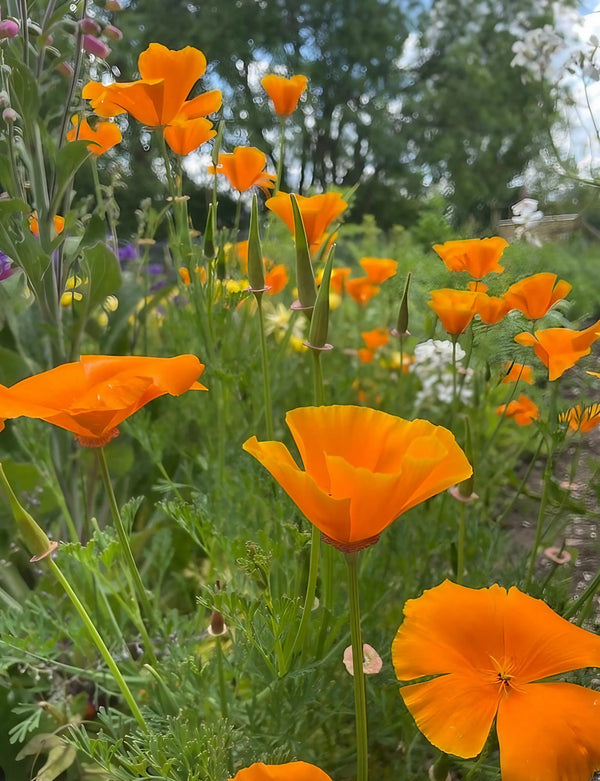
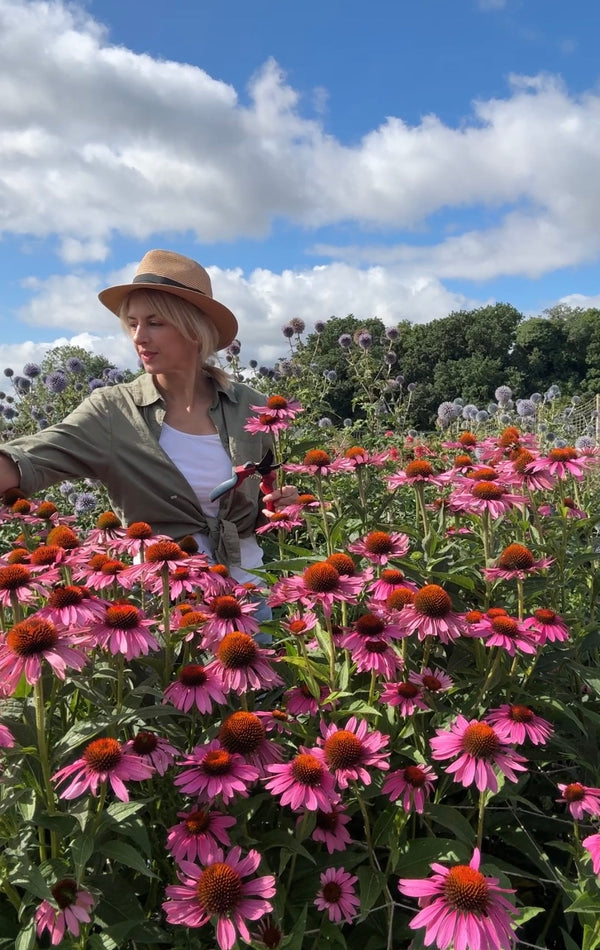
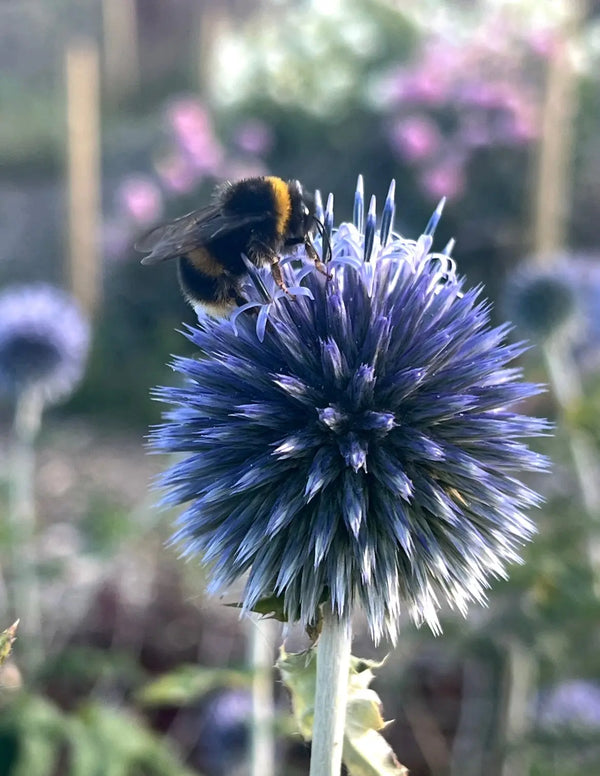
For the classic complementary colour combination, pair Linum with Californian Poppy 'Golden West' (if stocked) — blue and orange are complementary colours; both plants thrive in dry, poor soil and love the sun. For a naturalistic prairie scheme, combine with Echinacea purpurea (matching drought tolerance, contrasting form), Echinops ritro 'Veitch's Blue' (architectural blue spheres against airy blue saucers), and ornamental grasses for movement. For cottage borders, plant alongside Cornflower 'Blue Ball' for a layered all-blue scheme.
Plant alongside
Linum Blue Flax pairs beautifully with these cottage garden classics

RHS Plants for Pollinators
This plant has been assessed by the Royal Horticultural Society and recommended as especially beneficial to bees, butterflies and other pollinators. Growing plants like this directly supports UK pollinator populations — something close to our hearts at Salle Moor Hall Farm, where we see the difference a cottage garden full of the right plants can make.
Learn more at RHS.org.uk →