

About this product
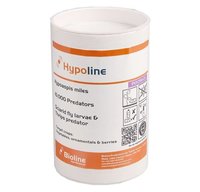
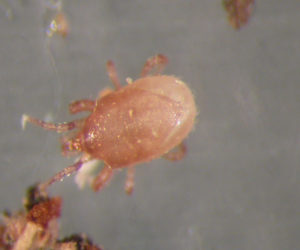
A soil-dwelling predatory mite that lives in the top centimetre or two of your compost and eats the eggs and young larvae of everything you would rather was not down there. Stratiolaelaps scimitus, still widely sold under its old name Hypoaspis miles, has been a cornerstone of professional biological control for more than 25 years.
They are under 1mm long, tan to light brown, and you will not see them once they are in. They do not bite people or pets, do not damage plants and do not climb onto leaves or furniture. They live in the soil and nowhere else, which makes this the most discreet pest control you can buy and the easiest to live with indoors.
The main target is fungus gnat larvae, the stage that does the actual root damage. They also take thrips pupae, which is useful because thrips pupate in the compost where most leaf treatments never reach them, plus springtails, root aphids, root mealybug crawlers, root weevils and the overwintering soil stages of spider mite.
What they will not do is worth knowing before you buy. Adult fungus gnats already flying are unaffected; the control works by breaking the lifecycle underneath them. They do not touch shore flies or moth flies, which are often mistaken for fungus gnats. They do nothing for anything above ground, so aphids, whitefly and spider mite on foliage need a different control. And they work best preventatively or early. For a heavy established infestation, combine them with nematodes for the larger larvae and yellow sticky traps for the adults.
Apply as soon as they arrive. If you genuinely cannot, hold them at 10 to 15°C for a day or two, no longer. Shake the container gently to distribute the mites through the carrier, then sprinkle it straight onto moist compost. Do not bury or mix it in. The mites work in the top centimetre or two and deep mixing simply loses them. Do not apply to dry compost either; water first if it needs it.
Professional rates run 100 to 200 mites per square metre preventatively, 200 to 300 for a light infestation and 300 to 500 for an active one. For houseplants, a small handful of the carrier mix per medium pot is about right, and a light sprinkle across a propagation tray.