Geum Lady Stratheden
Geum chiloense 'Lady Stratheden' — yellow avens
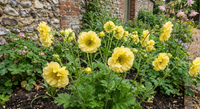
Warm buttery-yellow semi-double saucers floating on slender stems — the RHS AGM Geum that has been a cottage garden favourite since the 1920s. May to August flowering.
About this variety
Geum chiloense 'Lady Stratheden' Yellow Avens 'Lady Stratheden'
Warm buttery-yellow semi-double ruffled saucers floating on slender wiry stems above a neat mound of soft scalloped semi-evergreen foliage — Geum 'Lady Stratheden' is the RHS Award of Garden Merit cottage garden perennial that has been grown in British gardens since the 1920s for one simple reason: it reliably delivers months of warm sunny flowering in a colour that is genuinely difficult to find in a truly perennial plant.
Most "yellow" perennials are harsh, almost acidic in colour. Lady Stratheden is something different — a soft, enamelled, slightly amber-tinged yellow that glows in the garden and reads particularly beautifully in evening light when the low sun backlights the translucent petals. Each bloom is held on a slender wiry stem well above the basal foliage, so the flowers appear to float in mid-air with a light, relaxed quality. The semi-double form provides genuine substance without overwhelming the airy character. Hardy perennial (H7), surviving below -20°C. Holds the RHS Award of Garden Merit — recognition reserved only for plants of consistently outstanding garden performance. Flowering season is genuinely long: May through August with consistent deadheading. Height 50–60cm.
A note on growing
Geum seeds can be slow or variable in germination — 14 days to 6 weeks is the range, and this is normal. Do not discard trays of ungerminated seeds too quickly. Surface-sow indoors from February in light at 18–21°C. Cover with only the finest dusting of vermiculite (about 2mm) as the seeds need light to germinate. Maintain consistent warmth and moisture. A cold period after initial sowing can sometimes actually improve germination rates in difficult batches.
Plant out into sun or partial shade in moisture-retentive but well-drained soil. Geum is exceptionally tolerant of clay soils — the moisture-retention of clay actually suits it well, provided there is no prolonged winter waterlogging. Add grit to the planting hole in particularly dense clay.
The single most important management practice: deadhead every spent flower stem to the base, without fail, throughout the season. This is the difference between a Lady Stratheden that flowers for 6 weeks and one that flowers for 4 months. Cut the entire spent flower stem back to the basal foliage — do not leave stubs or partially dead stems. New stems emerge continuously from the base as spent ones are removed. Divide every 2–3 years to maintain vigour.
Where it shines
In cottage borders for warm, reliable, long-season yellow flowering. As a "backlit beauty" — plant where the rising or setting sun can shine through the petals for spectacular evening display. As a complementary partner to blue and purple plantings (yellow and purple/blue are the classical complementary colour pairings). In wildlife gardens, where the open semi-double form is accessible to bees and butterflies. As a clay-tolerant garden hero — few decorative perennials handle heavy moist soils as well as Geum.
Plant alongside
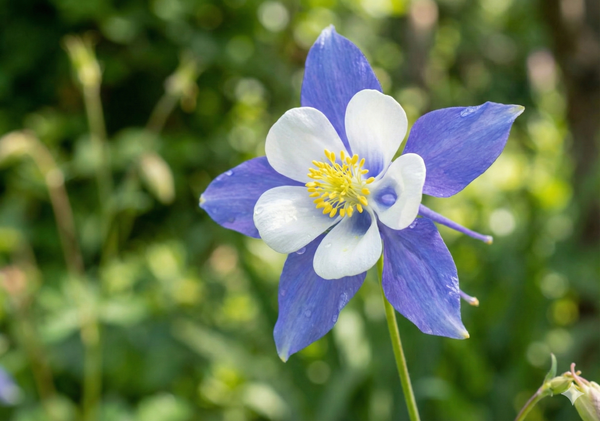
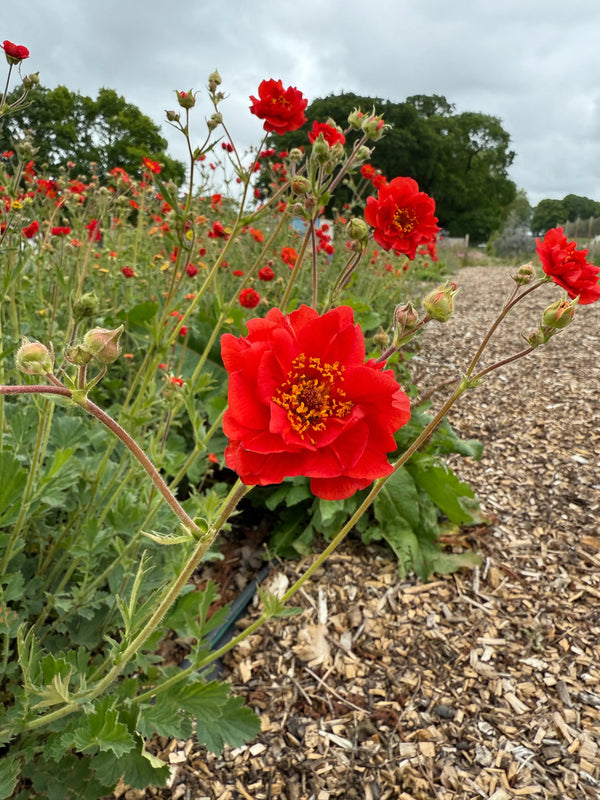
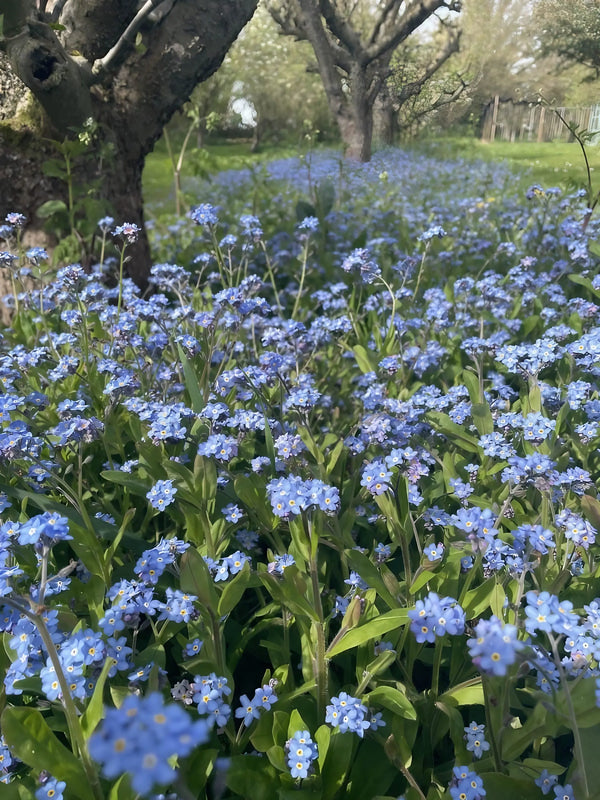
For the classical complementary colour combination, pair Lady Stratheden with the violet-purple of Hesperis 'Purple' (Sweet Rocket) — both flower simultaneously in May–July creating one of the most powerful classical cottage garden colour pairings. For an all-spring scheme, combine with Aquilegia 'Columbine Blue' (Granny's Bonnet) where blue spurs dance among the yellow saucers. With Forget-me-not 'Blue' rising from below for an early-season carpet effect. With Geum 'Mrs Bradshaw' for the classic yellow-and-red Geum pairing.
Plant alongside
Geum Lady Stratheden pairs beautifully with these cottage garden classics

RHS Plants for Pollinators
This plant has been assessed by the Royal Horticultural Society and recommended as especially beneficial to bees, butterflies and other pollinators. Growing plants like this directly supports UK pollinator populations — something close to our hearts at Salle Moor Hall Farm, where we see the difference a cottage garden full of the right plants can make.
Learn more at RHS.org.uk →
RHS Award of Garden Merit
The RHS Award of Garden Merit is given to plants of outstanding excellence for ordinary garden use. To earn this award a plant must be of good constitution, available to the gardening public, and perform reliably across a range of UK growing conditions. It is one of the most trusted plant recommendations in British gardening and a genuine mark of quality.
Learn more at RHS.org.uk →