


About this variety
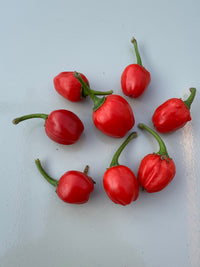
The round chilli of the eastern Himalayas, and the one that defines the cooking of Sikkim, eastern Nepal, Bhutan and the Darjeeling hills. Dalle means round in Nepali, and the pods are small glossy cherries just 1.5 to 2.5cm across, ripening green to a vivid scarlet, with thick fleshy walls that are soft enough to squeeze. It was given Geographical Indication status in 2020 to protect its Sikkim origin, extended to Darjeeling and Kalimpong the following year.
The odd thing about it is botanical. At 100,000 to 350,000 Scoville units the heat is habanero level, but this is a Capsicum annuum, the same species as jalapenos and bell peppers. Almost everything this hot is a chinense. What you get is superhot territory with the faster germination and shorter cycle of the easier species. The flavour underneath is fruity and tangy, the heat builds slowly and then sits in the throat. Locals call it Jyaanamara Khursani, murderer chilli, affectionately.
In its home hills it is grown as a winter-hardy perennial, and given protection here it will overwinter and crop again. Treat this as a superhot: wear gloves and eye protection when picking and processing the fruit.