Courgette Zucchini
Italian-tradition heritage courgette, glossy dark green
The Italian-tradition courgette - finer, slightly sweeter, glossy near-black skin, the variety to grow if you want proper zucchini fritters and stuffed flowers from your own kitchen garden.

About this variety
Cucurbita pepo 'Zucchini' Italian-tradition heritage courgette, dark green and fine-flavoured
The Italian-tradition courgette, distinguished by its slightly slimmer, slightly more elegant form and the deeper, more glossy dark green of its skin. "Zucchini" is the Italian name for what the British call courgette, and "Zucchini" as a variety name refers specifically to one of the original Italian heritage strains that helped establish the courgette in European kitchen gardens. Where All Green Bush is the British workhorse, Zucchini is the Mediterranean tradition — finer, slightly sweeter, slightly more refined in flavour.
The fruits are classically courgette-shaped, typically picked at 15–20cm long, with a deep glossy near-black green skin and tender pale flesh. The flavour is the proper Italian courgette taste — slightly nuttier and sweeter than the British type, particularly pronounced when fruits are picked young and small. The plant is a true bush habit (not trailing), making it manageable in a normal garden bed at around a metre's spread, and the cropping is generous and reliable through the summer months.
For gardeners who appreciate the distinction, Zucchini and All Green Bush make natural neighbours in the kitchen garden — sown together they provide both the British and Italian traditions on the same plate, with slight differences in skin colour, fruit form, and flavour profile. For everyday cooking, the differences are subtle; for the gardener who notices and cares, the variety is worth growing for its Italian heritage alone.
Zucchini is open-pollinated heritage, meaning seed saved from your best plants will grow true the following year.
A note on growing
Sow indoors from late April to mid-May in 7cm pots of seed compost, planting seeds on their edge (vertical) at 2cm depth — this prevents them sitting in water and rotting. Germination takes 5–10 days at 18–20°C. Move to bright, cooler conditions to grow on. Alternatively, sow direct outdoors from late May, two seeds per station 1m apart, thinning to the strongest seedling.
Plant out from early June once all risk of frost has passed. Courgettes are completely frost-tender. Allow at least 90cm between plants. Choose a sunny, sheltered position in soil that has been enriched with well-rotted manure or garden compost the previous autumn.
Water consistently and generously through the season. Drought-stressed plants produce poor fruit and become vulnerable to powdery mildew. A weekly liquid feed of high-potash tomato food from flowering onwards improves fruit set.
Harvest from July through to October. Pick small and pick often — the single most important piece of courgette advice. The Italian tradition particularly favours small fruits; a 15–18cm Zucchini is at its finest. Most growers pick three or four times a week through high summer.
One worthwhile addition: the male flowers of Zucchini courgettes are particularly prized in Italian cuisine. Picked in the morning before they fully open, dipped in light batter and deep-fried, they are a Mediterranean delicacy. Each plant produces many more male flowers than female (only the female flowers produce fruit), so removing some male flowers does not reduce yields — check that the flower has only a thin stem behind it (not the bulging mini-courgette of a female flower).
Where it shines
In the kitchen, Zucchini particularly suits Italian preparations. Slice into rounds, dust with flour, and shallow-fry in olive oil. Char on the griddle and dress with lemon and herbs. Make courgette fritters or zucchini bread. Hollow out larger fruits and stuff with rice, mince, herbs, and tomato in the southern Italian style. Use the flowers in Italian fried flower preparations or stuffed with ricotta and herbs. Use thinly sliced raw in carpaccio-style salads.
In the garden, Zucchini's compact bush habit makes it suitable for medium-sized vegetable beds, raised beds, and large patio containers (45cm+). Pair with All Green Bush for British/Italian variety on the same plant bed.
Plant alongside
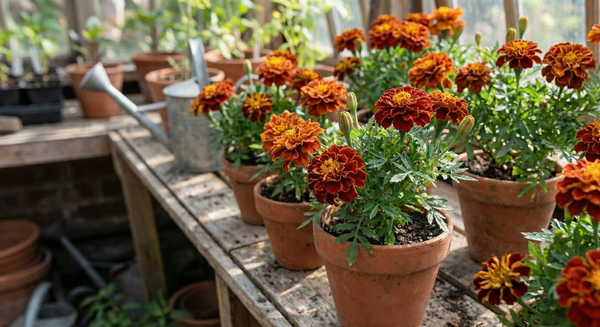
Courgettes benefit from companion planting that attracts pollinators and deters pests. Plant alongside French Marigold 'Spanish Brocade' for whitefly deterrence and added colour. Nasturtiums act as sacrificial decoy plants for aphids. Beans nearby fix nitrogen. Basil is a natural Italian companion that grows happily in the same conditions and is the perfect kitchen-pair for any zucchini dish. Avoid planting near potatoes.
Plant alongside
Courgette Zucchini pairs beautifully with these kitchen garden companions