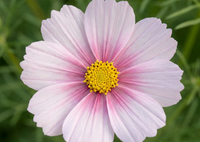
Cosmos Daydream – pale pink flowers in a cottage border with lavender and a wooden fence

Cosmos Daydream

£2.60
Skip to product information
Cosmos Daydream – pale pink flowers in a cottage border with lavender and a wooden fence
RHS Plants for PollinatorsBeginner friendly

Cosmos Daydream

Cosmos bipinnatus 'Daydream' — extra-early white-to-blush bicolour

Watercolour Cosmos with white outer petals melting through blush to deep rose-pink centres — the early-flowering bicolour bred to fill the June cutting-garden gap.

£2.60

Free UK delivery on seed orders over £40

Dispatched from our Norfolk farm by Royal Mail, usually within one working day.

Your growing year

Sow, plant out and flowering months for this variety

Jan
Feb
Mar
Apr
May
Jun
Jul
Aug
Sep
Oct
Nov
Dec
Sow
Plant out
In flower
SowPlant outIn flower

At a glance

Height
90–150cm
Spread
45cm
Spacing
45cm
Position
Full sun
Colour
Pink
Seeds per packet
50
Soil
Poor soil, NO feeding — the Cosmos starvation rule
Grow guide How to grow Cosmos Daydream Read the full guide →

About this variety

Three tones in one flower with no visible join between them: white at the outer edge, pale blush through the middle, and a distinct ring of deeper rose around the small gold disc. At 7 or 8cm across it has the deliberate look of a botanical illustration.

The more useful thing about it is the timing. Most cosmos take eight to ten weeks from sowing to first flower. 'Daydream' takes seven to eight, which sounds marginal and in practice means flowers in June, when the rest of the cosmos are still all leaf. For a cutting patch, it fills the awkward gap between the early hardy annuals and the main summer crop.

It is one of the tallest in the range at 90 to 150cm, so it will want support, and pale petals mark badly in heavy rain. Site it where low morning or evening light can get behind it. Backlit, the white edge glows and the blush centre warms, and that is when the watercolour effect actually happens. Do not feed it. Cosmos on rich ground gives magnificent foliage and very little flower, which is the commonest reason people are disappointed by it.
Plant alongside

Chosen by us, not by an algorithm

RHS Plants for Pollinators

This plant has been assessed by the Royal Horticultural Society and recommended as especially beneficial to bees, butterflies and other pollinators. Growing plants like this directly supports UK pollinator populations — something close to our hearts at Salle Moor Hall Farm, where we see the difference a cottage garden full of the right plants can make.

Learn more at RHS.org.uk →