
Chard Rainbow Mixed
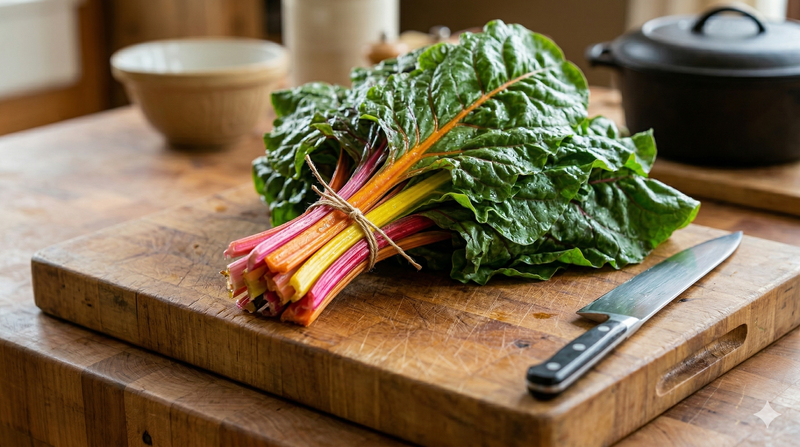
Mixed-colour Swiss chard - scarlet, crimson, orange, yellow, pink, white stems
The vegetable that earns a place in the flower border as readily as the kitchen garden - brilliantly-coloured stems glowing like stained glass, cut-and-come-again from June to December.
About this variety
Beta vulgaris subsp. cicla 'Rainbow Mixed' Mixed colour Swiss chard, ornamental and edible
The vegetable that earns its place in the flower border as readily as the kitchen garden. Rainbow chard produces tall, upright plants with broad green leaves and brilliantly-coloured stems and midribs in scarlet, crimson, orange, yellow, pink, and white — all from the same packet, all in the same row. Slice a stem in half and the colour runs the full length, glowing like stained glass when sun catches the leaves from behind. This is genuinely one of the most beautiful vegetables you can grow.
Chard is the same species as beetroot, bred over centuries for leaf and stem rather than root. The leaves cook like spinach but are bigger, sturdier, and milder — less bitter, less prone to wilt-down-to-nothing, more useful in pies and bakes where you need actual leaf structure. The stems eat like a cross between asparagus and celery — slow-cooked, they soften to a tender sweetness that surprises anyone expecting fibrousness. The young leaves of any colour go raw into salads.
The decorative value is genuine and considerable. A row of Rainbow chard at the back of a flower border looks intentional, beautiful, and architectural; few gardeners realise it's a vegetable until they look closely. The plants reach 50–60cm tall, stand upright without staking, and remain colourful from June right through to first hard frosts in November. As an "edimental" — edible-and-ornamental — Rainbow chard is genuinely unmatched.
This is a mixed-colour seed selection: each seed produces one plant of one colour, but you cannot predict in advance which colour any given seed will become. The mix is the point — a row sown from this packet typically delivers roughly even proportions of red, yellow, orange, pink, and white plants.
A note on growing
Direct sow outdoors from April to July at 2cm depth in rows 30cm apart. Each chard "seed" is actually a multigerm cluster — expect 2–4 seedlings per station and thin to the strongest single plant once they are large enough to handle, leaving 25cm between final plants. Germination takes 10–14 days. Chard is far less demanding than other vegetables — tolerates most soils, accepts part shade, and rarely needs special preparation.
Water consistently through dry spells but the plants are remarkably drought-tolerant compared to lettuce and spinach. Apply a general-purpose feed in midsummer to keep the leaves producing.
Harvest from June onwards by cutting the outer leaves from each plant individually — the inner leaves continue producing all season. This "cut-and-come-again" approach extends harvest for months. A well-grown plant can be picked from for six to eight months continuously. In mild winters, Rainbow chard may overwinter and produce a final flush of leaves in early spring before bolting to seed.
For continuous supply through winter, the late-summer leaves can be left on the plants under fleece or in a cold greenhouse for picking through to December.
Where it shines
In the kitchen, Rainbow chard is genuinely versatile. Strip the leaves from the stems and use them separately: leaves wilted with garlic and chilli, stems sliced and slow-cooked in butter or olive oil until tender. Use young leaves raw in salads where the colour adds drama. Stuff with rice and herbs and roll like Greek dolmades. Slip into quiches and pies. Add to risottos and pasta. Particularly outstanding in winter stews where most leafy greens are out of season.
In the garden, plant Rainbow chard in deliberate ornamental positions — the back of a flower border, alongside dahlias and sunflowers, as a structural anchor in a kitchen garden, in a large pot on the patio. The visual reward through the long season is genuinely exceptional. A single packet of seeds delivers months of beauty.
Plant alongside
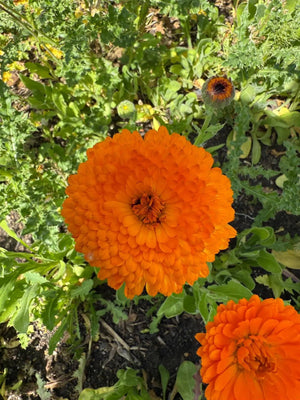
Chard tolerates close neighbours politely. Plant alongside beans (which fix nitrogen), brassicas (which need similar growing conditions), and onions or alliums for general protection. Calendula 'Neon' attracts beneficial insects. Avoid planting near other beet-family crops to reduce shared pest pressure.
Plant alongside
Chard Rainbow Mixed pairs beautifully with these kitchen garden companions