Cerinthe major 'Purpurascens' Seeds
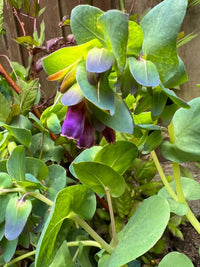
Cerinthe is a plant that stops people in their tracks. It has a unique, "underwater" beauty, with fleshy, silver-blue leaves that spiral up the stem, gradually turning into deep, inky violet-purple bracts at the top.
From these purple bracts hang clusters of rich purple-yellow bells that are filled with nectar. This plant is known as "Honeywort" for a reason—it is an absolute obsession for bees. If you want to bring life, movement, and a humming sound to your garden, this is the single best annual you can grow.
Read More
🌿 Understanding the Plant
Cerinthe major 'Purpurascens' is a robust Hardy Annual (H3). Originating from the Mediterranean, it is biologically engineered to thrive in full sun and well-drained, often poor, soil. It possesses the prestigious RHS Award of Garden Merit, a mark of excellence for its reliable garden performance and unique architectural silhouette.
The "Shrimp" Morphology: Often referred to as the "Blue Shrimp Plant," its common name describes the distinctive arching habit of the flower heads. The bracts and flowers curl over in a graceful, decurved shape that mimics the tail of a shrimp, providing a sculptural quality rare in annual species.
Pollinator Obsession: True to its name "Honeywort," Cerinthe is a nectar powerhouse. It is one of the highest-rated plants for biodiversity, specifically attracting British bumblebees who will visit the drooping bells repeatedly from May through to August.
🌱 Growing Guide
Cerinthe seeds are exceptionally large, resembling smooth black beads, making them easy to handle and sow with precision.
How to Sow:
Sow indoors from February to April, or direct sow outdoors in September for the earliest blooms the following spring. To improve germination rates, we recommend soaking the seeds in tepid water for 12 hours prior to sowing to soften the hard outer coating. Sow 1cm deep. Germination typically occurs within 7-14 days.
Where to Plant:
They demand full sun to develop their characteristic deep purple pigmentation; in shaded areas, the foliage will remain primarily green. They thrive in well-drained, average-to-poor soil. Once established, they are remarkably drought-tolerant, making them ideal for gravel gardens or Mediterranean-style borders.
Ongoing Care:
Cerinthe can become slightly top-heavy as the bracts fully develop. We recommend planting them in tight groups so they can lean on one another for support, or providing light twiggy sticks. They are enthusiastic self-seeders; if you allow the seeds to drop at the end of the season, you will likely receive a fresh generation of "free" plants the following spring.
📋 Plant Specifications
| Botanical Name | Cerinthe major 'Purpurascens' |
| Common Name | Honeywort / Blue Shrimp Plant |
| Plant Type | Hardy Annual |
| Hardiness | H3 (Tolerates light frost) |
| Light Requirements | Full Sun ☀️ |
| Height | 45cm - 60cm |
| Spread | 45cm |
| Spacing | Plant 30cm apart |
| Flowering Period | May to August |
| Perfect For | 🐝 Elite Bee & Pollinator Forage 🏺 Architectural Container Focus 💜 Rare Purple/Silver Foliage Interest 🏜️ Low-Water Mediterranean Borders |
| Seeds per Packet | Approximately 12 large seeds |
🤝 Beautiful Garden Combinations
The moody purple and silver tones of Cerinthe work spectacularly with available partners from our range:
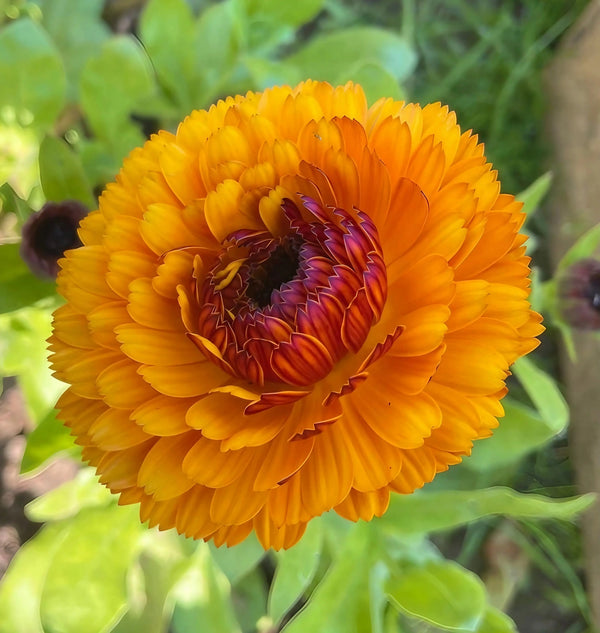
- 🧡 Calendula 'Touch of Red': The Jewel Box Contrast. This is high-impact colour theory in action. The deep mahogany-red and burnished orange of 'Touch of Red' creates a dramatic contrast with the cool silver-blue of the Honeywort. Both are drought-tolerant, providing a long-season buffet for British bees.
- ☁️ Nigella 'Miss Jekyll Blue': The Textural Haze. If both are sown in autumn, they will flower together in late spring. The misty, sky-blue foliage of the Nigella provides a soft, ethereal backdrop to the bold, architectural succulent leaves of the Cerinthe, creating a professional-looking cool-toned display.
📅 Sowing & Flowering Calendar
Direct sow in autumn for the earliest spring display, or in spring for a summer of architectural purple and blue interest.
| Month | J | F | M | A | M | J | J | J | A | S | O | N | D |
|---|---|---|---|---|---|---|---|---|---|---|---|---|---|
| Direct Sow | ✓ | ✓ | ✓ | ✓ | |||||||||
| Flowering | ✓ | ✓ | ✓ | ✓ |
🐝 Bee Magnet
Cerinthe holds the RHS Plant for Pollinators status. Its nectar-rich bell flowers are an essential food source for British bumblebees and solitary bees during the early-to-mid summer gap.
🏆 Robust Garden Stamina
Known for its stamina and ability to thrive in poor soils, Cerinthe major 'Purpurascens' is an essential choice for those wanting to create a romantic, low-maintenance garden that provides high-quality structural pigment throughout the year.
📖 Want more detailed growing advice?
View our Complete Growing Guide for Annuals →
- Regular price
-
£2.40 - Regular price
-
- Sale price
-
£2.40
Couldn't load pickup availability
5.0 / 5.0
(1) 1 total reviews


Cerinthe major Purpurascens
- Regular price
-
£2.40 - Regular price
-
- Sale price
-
£2.40
Unusual. Lovely but hard to germinate. I only had 2