Aji Largo Rocoto Chilli
A true rocoto - the hardy, hairy-leaved Andean chilli with thick, juicy flesh
Something genuinely different - a true Andean rocoto (Capsicum pubescens) with downy leaves, black seeds and thick, juicy, apple-crisp flesh. The hardiest chilli of all, and one you can overwinter to crop again next year.
About this variety
Capsicum pubescens 'Aji Largo' A true rocoto — the hardy, hairy-leaved Andean chilli with thick, juicy flesh
Something genuinely different, and a real conversation piece for the keen chilli grower. Aji Largo is a rocoto — a member of Capsicum pubescens, a species quite distinct from every other chilli, and one rarely seen in British gardens. Rocotos are the chillies of the high Andes, grown for centuries up in the cool mountain air of Peru, Bolivia, and Ecuador, and they carry two unmistakable signatures that set them apart from all their relatives: soft, downy, hairy leaves (the Latin pubescens means exactly that) and curious jet-black seeds. Once you've grown one, you'll always recognise the species.
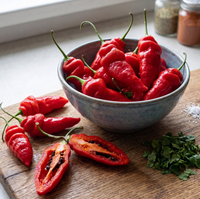
The pods are handsome and substantial — conical, deeply wrinkled, around 7cm long, ripening to a glossy deep red. What really marks them out, though, is the flesh: thick, fleshy, and notably juicy, with a higher moisture content than other chillies, almost like a small, hot, crisp apple. The heat is a proper hot kick — somewhere in the region of 30,000 to 100,000 Scoville units, and reputedly the hottest of the rocotos — but it sits behind a fresh, fruity, full-bodied flavour rather than arriving as bare fire. This is a chilli with real character.
Best of all, from a British grower's point of view, is the rocoto's secret talent. Because Capsicum pubescens evolved high in the Andes where the air is cool, it is the hardiest and most cold-tolerant of all the chilli species — markedly tougher in cool conditions than the warmth-hungry superhots and habaneros. It still won't survive a frost, but unlike almost any other chilli, a rocoto can be brought in over winter and kept going as a short-lived perennial, fruiting again the following year and beyond. Treated kindly, a single plant can become a long-term resident of the greenhouse.
It does ask for patience: rocotos are long-season plants, so an early start is essential. The reward is a relatively open, branching plant of around a metre, hung with thick scarlet pods, and a chilli experience quite unlike anything else in the garden.
A note on growing
Sow early — this is the single most important thing with a rocoto. Because pubescens needs a long season (often 95 days or more from transplanting to ripe fruit), sow indoors from January, or even late December if you can give the seedlings enough light and warmth. Use a heated propagator at around 25–28°C; the black seeds can be slow and a little erratic to germinate, so be patient and don't give up on a tray too soon.
Prick out into 9cm pots once the seedlings have two true leaves, and grow on in good light at a minimum of 18–20°C. Pot on progressively to a large final pot — this is a sizeable, branching plant. Rocotos do best under cover in the UK, in a greenhouse, polytunnel, or conservatory, which gives them the long season they need; they tolerate cooler conditions than other chillies, but they still want warmth and a long run to ripen a full crop. Water consistently and feed weekly with a high-potash tomato food once the first flowers set.
Here's the rocoto's special trick: at the end of the season, instead of pulling the plant up, bring it somewhere frost-free and bright — a cool greenhouse, porch, or windowsill — cut it back, water sparingly, and it will often overwinter and crop again the following year, growing stronger and more productive with age. No other chilli rewards a little winter care quite so well. Harvest the pods from late summer through autumn, picking once they have ripened to a full deep red.
Where it shines
In the kitchen, the rocoto is the heart of Andean cooking, and Aji Largo earns its place there with its thick, juicy, fruity flesh. In Peru and Bolivia, rocotos are famously stuffed and baked — rocoto relleno, filled with spiced meat and cheese, is a classic — and the substantial flesh makes this variety excellent for the job. Use it fresh in fiery salsas and sauces, blend it into the bright, hot table condiments of Andean cuisine, or chop it through stews and soups for a deep, fruity heat. The high moisture content means it doesn't dry as readily as thinner chillies, so it's at its best used fresh.
In the garden, it's a genuinely interesting plant to grow — the soft hairy foliage, the pretty flowers, the thick scarlet pods, and the prospect of a chilli that comes back year after year make it a favourite among growers who like something out of the ordinary.
At a glance
- Heat: hot, around 30,000–100,000 SHU — reputedly the hottest of the rocotos
- Flavour: fresh, fruity and full-bodied, with thick, juicy, apple-crisp flesh
- Species: Capsicum pubescens — a true rocoto, with hairy leaves and black seeds
- Plant: open, branching, around 1m — long-season, so sow early
- Hardy: the most cold-tolerant chilli species — can be overwintered as a perennial
- Sow: January (or earlier), heated propagator at 25–28°C
- Harvest: late summer to autumn, deep red
- Best for: stuffing (rocoto relleno), fresh salsas and Andean sauces
Plant alongside
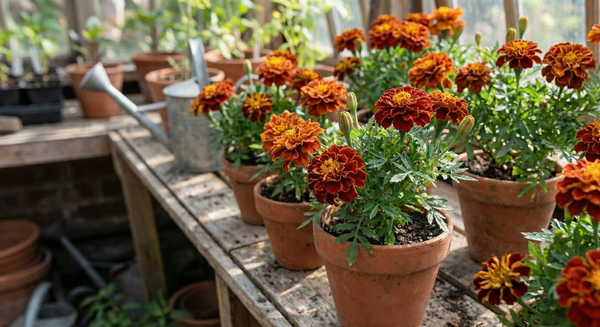
Chillies do well with companions that draw in pollinators and help keep pests down. Plant alongside French Marigold 'Spanish Brocade' to deter aphids and whitefly, and Calendula 'Neon' to attract beneficial predators. Basil is a classic greenhouse companion that enjoys the same warmth and sun, and makes a natural culinary partner too.
Plant alongside
Aji Largo Rocoto Chilli pairs beautifully with these kitchen garden companions