
Aji Colorado Orange Chilli
A fruity, glowing-orange Peruvian aji with a friendly medium heat
A rare and beautiful Peruvian aji - a tall, generous bush hung with glowing orange pods, with a fresh, fruity, bean-like flavour and a friendly medium heat. The kind of chilli you cook with for flavour, not bragging rights.
About this variety
Capsicum baccatum 'Aji Colorado Orange' A fruity, glowing-orange Peruvian aji with a friendly medium heat
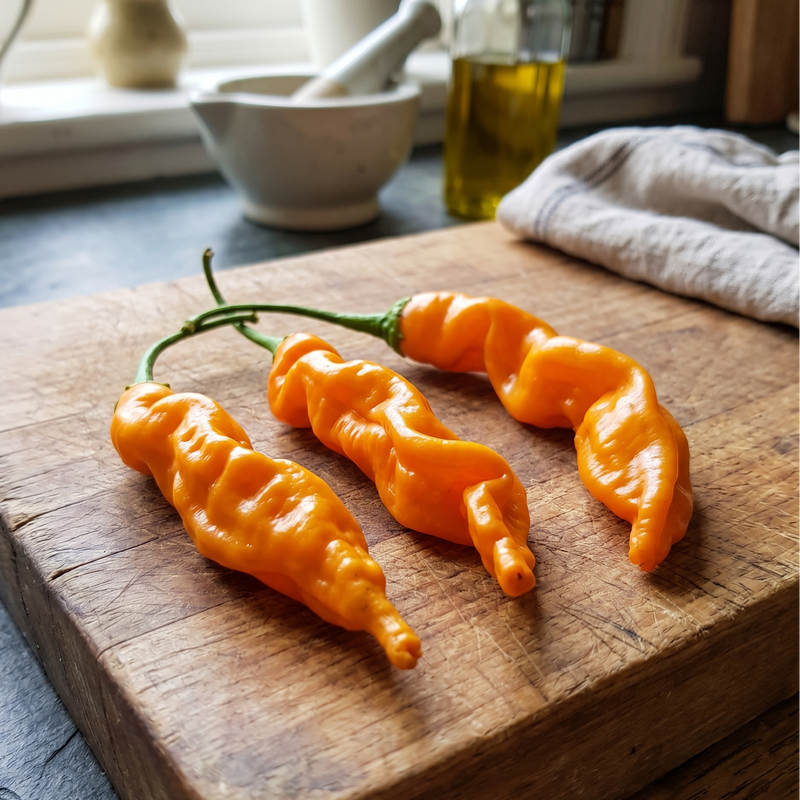
A beautiful and rather rare South American chilli, and a lovely introduction to a whole branch of the pepper family that British gardeners rarely meet. Aji Colorado Orange is an aji — the Andean name for the chillies that have been central to Peruvian and Bolivian cooking since the time of the Incas, when they were so prized they were given as tribute to high-ranking leaders. This is the warm-orange form, and it's as good to look at as it is to eat: a big, dangly, generous bush hung with glowing conical pods that ripen from green to a rich, warm orange.
What makes the ajis special is their flavour. Aji Colorado Orange belongs to Capsicum baccatum, the species that gives South America its most beloved cooking chillies, and like its relatives it leads with taste rather than punishment: a fresh, fruity, almost bean-like flavour with real depth, carried on a pleasant medium heat that adds a satisfying kick without ever overwhelming the dish. At 20,000 to 30,000 Scoville units it's in the same friendly territory as a hot cayenne — warm and lively, but a world away from the searing superhots. This is a chilli you cook with for flavour, not for bragging rights.
It's also, happily, an easy and rewarding plant to grow. The baccatum chillies are famously productive, and Aji Colorado Orange is no exception — a vigorous, bushy plant that crops heavily over a long season, fairly shrugging off the attention that the fussier superhots demand. One charming botanical quirk to look out for: like all true baccatum chillies, its flowers carry distinctive greenish or straw-coloured spots on the petals — a small detail that marks it out as a genuine aji.
One thing worth knowing: baccatum plants grow tall and can become quite large and heavy with fruit, so they appreciate a bit of room and usually want staking or support once the pods are weighing the branches down. Give it that, a sunny greenhouse or warm sheltered spot, and a long enough season, and it will reward you generously.
A note on growing
Sow indoors from January to March. Like most chillies it benefits from warmth to germinate — a heated propagator at around 22–28°C is ideal — and the baccatum types can be a touch slower than the easy annuums, so allow up to three or four weeks and don't give up on a tray too soon. Sow on the surface or barely covered, and keep the compost moist but not wet while you wait.
Prick out into 9cm pots once the seedlings have two true leaves, and grow on in good light at a minimum of 18–20°C to keep them sturdy. Pot on progressively to large final pots — these are big plants and want the root room. Aji Colorado Orange grows best under cover in the UK: a greenhouse, polytunnel, or conservatory gives the long, warm season it needs to ripen a full crop, though a very warm, sheltered, sunny spot outdoors can work in a good summer. Move plants out only once all danger of frost has passed.
Water consistently and feed weekly with a high-potash tomato food once the first flowers set. As the plant grows tall and the pods build up, stake or cane it so the laden branches don't snap. Pinch out the growing tip early to encourage a bushier, more productive shape. Harvest from late summer into autumn, picking the pods once they have turned a full warm orange — though they're perfectly usable green if you'd like a fresher, sharper note earlier on. Regular picking keeps the plant cropping right up to the first frosts.
Where it shines
In the kitchen, Aji Colorado Orange is a wonderfully versatile cooking chilli — this is, after all, the kind of pepper that anchors an entire cuisine. Its fresh, fruity flavour and manageable heat make it ideal for the Peruvian and Bolivian dishes it was born to: blended into vibrant sauces and pastes, stirred through stews, or crushed into chilli flakes. It's superb in salsas, marinades, and ceviche-style dishes, and the warm-orange flesh makes a beautiful sauce with real depth of flavour. Like its Andean relatives, it dries and grinds well into a fragrant powder, and is just as happy crushed with a little vinegar into a punchy condiment for the table.
In the garden, it's a genuinely handsome plant — a tall, generous bush glowing with orange fruit through late summer and autumn, and productive enough that a single plant keeps a kitchen well supplied.
At a glance
- Heat: medium-hot, 20,000–30,000 SHU — a friendly cayenne-ish kick
- Flavour: fresh, fruity, almost bean-like, with real depth — the classic aji profile
- Plant: tall, vigorous, bushy and high-yielding — usually needs staking
- Fruit: conical pendant pods, ripening green to warm orange
- Sow: January to March, propagator at 22–28°C
- Harvest: late summer to autumn, orange (or green for a fresher note)
- Grow under cover in the UK for the best, fullest crop
- Heritage: a rare Peruvian and Bolivian aji, grown since the Incas
Plant alongside
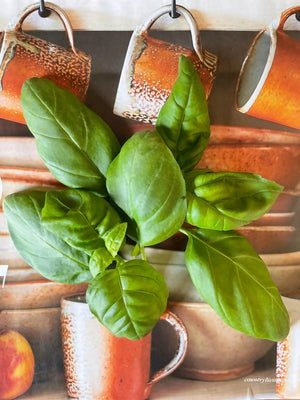
Chillies do well with companions that draw in pollinators and help keep pests down. Plant alongside French Marigold 'Spanish Brocade' to deter aphids and whitefly, and Calendula 'Neon' to attract beneficial predators. Basil is a classic greenhouse companion that enjoys the same warmth and sun, and makes a natural culinary partner too.
Plant alongside
Aji Colorado Orange Chilli pairs beautifully with these kitchen garden companions