Skip to product information
1 of 5

Basil 'Classic Italian' Seeds (Genovese)

If you could only grow one herb for the rest of your life, this would be it. 'Classic Italian' Genovese Basil is the definitive culinary basil—the gold standard by which all others are measured. This is the authentic Italian variety from the Genoa region (the pesto capital of the world!), bred specifically for those large, glossy, spoon-shaped leaves with that intoxicating sweet-peppery aroma that instantly transports you to sun-drenched Italian hillsides. The moment you brush against the leaves, they release an incomparable fragrance—warm, slightly spicy, with notes of anise, clove, and mint all wrapped into one glorious scent.

This is the variety you need for tearing over ripe tomatoes and creamy buffalo mozzarella, blending into vibrant emerald-green pesto that puts shop-bought versions to shame, or tucking into fresh pasta seconds before serving. Unlike those sad, spindly supermarket pots (which inevitably give up after a week on your windowsill), growing your own Genovese basil from seed gives you robust, bushy, prolific plants that you can harvest from all summer long—and with proper care, even year-round indoors! The leaves grow substantially larger than standard sweet basil (up to 7.5cm/3 inches long), they're thicker and more substantial, and crucially, they're slow to bolt in hot weather, meaning they stay sweet and tender rather than turning bitter. This is a true kitchen staple—easy to grow, incredibly rewarding, and absolutely transformative in the kitchen.


Read More

🌿 Understanding the Plant

Basil 'Classic Italian' (Genovese) is a Tender Annual (H1c), meaning it's extremely frost-tender and requires warmth to thrive.

Origin and History:
Sweet basil (Ocimum basilicum) originates from the tropical regions of central Africa and Southeast Asia, where it has been cultivated for over 5,000 years. It made its way to Italy via ancient spice routes and found its spiritual home in Genoa (Liguria), where the warm Mediterranean climate and the local culinary culture transformed it into what we now know as "Genovese" basil—the ultimate pesto variety. The name "basil" comes from the Greek "basileus" meaning "king," reflecting its status as the king of herbs in ancient times.

The "Genovese" Difference:
There are dozens of basil varieties (sweet basil, Thai basil, lemon basil, Greek bush basil, purple basil), but Genovese is considered the giant among them—literally and figuratively! It has been specifically bred for:
- Larger leaves (up to 7.5cm/3 inches long vs. 2.5-5cm for standard sweet basil)
- Thicker, more substantial leaves with better texture for pesto
- Balanced sweet flavour without bitterness, even as plants mature
- Slow bolting (resistance to flowering) in hot weather, extending the harvest window
- Higher essential oil content = more intense aroma and flavour
The leaves are distinctly almond-shaped with a glossy, slightly crinkled surface, bright emerald-green colour, and pronounced veining. They're tender and bruise easily (releasing aromatic oils), which is why basil should always be torn by hand rather than chopped with a knife.

The Heat Obsession:
This is absolutely crucial to understand: basil is a heat-loving tropical plant that evolved in warm, humid climates. It doesn't just prefer warmth—it genuinely requires it to thrive:
- Minimum temperature for growth: 10-15°C (but it will sulk!)
- Optimal temperature range: 20-30°C (the warmer, the happier)
- Germination temperature: 20-25°C (won't germinate reliably below 18°C)
Below 10°C, basil stops growing entirely. At 5°C or below, leaves turn black and die. Even a light frost (0°C) is fatal. This means basil is strictly a summer outdoor crop in the UK, or a year-round indoor/greenhouse crop. It absolutely adores heat, sunshine, and humidity. Think "tropical rainforest understory" rather than "British cottage garden"!

The Flowering Dilemma:
Basil is programmed to grow, flower, set seed, and die—all in one season. Once it starts flowering, all its energy goes into reproduction rather than leaf production. The leaves become smaller, tougher, and develop a slightly bitter, more intense flavour (still edible, but not ideal for fresh use). The secret to continuous harvests is preventing flowering by regular harvesting and pinching out flower buds the moment they appear. Those small white flowers (which appear in tall spires) are actually edible and loved by bees, but for maximum leaf production, sacrifice them ruthlessly!

The "Soft Leaf" Challenge:
Basil has extremely tender, delicate leaves with thin cell walls that bruise very easily. This is why:
- Leaves should be torn by hand, never chopped with a knife (chopping bruises and oxidizes them, turning them black)
- Leaves should be added to hot dishes at the last minute (prolonged cooking destroys the delicate flavour and turns leaves brown)
- Plants are prone to damage from rough handling, wind, and rain
- Watering should always be done at the base, never overhead (wet leaves overnight = fungal diseases)

🌱 Growing Guide

Basil is genuinely one of the easiest herbs to grow from seed—germination is fast and reliable (often within 5-7 days!)—but it has one absolute requirement: WARMTH! Get the temperature right and you'll have abundant harvests. Get it wrong and your plants will sulk, turn yellow, and eventually collapse. Here's how to succeed:

When to Sow:
Indoor Sowing (March to May): For outdoor planting, sow indoors from early March to late May. For year-round indoor growing on a warm, sunny windowsill, you can sow anytime.
CRITICAL: Do not plant outdoors until all frost risk has passed AND nighttime temperatures stay consistently above 10°C. In most of the UK, this means late May to early June. Rushing it will result in blackened, dead plants!

How to Sow:
CRUCIAL TIP: Basil seeds need LIGHT to germinate! Do not bury them deep!

1. Fill small pots or module trays with seed compost (use sterile seed-starting mix to prevent damping-off disease)
2. Water the compost thoroughly and let it drain
3. Scatter seeds thinly on the surface (they're tiny—4-5 seeds per module is plenty)
4. Cover with the finest dusting of vermiculite or sieved compost (literally 1-2mm—seeds should still be visible!)
5. Place in a warm location (20-25°C)—a heated propagator is ideal, but a sunny windowsill works if warm enough
6. Keep compost moist but not waterlogged (use a spray bottle to avoid disturbing seeds)
7. Germination: 5-10 days at optimal temperature (20-25°C). Can take up to 14 days at lower temperatures.

The Critical Seedling Stage:
Once seedlings emerge, they're vulnerable to "damping off" (fungal disease that kills seedlings overnight). Prevent it by:
- Providing excellent ventilation (don't keep them in a closed propagator 24/7)
- Watering in the morning only (never at night)
- Keeping under very bright light (a south-facing windowsill or grow lights)
- Not overcrowding (thin to one strong seedling per module)

The Magic "Pinching" Technique:
This single step is THE secret to bushy, productive basil plants! When seedlings have developed 3 sets of true leaves (usually 3-4 weeks after germination), pinch out the very top growing tip—just snap off the top 1-2cm with your fingernails, cutting just above a pair of leaves. This stops the plant producing one tall, spindly stem and instead forces it to branch from below, creating a bushy plant. You'll get double or triple the harvest! Repeat this pinching every 2-3 weeks throughout the growing season, always cutting just above a leaf pair. Each pinch creates two new growing tips!

Planting Out (Outdoor Growing):
Hardening Off: Before planting outdoors, gradually acclimatize plants over 7-10 days. Start by placing them outside during the day in a sheltered spot, bringing them in at night. Gradually increase outdoor time.
When to Plant: Only when nighttime temperatures stay consistently above 10°C (typically late May/early June in the UK).
Where to Plant: Full sun (6-8 hours minimum), sheltered from wind, in free-draining, nutrient-rich soil.
Spacing: 20-30cm (8-12 inches) apart. Closer spacing (20cm) creates mutual shade which helps keep soil moist; wider spacing (30cm) promotes better air circulation (helpful in humid climates prone to mildew).

Container Growing (The Best Option for UK!):
Basil is arguably better in pots than in the ground in the UK climate because:
- You can move pots to follow the sun
- You can bring pots under cover if temperatures drop
- You can control soil conditions perfectly
- Containers warm up faster than garden soil
Pot Size: Minimum 20cm (8-inch) diameter pot for one plant; 30cm (12-inch) for 3 plants
Compost: Use a good-quality, peat-free multipurpose compost or a loam-based compost (like John Innes No. 2). Basil likes rich, fertile soil!
Drainage: Excellent drainage is essential—basil hates waterlogged roots. Ensure pots have drainage holes and add a 2-3cm layer of crocks/gravel at the bottom.

Watering:
Basil has a paradoxical relationship with water: it needs consistent moisture but excellent drainage. The soil should be moist but never waterlogged.
- Water when the top 2-3cm of soil feels dry
- ALWAYS water at the base of the plant, never overhead! Wet leaves overnight = fungal diseases
- Water in the morning (never at night)
- In hot weather, containers may need watering daily
- Wilting leaves = underwatered; yellow leaves = overwatered

Feeding:
Unlike Cosmos (which thrives on neglect!), basil appreciates feeding. It's a leafy crop that benefits from nitrogen. Feed container-grown plants with a balanced liquid fertilizer (like seaweed feed or diluted fish emulsion) every 2-3 weeks during active growth. Don't use tomato food (too high in potassium, not enough nitrogen).

Harvesting:
Start harvesting when plants are 15-20cm tall (usually 4-6 weeks after planting out). Harvest regularly—the more you pick, the more it grows!
- Always harvest from the top, cutting just above a pair of leaves (this encourages branching)
- Never remove more than 1/3 of the plant at once
- Pinch out flower buds the instant they appear (unless you want seeds)
- For pesto, harvest in the morning after dew has dried but before the heat of the day
- Best flavour timing: Just before the plant flowers, when essential oil content is highest

Succession Sowing:
For continuous fresh basil all summer, sow new batches every 3-4 weeks from March through June. Each sowing gives you 8-12 weeks of prime harvesting before plants decline.

Indoor Year-Round Growing:
Basil grows brilliantly on sunny windowsills! Requirements:
- South or west-facing window (minimum 6 hours direct sun)
- Warm room (18-25°C—avoid cold draughts!)
- Regular turning (rotate pot weekly so all sides get light)
- High humidity (mist occasionally or use a pebble tray)

📏 Plant Specifications
Common Name: Sweet Basil, Italian Basil, Genovese Basil
Botanical Name: Ocimum basilicum 'Genovese'
Plant Type: Tender Annual (H1c - Very Tender)
Height: 30-60cm (12-24 inches) when pinched regularly; up to 90cm if allowed to flower
Spread: 30-45cm when pinched to encourage bushing
Leaf Size: 5-7.5cm (2-3 inches) long - significantly larger than standard sweet basil
Leaf Colour: Bright emerald-green, glossy with slight crinkled texture
Flavour Profile: Sweet, slightly peppery with notes of anise, clove, and mint
Flowers: Small white flowers in tall spikes (edible, loved by bees)
Sunlight: Full sun (minimum 6-8 hours daily)
Soil: Rich, fertile, well-drained; pH 6.0-7.5
Hardiness: H1c (Very Tender - killed by frost; needs minimum 10°C to survive)
Germination Time: 5-10 days at 20-25°C (can take 14 days at lower temperatures)
Germination Temperature: Optimal 20-25°C (won't germinate reliably below 18°C)
Time to First Harvest: 6-8 weeks from sowing (when plants reach 15cm tall)
Sowing Depth: Surface sowing (barely cover with 1-2mm vermiculite - seeds need light!)
Spacing: 20-30cm (8-12 inches) apart
Pests & Diseases: Aphids, slugs (young plants), downy mildew, damping-off (seedlings)
Attracts: Bees, butterflies (when flowering); repels whitefly, aphids, mosquitoes
Best Uses: Pesto, caprese salad, pasta, pizza, tomato dishes, herb butter, infused oils, windowsill growing
Seeds per Packet: Approximately 500 seeds
🎨 Perfect Garden Companions

Basil is the ultimate "companion plant" for the vegetable and herb garden. Not only does it enhance the flavour of neighbouring plants (particularly tomatoes!), but its strong aromatic oils also confuse and repel many common pests. Here are the perfect growing companions:

  • 🍅 Tomatoes - The Culinary Couple
    This is THE classic companion planting combination! Tomatoes and basil are soulmates both on the plate and in the soil. Growing basil near tomatoes offers multiple benefits: (1) Basil's strong scent confuses whitefly and other tomato pests, acting as a natural pest deterrent. (2) Some gardeners swear that basil improves tomato flavour (though this is debated—it certainly doesn't harm!). (3) Both plants have similar requirements: full sun, warm temperatures, rich soil, and consistent moisture. (4) Harvesting basil encourages bushier growth, and the shade from tomato plants can actually help keep basil's roots cool during scorching summer heat. Plant basil between tomato plants at 30cm spacing, or grow basil in pots placed amongst tomato grow bags. The combination looks beautiful, smells amazing, and gives you everything you need for perfect caprese salad or pasta al pomodoro!
  • 🌼 Tagetes (French Marigold) - The Bodyguard
    Basil's Achilles' heel is aphids—those tiny sap-sucking pests that cluster on tender new growth. Enter French Marigolds, the ultimate aphid bodyguards! Tagetes produces a strong scent that many pests dislike, but more importantly, their bright flowers attract hoverflies and ladybirds (ladybugs), whose larvae are voracious aphid-eaters. One hoverfly larva can consume 400+ aphids before pupating! Plant compact French Marigolds (like 'Red Cherry' or 'Naughty Marietta') around the edges of basil beds or in the same containers—the marigolds act as a "trap crop" and biological pest control system. Bonus: the combination of emerald-green basil foliage and bright orange/yellow marigold flowers is visually stunning! Both plants love heat and full sun, making them culturally compatible.
  • 🌿 Nasturtium - The Sacrificial Shield
    Nasturtiums are brilliant companion plants for basil because they act as a "sacrificial crop" for aphids—aphids find nasturtiums irresistible and will colonize them first, leaving your precious basil leaves untouched! Plant trailing nasturtiums (like 'Tom Thumb' compact varieties) around basil pots or along the edges of basil beds. The nasturtiums also have edible leaves and flowers (peppery flavour), so you get two edible crops in one space. Both plants love warmth and full sun. Nasturtiums are also shallow-rooted, so they won't compete with basil for nutrients. The combination of round nasturtium leaves with basil's almond-shaped foliage creates beautiful textural contrast. And aphids on nasturtiums are easier to spot and blast off with a water spray than aphids hidden in basil's growing tips!
  • 🥬 Lettuce & Salad Greens - The Cool Shade Partnership
    This is a brilliant space-saving combination for raised beds or large containers! Lettuce and salad greens prefer slightly cooler conditions than basil and benefit from partial shade in hot weather. Plant quick-growing lettuce around the base of basil plants—the basil's canopy provides light shade that prevents lettuce from bolting (going to seed) in summer heat, while the lettuce acts as a "living mulch" that keeps basil's roots cool and moist. Both are shallow-rooted, so they don't compete. Harvest lettuce leaves from the outside, allowing the centre to continue growing. Cultural note: lettuce needs more water than basil, so this works best in containers where you can control moisture levels carefully. The combination gives you salad leaves AND fresh basil for the perfect salad dressing!
  • 🌶️ Peppers (Sweet & Chilli) - The Mediterranean Trio
    Basil, tomatoes, and peppers form the holy trinity of Mediterranean vegetable gardening! Peppers and basil are culturally very compatible—both are heat-loving, sun-worshipping plants that thrive in similar conditions. Basil's aromatic oils are said to repel aphids, thrips, and other pepper pests. Plant basil in between pepper plants at 25-30cm spacing. The pepper plants provide some wind protection for the more delicate basil, while basil's lower growth habit doesn't shade the peppers. Harvest fresh basil leaves to make herb-infused oils for drizzling over roasted peppers—the ultimate garden-to-table combination! In containers, grow one pepper plant with 2-3 basil plants in a large pot (minimum 40cm diameter). Water consistently and feed regularly with balanced liquid fertilizer.

💡 Companion Planting Tip: Basil's pest-repelling properties work best when plants are actively growing and releasing their aromatic oils. This means regular harvesting (which encourages new growth) actually IMPROVES the companion planting benefits! Don't be shy about picking basil—the more you harvest, the more it helps its neighbours, and the bushier and more productive it becomes. It's a win-win-win situation!

📅 Sowing & Harvesting Calendar
Activity Jan Feb Mar Apr May Jun Jul Aug Sep Oct Nov Dec
Sow Indoors
Plant Out
Harvest

⚠️ The Pesto Secret!
The best flavour is in the leaves BEFORE the plant flowers. Harvest regularly (pinching the tips) to prevent flower spikes forming. If it does flower, the leaves can become slightly bitter—though the white flowers themselves are edible and loved by bees! For maximum pesto production: pinch out flower buds the instant they appear!

🐝 Pollinator Paradise (When Flowering)

While we usually pinch off basil flowers to maximize leaf production, if you allow some plants to flower, those tall spires of small white flowers are absolute bee magnets! Honey bees, bumblebees, and beneficial hoverflies (whose larvae eat aphids!) all adore basil flowers. The flowers are also edible with a milder basil flavour—perfect scattered over salads or frozen in ice cubes for summer drinks. Consider allowing 1-2 plants to flower while keeping the rest pinched for leaves—best of both worlds!

📖 Want more detailed growing advice?
View our Complete Growing Guides →

Regular price
£1.95
Regular price
£0.00
Sale price
£1.95
Tax included. Shipping calculated at checkout.

    1 total reviews

    Green basil plant in a rustic setting with ceramic pots and a peach.
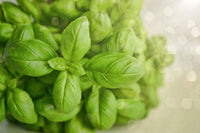
    Close-up of fresh green basil leaves with a blurred background
    Basil leaves on a wooden cutting board with garlic bulbs
    basil leaves on a marble surface
    Basil leaves, garlic bulb, and a glass of water on a wooden surface