
Buena Mulata Chilli
A purple heirloom cayenne with a beautiful colour journey and a remarkable history
A rare purple heirloom cayenne with one of the loveliest stories in the pepper world - stewarded by the artist Horace Pippin and famous for its chameleon colour journey from violet to red. Beautiful, productive, and sweeter than a plain cayenne.
About this variety
Capsicum annuum 'Buena Mulata' A purple heirloom cayenne with a beautiful colour journey and a remarkable history
A rare and beautiful heirloom chilli with one of the loveliest stories in the whole pepper world. Buena Mulata is a purple-fruited cayenne type, treasured as much for its history and looks as for its lively heat. Its seeds were stewarded through the first half of the twentieth century by Horace Pippin, the celebrated American folk artist and keen gardener, who collected and saved rare varieties; in 1944 he passed Buena Mulata to a beekeeper friend, and it was rediscovered decades later in an old seed collection by the food historian William Woys Weaver, who reintroduced it to the world. To grow it is to keep a small piece of living horticultural history going.
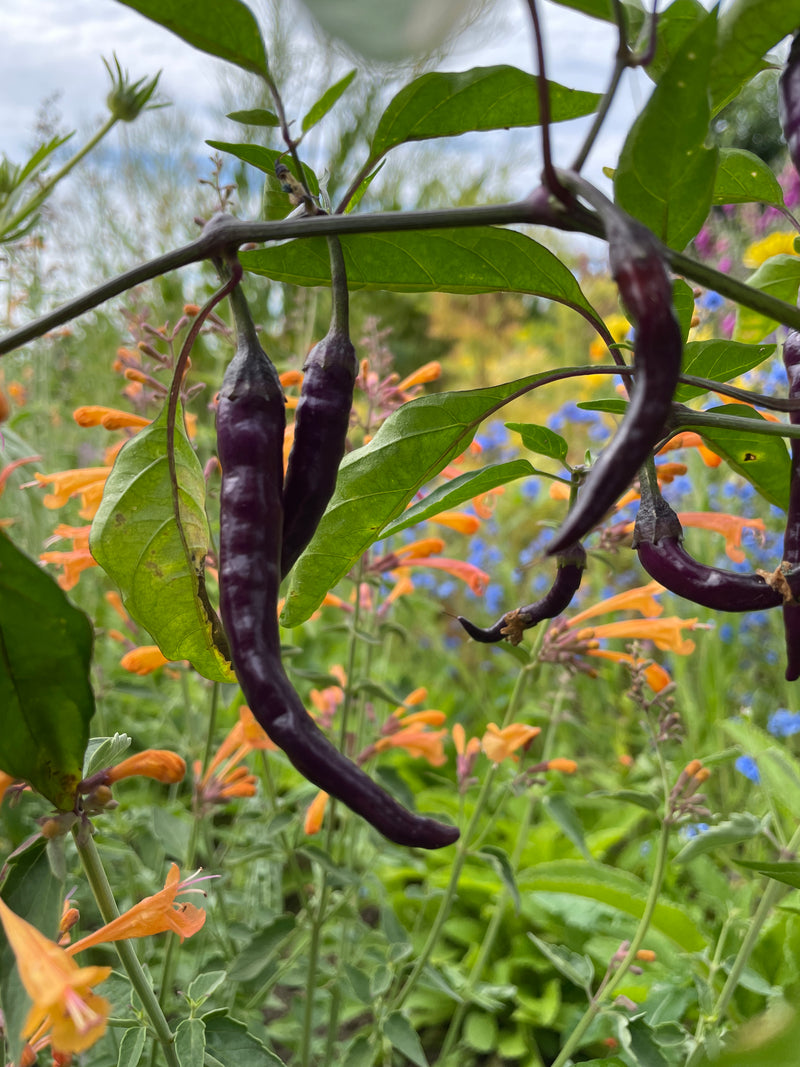
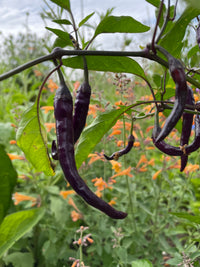
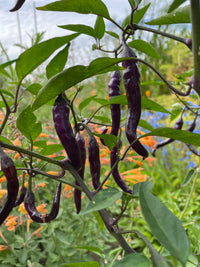
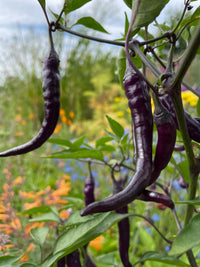
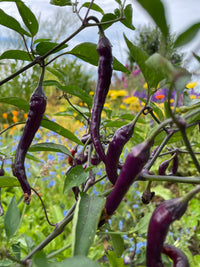
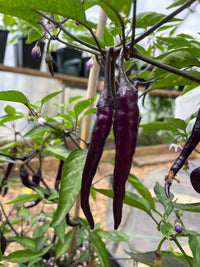
And what a thing to grow. The pods are the great spectacle: long, slim, tapering cayennes that begin a striking deep violet-purple, then ripen through a magical, chameleon-like sequence — lavender and pinkish tones, then orange, then brown, and finally a glossy deep red. At any moment a single plant carries pods at every stage at once, a shifting rainbow against handsome purple-flushed stems and pretty purple-and-white flowers. Few chillies put on such a show.
It's a wonderful kitchen chilli, too, with a real twist most ornamental peppers can't match. The heat is a friendly, usable 30,000 to 50,000 Scoville units — right in classic cayenne territory — but where a plain cayenne is all fire, Buena Mulata has a genuine sweetness and a hint of smokiness behind the heat, and the flavour actually changes as the pods ripen: the violet-stage pods are sharper and more vegetal, while the fully red ones turn sweeter, fruitier, and meatier. It's a chilli you can cook with all season and keep discovering.
As a Capsicum annuum it's straightforward and quick to grow — far easier than the slow superhots — and famously productive, a single bushy plant of around 2 to 3 feet capable of carrying a startling number of pods. Its compact, good-looking habit makes it just as happy as an ornamental in a large container or on a sunny patio as it is in the vegetable garden.
A note on growing
Sow indoors from February to April, about six to eight weeks before the last expected frost. As an annuum it germinates readily — a heated propagator or warm windowsill at 22–28°C will usually see seedlings up within one to three weeks. Sow on the surface or barely covered, and keep the compost moist but not wet.
Prick out into 9cm pots once the seedlings have two true leaves, and grow on in good light at a minimum of 18–20°C to keep them sturdy. Pot on progressively to a generous final pot — the tidy, bushy habit makes it an excellent container plant. Buena Mulata does well with the long, warm season of a greenhouse, polytunnel, or conservatory in the UK, and equally in a warm, sheltered, sunny spot outdoors once all danger of frost has passed. Give it plenty of sun: good light brings out the richest purples and the best of that colour show.
Water consistently and feed weekly with a balanced or high-potash tomato food once the first flowers set. Pinch out the growing tip early to encourage a bushier, heavier-cropping plant, and stake it if the branches grow heavy with fruit. Harvest from late summer into autumn, picking the pods at whatever colour takes your fancy — the purple stage for a sharper note, or fully red for the sweetest, fruitiest flavour. Regular picking keeps this generous cropper producing right up to the first frosts. As with any hot chilli, it's sensible to wash your hands after handling the cut fruit and to keep it away from your eyes.
Where it shines
Buena Mulata earns its place in the kitchen as readily as in the border. Its fruity, gently sweet, lightly smoky heat is lovely in fresh salsas and guacamole, and it makes a particularly beautiful salsa morada when used at the purple stage. Use it fresh, chopped through summer dishes, or build it into hot sauces and marinades where its cayenne heat and fruity depth shine. Like other cayennes it dries superbly — the slim pods dry quickly — to be crushed into flakes or ground into a fragrant, fiery powder for year-round use. Whichever way you use it, you're cooking with a chilli that's as good as it is beautiful.
In the garden, it's a genuine showpiece — the ever-changing pods, purple stems, and pretty flowers make it one of the most ornamental cayennes there is, and the kind of plant that earns admiring questions from visitors.
At a glance
- Heat: hot, 30,000–50,000 SHU — classic cayenne strength
- Flavour: sweeter and fruitier than a plain cayenne, with a hint of smoke; changes as it ripens
- Looks: chameleon pods ripening violet to lavender, orange, brown and deep red — highly ornamental
- Plant: bushy, 2–3ft, extremely productive — excellent in containers
- History: a treasured heirloom, stewarded by the artist Horace Pippin and reintroduced by William Woys Weaver
- Sow: February to April, 22–28°C
- Harvest: late summer to autumn, any colour stage
- Best for: salsas, salsa morada, hot sauces, drying — and sheer ornament
Plant alongside
Chillies do well with companions that draw in pollinators and help keep pests down. Plant alongside French Marigold 'Spanish Brocade' to deter aphids and whitefly, and Calendula 'Neon' to attract beneficial predators. Basil is a classic greenhouse companion that enjoys the same warmth and sun, and makes a natural culinary partner too.
Plant alongside
Buena Mulata Chilli pairs beautifully with these kitchen garden companions