

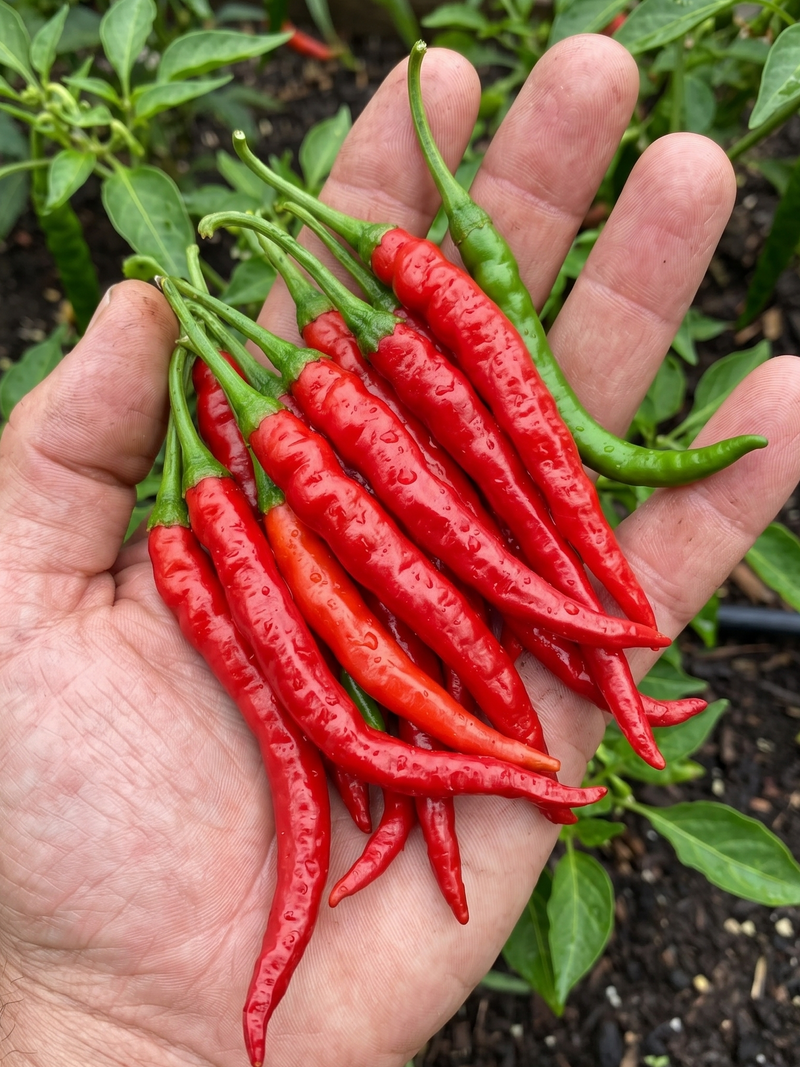
Chilli Heritage Open-pollinated

Bangalore Torpedo Chilli

Indian heritage long chilli from southern India - medium heat, outstanding for drying

£2.99approx. 15 seeds

The Indian heritage chilli from Bangalore in Karnataka - long slender often-twisted fruits, clean medium heat (10,000-30,000 SHU), outstanding for authentic southern Indian cooking and drying.

Heat level 5/10
Medium-hot
Scoville 10,000-30,000 SHU
Sowing months
JanFebMarAprMayJunJulAugSepOctNovDec
Harvest months
JanFebMarAprMayJunJulAugSepOctNovDec
Height
60-90cm
Spread
45cm
Spacing
45cm
Position
Full sun. Sheltered. Outdoors or greenhouse.
Soil
Rich, fertile, well-drained.
About this variety

Capsicum annuum 'Bangalore Torpedo' Indian heritage long chilli from southern India, medium heat

The Indian heritage chilli that has been a staple of southern Indian kitchen gardens for generations, named for the city of Bangalore in Karnataka where it has been grown and selected over many years. Bangalore Torpedo produces long, slender, slightly twisted fruits 10–15cm in length — some growing as straight tapered cones, others curling into the distinctive "pig's tail" twist that gives the variety part of its character. The fruits ripen from light green through to a vivid red, and the plants are notably prolific, often hanging with dozens of curving red pods at peak season.

The heat sits in the medium range at roughly 10,000–30,000 SHU on the Scoville scale — properly hot to British palates accustomed to mild supermarket chillies, but manageable enough for everyday cooking rather than challenge-eating. The flavour is the authentic southern Indian chilli profile: clean, sharp, properly capsicum-flavoured, with a clarity of heat that makes Bangalore Torpedo ideal for the dishes it was bred for. This is the chilli to grow if you cook genuine Indian food and want the right fundamental ingredient rather than substitutes.

The thin-walled fruits are outstanding for drying — one of Bangalore Torpedo's traditional uses in India. String the ripe red pods together and hang them in a warm dry kitchen to produce your own dried chillies for grinding into powder, crushing into flakes, or using whole in tempering oils for curries. The thin walls mean the fruits dry quickly without losing flavour, and the dried chillies retain heat and character considerably better than commercial dried alternatives.

Bangalore Torpedo is open-pollinated heritage. Seed saved from your best fruits will grow true the following year.

A note on growing

Sow indoors from February to April at 20–25°C in seed compost at 0.5cm depth. Use a heated propagator for the best germination; expect 14–21 days. Prick out seedlings into 9cm pots once they have two true leaves, growing on at 18°C minimum.

Plant out from late May (greenhouse) or early June (outdoors) once all frost risk has passed. As a Capsicum annuum variety, Bangalore Torpedo crops more reliably outdoors in UK conditions than chinense varieties — though it still prefers a sunny sheltered position, ideally against a south-facing wall, or in a greenhouse for heaviest crops.

Plant in 25–30cm pots filled with quality compost, or into fertile garden soil. Allow 45cm between plants. The plants reach 60–90cm tall and become quite bushy, often needing light support as fruits develop.

Water consistently. Feed weekly with high-potash tomato food from first flowers. Cut fruits cleanly with scissors rather than pulling — the plants are delicate at the fruit attachment and tugging can damage flowering branches.

Harvest from July through to October. Pick green for the mildest heat (still useful in Indian cooking), or wait for full red for peak heat, flavour, and drying suitability. Plants typically crop continuously from July to first frost.

Where it shines

In the kitchen, Bangalore Torpedo is the chilli of authentic southern Indian cooking. Slice green pods into dals, sambars, and rasams for fresh chilli heat. Use red pods whole in tempering oils (heat oil with mustard seeds, curry leaves, and a whole dried Bangalore Torpedo for instant authentic flavour). Crush dried fruits into curries, biryanis, and pakora batters. Make Indian-style chilli pickles. Use in Goan vindaloos, Hyderabadi biryanis, Kerala fish curries, and any preparation where you want clean medium chilli heat without the overwhelming intensity of habaneros. Outstanding for making homemade chilli powder — the dried red fruits grind to a brilliant orange-red powder with proper Indian-chilli flavour.

In the garden, two or three plants produce a substantial summer crop. Greenhouse growing is recommended for heaviest yields, though sheltered south-facing outdoor positions also work well. The prolific red fruits make the plants attractive enough to use as ornamental features in container groupings on a sunny patio.

Plant alongside

Chillies benefit from companion plants that attract pollinators and deter pests. Plant alongside French Marigold 'Spanish Brocade' to deter aphids and whitefly. Basil is a traditional companion. Calendula 'Neon' attracts beneficial predators.