
Broccoli Early Purple Sprouting
Heritage hungry-gap broccoli for late winter and early spring harvest
The vegetable that earns its keep when nothing else is cropping - tender purple spears from February to April, hardy to -12C, and filling the hardest harvest gap in the UK growing year.
About this variety
Brassica oleracea (Italica Group) 'Early Purple Sprouting' Heritage hungry-gap broccoli for late winter and early spring
The vegetable that earns its keep when nothing else is cropping. Early Purple Sprouting Broccoli is the British heritage brassica grown for one specific reason: it produces an abundance of tender purple spears from February through to April, in the depths of the hungry gap when the kitchen garden has almost nothing fresh to offer. Sown in spring, transplanted in summer, standing patiently through autumn and winter, then erupting into harvest just as the year turns — this is one of the most strategically useful crops a UK kitchen garden can grow.
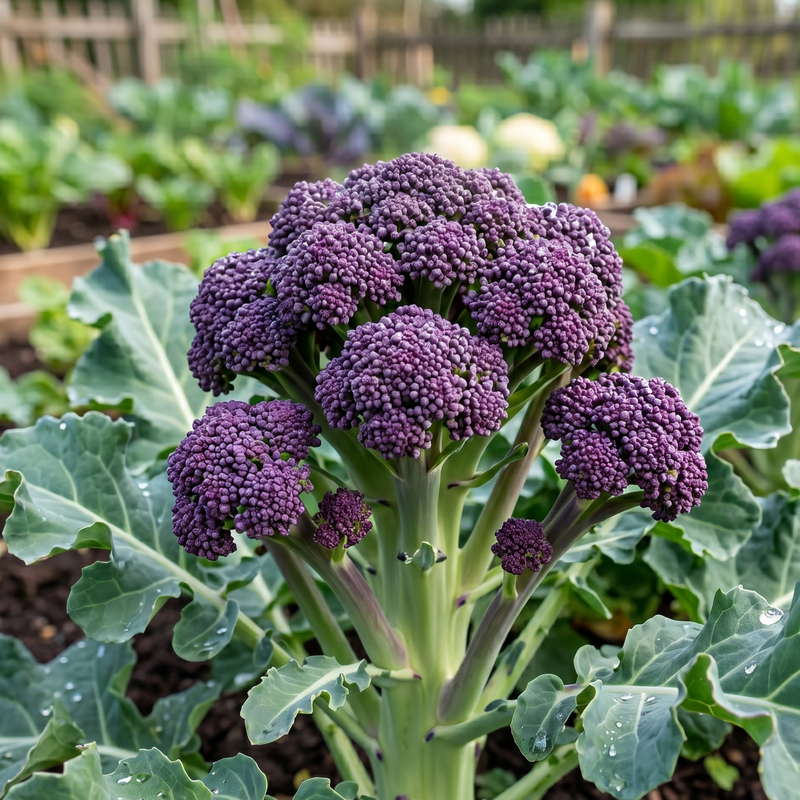
The spears are slender, tender, and a beautiful deep purple-violet, set against soft grey-green leaves. Each plant produces a central spear first, then a long succession of side-shoots over four to six weeks of regular picking. The flavour is sweeter and more delicate than the calabrese broccoli of supermarket fame — nuttier, more refined, with a tenderness that makes it as good raw in salads as it is steamed, stir-fried, or roasted. The purple fades slightly to dark green when cooked, but the flavour and texture remain outstanding.
Crucially, this is one of the hardiest vegetables you can grow. Established plants tolerate temperatures as low as −12°C without protection, standing through autumn frosts and winter cold to deliver their harvest at exactly the moment fresh greens are most welcome. The "Early" in the name distinguishes this variety from later-maturing types — Early Purple Sprouting cropping typically begins in February, two to four weeks ahead of later varieties, extending the useful harvest window further.
Early Purple Sprouting is open-pollinated heritage, meaning seed saved from your best plants will grow true to type the following year. The variety has been in continuous cultivation in British kitchen gardens for well over a century.
A note on growing
Sow indoors from late February to March in a heated propagator, or in a seed bed outdoors from April to May. Sow seeds at approximately 1.5cm depth in good-quality seed compost. Germination is fastest at 21–27°C and takes 7–14 days; once seedlings emerge, move them to a cooler, brighter position (cold frame, greenhouse, or cool windowsill) to grow on without becoming leggy.
Transplant into final position from June to July, once plants are 10–12cm tall with several true leaves. Space 50–60cm apart in both directions — mature plants are large and need the room to develop properly. Plant very firmly — so firmly that you cannot pull the plant out by a leaf without it tearing — in well-prepared, firm, fertile soil that has had plenty of well-rotted manure or compost added the previous autumn. Loose planting allows wind-rock that damages the root system and produces poor-quality crops. Brassicas dislike loose soil intensely, so if planting into freshly dug ground, tread the area firm before transplanting.
Three further practices define success. Net immediately from transplanting through to September against cabbage white butterfly — a single generation of caterpillars can devastate young plants before harvest is even close. Stake or earth up the stems in autumn as the plants grow tall (up to 90cm) to prevent wind-rock through winter storms; some growers earth up around the base of the stem in October as additional anchoring. Water consistently through the growing season, particularly in dry summer spells — broccoli plants left to dry out at the wrong moment produce smaller, poorer harvests months later.
Harvest from February to April. The central spear matures first and should be cut when 10–15cm long, while the flower buds are still tightly closed and before any yellow petals appear. Cutting the central spear stimulates the plant to produce side-shoots in abundance — check the plants twice a week through the harvest window and cut every shoot as it reaches size. Regular picking extends the cropping period and keeps production going for four to six weeks; left unpicked, spears will open into yellow flowers and the plant will stop producing new shoots.
Where it shines
In the kitchen, Early Purple Sprouting is one of the great British seasonal vegetables. Steamed for three or four minutes and served with melted butter and a squeeze of lemon — the classic simple preparation that lets the flavour speak. Stir-fried with garlic, ginger, chilli, and soy sauce for a quick supper. Roasted at high heat with olive oil until the edges crisp and caramelise. Tossed raw with sliced fennel and shaved Parmesan in a salad. Used as a side with rich late-winter dishes — roast lamb, slow-cooked beef, hearty stews. Picked at the right size, the entire spear including the stem is tender enough to eat whole, with no need to peel or trim.
In the garden, Early Purple Sprouting fills the hardest harvest gap in the UK growing year. Between January (when stored autumn root vegetables are running thin) and May (when the first spring crops are still weeks away from cropping), purple sprouting broccoli is one of very few fresh greens you can pick from your own garden. Plants take up considerable space for considerable time — sown in April, harvested the following February, occupying ground for ten months — but the return is genuinely valuable. Five or six plants is enough for a family.
Plant alongside
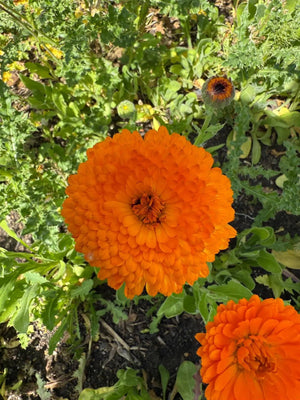
Broccoli benefits from companion plants that deter cabbage white butterflies and aphids. Plant alongside French Marigold 'Spanish Brocade' whose strong scent confuses egg-laying butterflies, and Calendula 'Neon' to attract hoverflies whose larvae devour aphids. Onions and leeks planted between brassica rows deter cabbage root fly. Quick-growing lettuce or radish can be intercropped between young broccoli plants and harvested long before the broccoli needs the space — making productive use of the months between transplanting and the autumn closure of the canopy. Avoid planting near strawberries, runner beans, or tomatoes.
Plant alongside
Broccoli Early Purple Sprouting pairs beautifully with these kitchen garden companions