

Sunflower Ring of Fire
Helianthus annuus 'Ring of Fire' — AAS + Fleuroselect award winner
The dramatic solar-eclipse bicolour with mahogany-red rings blending to golden-yellow tips — AAS and Fleuroselect winner, pollenless, late-blooming August–October.
About this variety
Helianthus annuus 'Ring of Fire' Solar Eclipse Sunflower 'Ring of Fire'
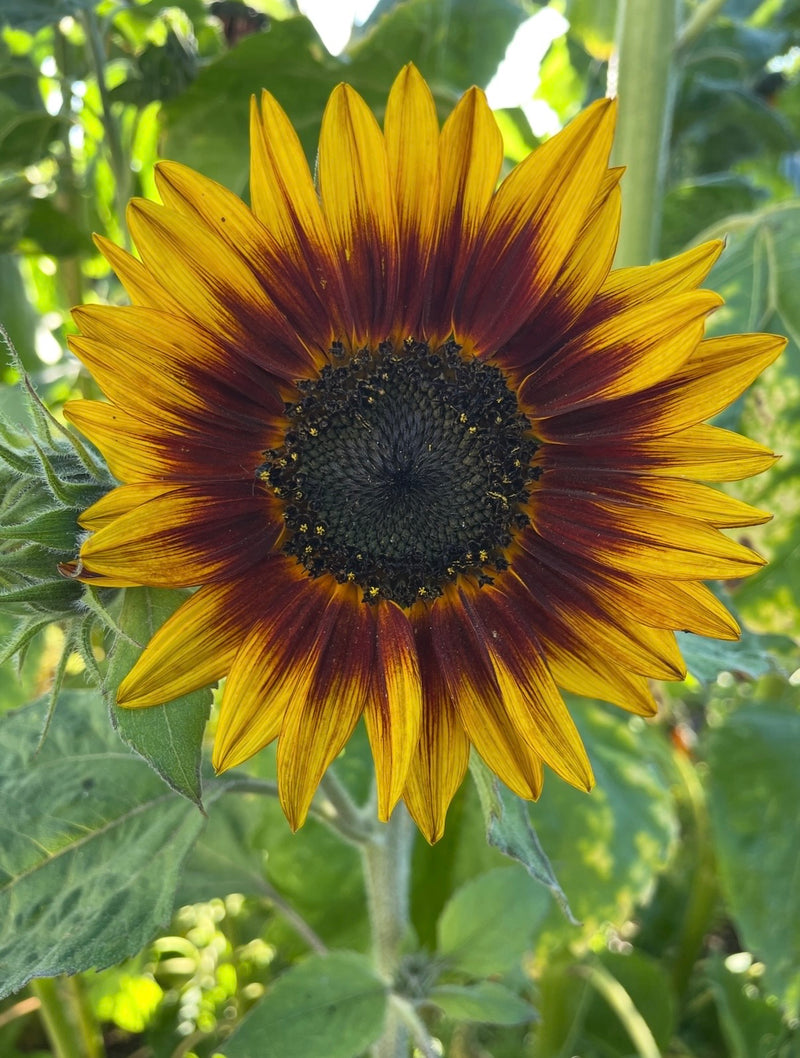
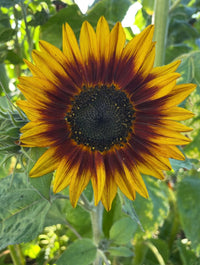
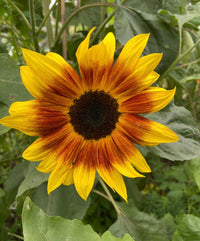
The dramatic solar-eclipse bicolour — mahogany-red ring at the petal bases blending outwards to golden-yellow tips, all surrounding a dark chocolate disc. Sunflower 'Ring of Fire' is the bicolour award-winner (AAS Winner + Fleuroselect) that arrives later than most sunflowers, peaking August through October when most other sunflowers have finished. Pollenless, branching to 120–150cm.
This is the cottage garden's "late-season firework". 'Ring of Fire' is a deliberately later-flowering variety than most sunflowers — needing 100–120 days from sowing to first flower — which means it arrives at its peak in August, September and October when most other sunflowers are winding down. The bicolour effect is striking: each large 12–15cm flower has petals that are mahogany-red at the base, blending out through warm bronze to golden-yellow at the tips, with the whole composition centred on a dark chocolate disc. The visual effect is genuinely of a solar eclipse — the golden corona around a dark central body. Both AAS (All-America Selections) winner AND Fleuroselect award holder — independently recognised internationally for outstanding garden performance. Pollenless — clean for indoor cut-flower use, no yellow staining. Branching habit producing multiple stems per plant. Day-length neutral (flowers reliably regardless of latitude variations). Half-hardy annual. Height 120–150cm.
A note on growing
Sow one seed per 7–9cm pot in April at 18–22°C — the longer flowering schedule of 'Ring of Fire' (100–120 days to bloom) means starting indoors in April produces flowers in August; later sowings flower correspondingly later. Germination 7–10 days. Harden off and plant out late May or early June in full sun at 45cm spacing.
At 120–150cm, 'Ring of Fire' benefits from light staking in exposed gardens — install canes early before the stems are tall enough to be brittle. Protect young plants from slugs for the first 2–3 weeks. Water deeply at the base and feed fortnightly through midsummer.
Where it shines
In late-summer-into-autumn borders specifically as the variety that bridges the gap between summer-flowering sunflowers and the autumn winding-down period. As an architectural back-of-border focal feature where the bicolour drama and the substantial height create real impact. As cut flowers — the pollenless characteristic combined with the dramatic bicolour pattern produces some of the most photogenic indoor flower arrangements possible from a single annual sowing. In container plantings where the tall structure provides drama for large pots.
Plant alongside
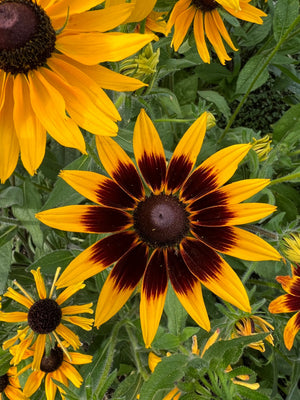
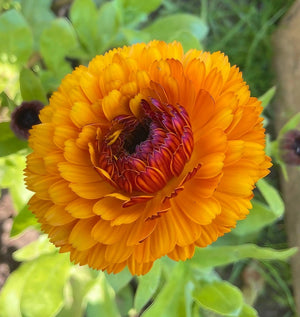
For maximum late-summer drama, pair 'Ring of Fire' with Rudbeckia 'Autumn Forest' (matching mahogany-warm autumn tones) and Cosmos 'Sensation Mixed' (matching late-summer reliability, cottage softness). For matching scale and bicolour drama, combine with Calendula 'Touch of Red' (echoing the mahogany-and-gold colour palette).
Plant alongside
Sunflower Ring of Fire pairs beautifully with these cottage garden classics
RHS Plants for Pollinators
This plant has been assessed by the Royal Horticultural Society and recommended as especially beneficial to bees, butterflies and other pollinators. Growing plants like this directly supports UK pollinator populations — something close to our hearts at Salle Moor Hall Farm, where we see the difference a cottage garden full of the right plants can make.
Learn more at RHS.org.uk →
RHS Award of Garden Merit
The RHS Award of Garden Merit is given to plants of outstanding excellence for ordinary garden use. To earn this award a plant must be of good constitution, available to the gardening public, and perform reliably across a range of UK growing conditions. It is one of the most trusted plant recommendations in British gardening and a genuine mark of quality.
Learn more at RHS.org.uk →