

Oxeye Daisy
Leucanthemum vulgare -- Oxeye Daisy; Moon Daisy; Dog Daisy; native British perennial
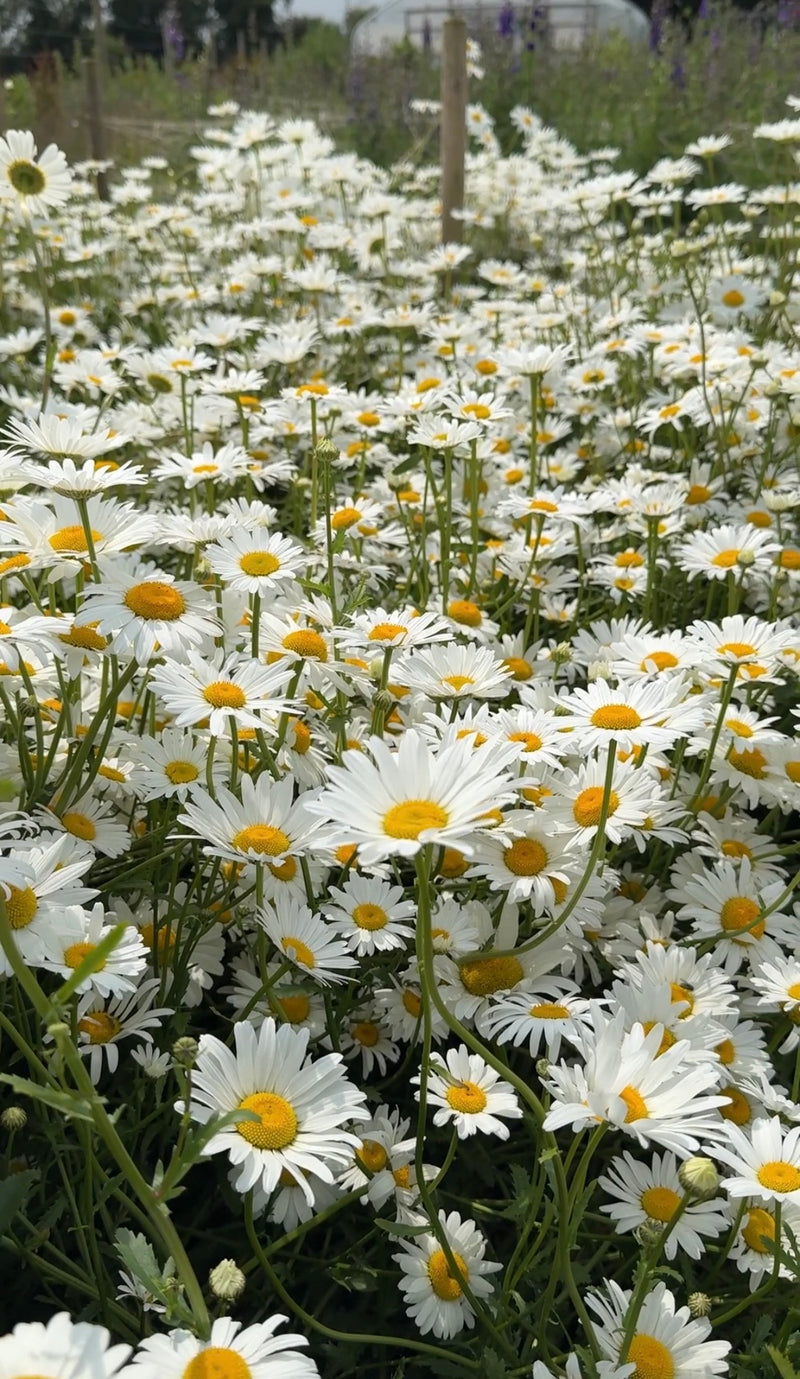
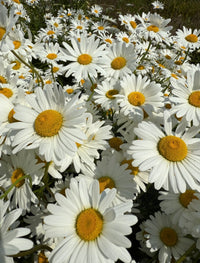
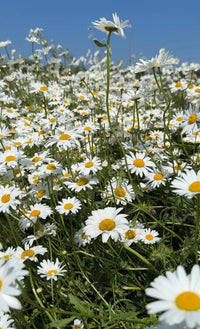
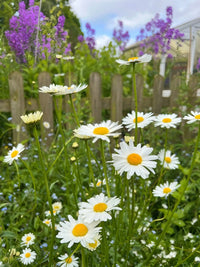
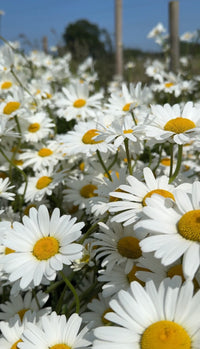
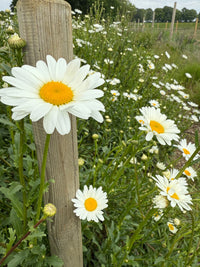
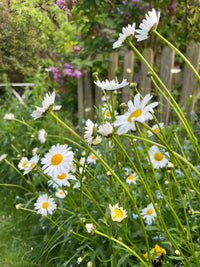
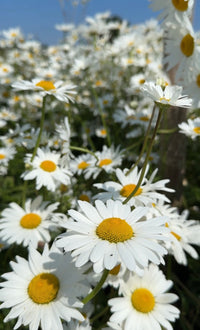
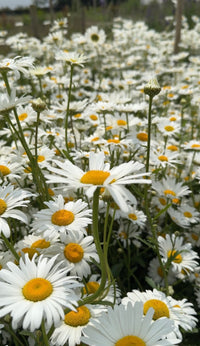
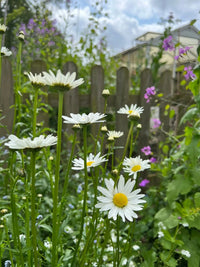
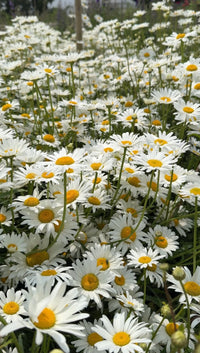
The original British wildflower — pure white petals around a vibrant yellow eye, swaying on tall wiry stems. Tough native perennial, foundation of any meadow project. RHS Pollinators.
About this variety
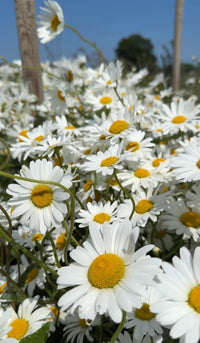
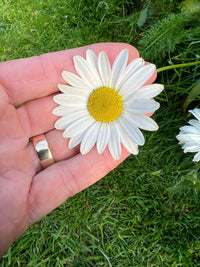
The native British daisy, the one in every unimproved meadow and on every roadside verge. Broad white petals round a yellow disc, 5 to 7cm across, on wiry stems at 40 to 60cm that bob and ripple in the wind.
It is the plant to start a meadow with. It germinates readily, spreads by rhizome and by seed, and knits a patch of bare ground together while slower species establish. It is also excellent on a bank that needs stabilising.
That vigour is the warning as much as the selling point. It will take over a small formal border and crowd out anything delicate near it, so give it room or keep it out of a fine composition. And do not feed it or sow it into improved soil. Rich ground gives you tall leggy floppy plants with fewer flowers, and it lets the daisy out-compete the smaller meadow species you were trying to grow.
From seed, expect a rosette and no flowers in year one and the display from year two. Cut the whole planting down in late summer once the seed has dropped, and take the cuttings away, or you feed the soil and undo the point of it.
Plant alongside
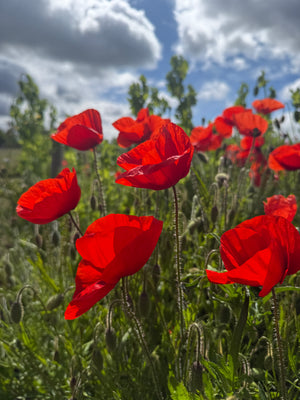
Oxeye Daisy pairs beautifully with these cottage garden classics
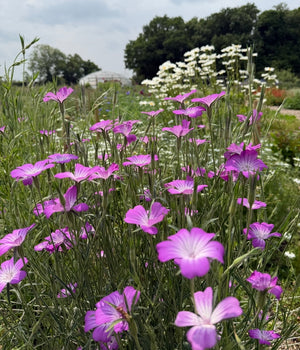

RHS Plants for Pollinators
This plant has been assessed by the Royal Horticultural Society and recommended as especially beneficial to bees, butterflies and other pollinators. Growing plants like this directly supports UK pollinator populations — something close to our hearts at Salle Moor Hall Farm, where we see the difference a cottage garden full of the right plants can make.
Learn more at RHS.org.uk →