

Linum Blue Flax
Linum perenne -- Blue Flax; perennial flax
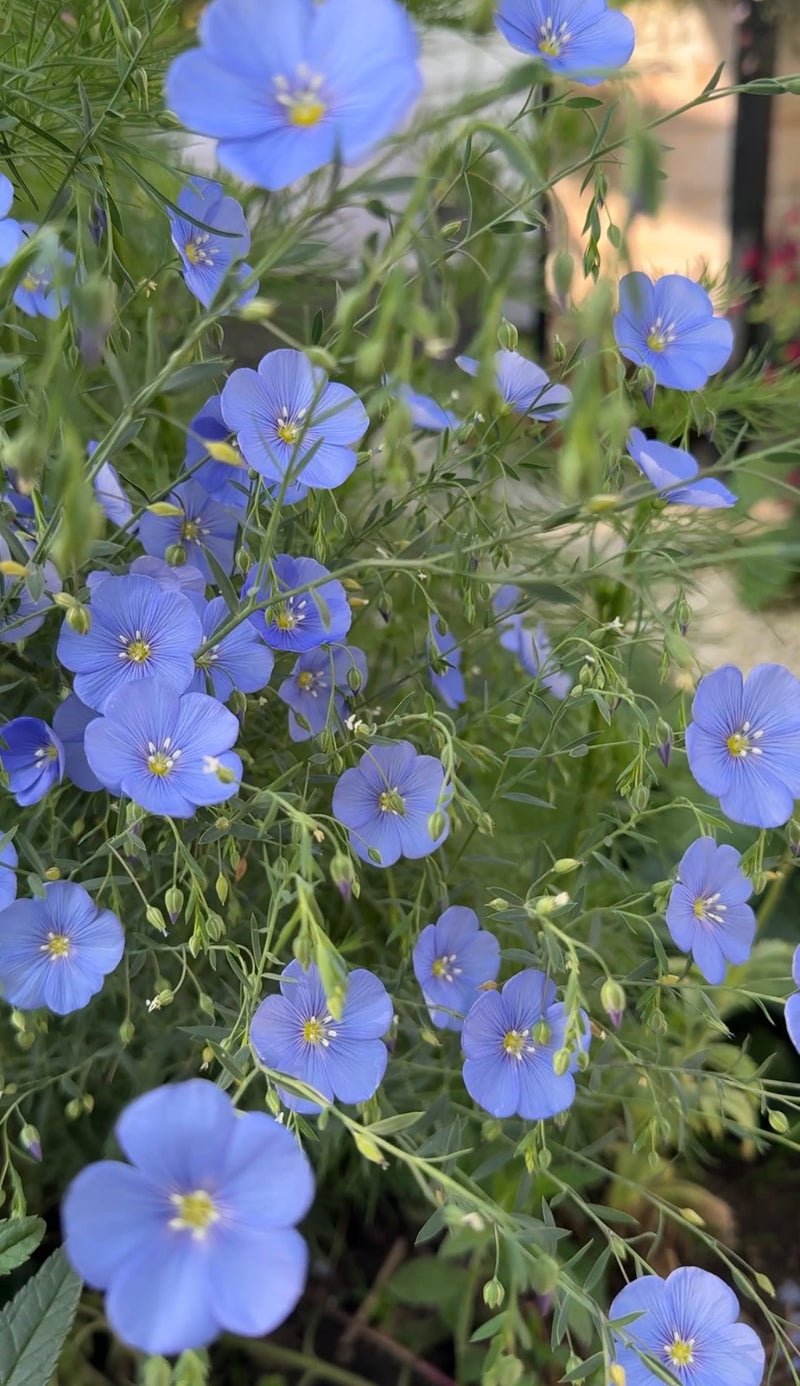
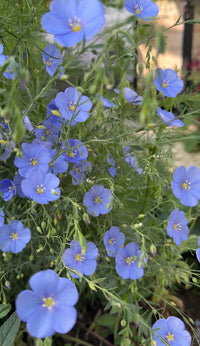
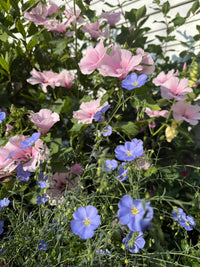
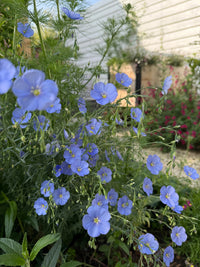
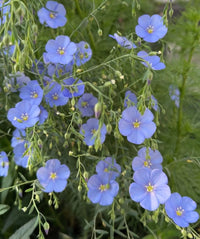
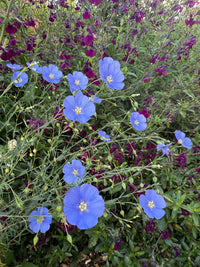
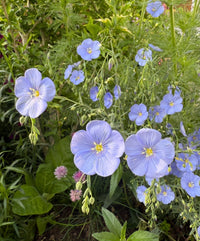
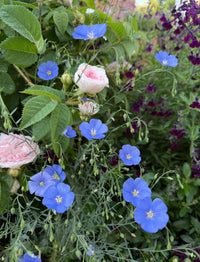
Slender arching stems carrying hundreds of pure sky-blue saucer flowers — the cottage garden's "shimmering river of blue". Flowers year one from seed, drought-tolerant.
About this variety
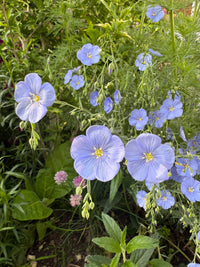
Slender arching stems carrying hundreds of small clear sky-blue saucers, at 30 to 45cm, and the whole plant moves in the least breeze. In a drift it reads as a river of blue running through the border.
Each flower lasts one morning. They open with the sun, drop their petals by late afternoon and leave a scatter of blue confetti on the ground beneath, and a fresh flush opens the next day. That goes on from June through August. It is also one of the few perennials that flowers in its first year from seed, and though it is short-lived at three or four years a plant, it self-seeds reliably enough to hold its place indefinitely once settled.
What kills it is heavy wet clay in winter, not cold. It is hardy well below anything Britain produces and thoroughly drought-tolerant, and it wants sharp drainage above all else; on heavy ground add grit, use a raised bed, or grow it in rockery conditions. It also hates root disturbance, so sow it where it is to grow or raise it in modules. Shear it back by half after the first flush for a second.
Plant alongside
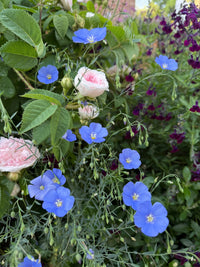
Linum Blue Flax pairs beautifully with these cottage garden classics
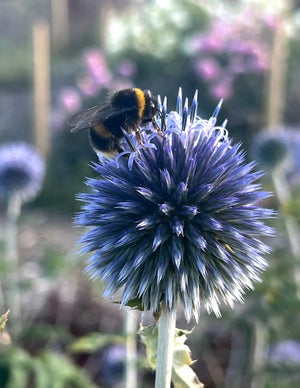
RHS Plants for Pollinators
This plant has been assessed by the Royal Horticultural Society and recommended as especially beneficial to bees, butterflies and other pollinators. Growing plants like this directly supports UK pollinator populations — something close to our hearts at Salle Moor Hall Farm, where we see the difference a cottage garden full of the right plants can make.
Learn more at RHS.org.uk →