

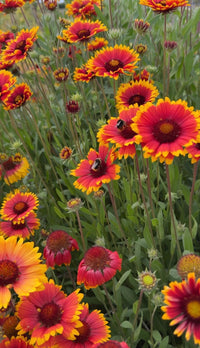
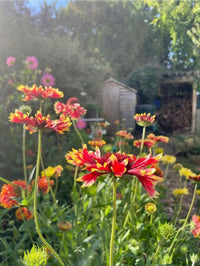

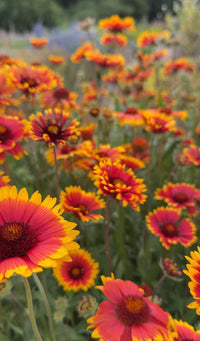
Gaillardia Aristata Bicolour Goblin
Gaillardia aristata Bicolour Goblin -- blanket flower; prairie native
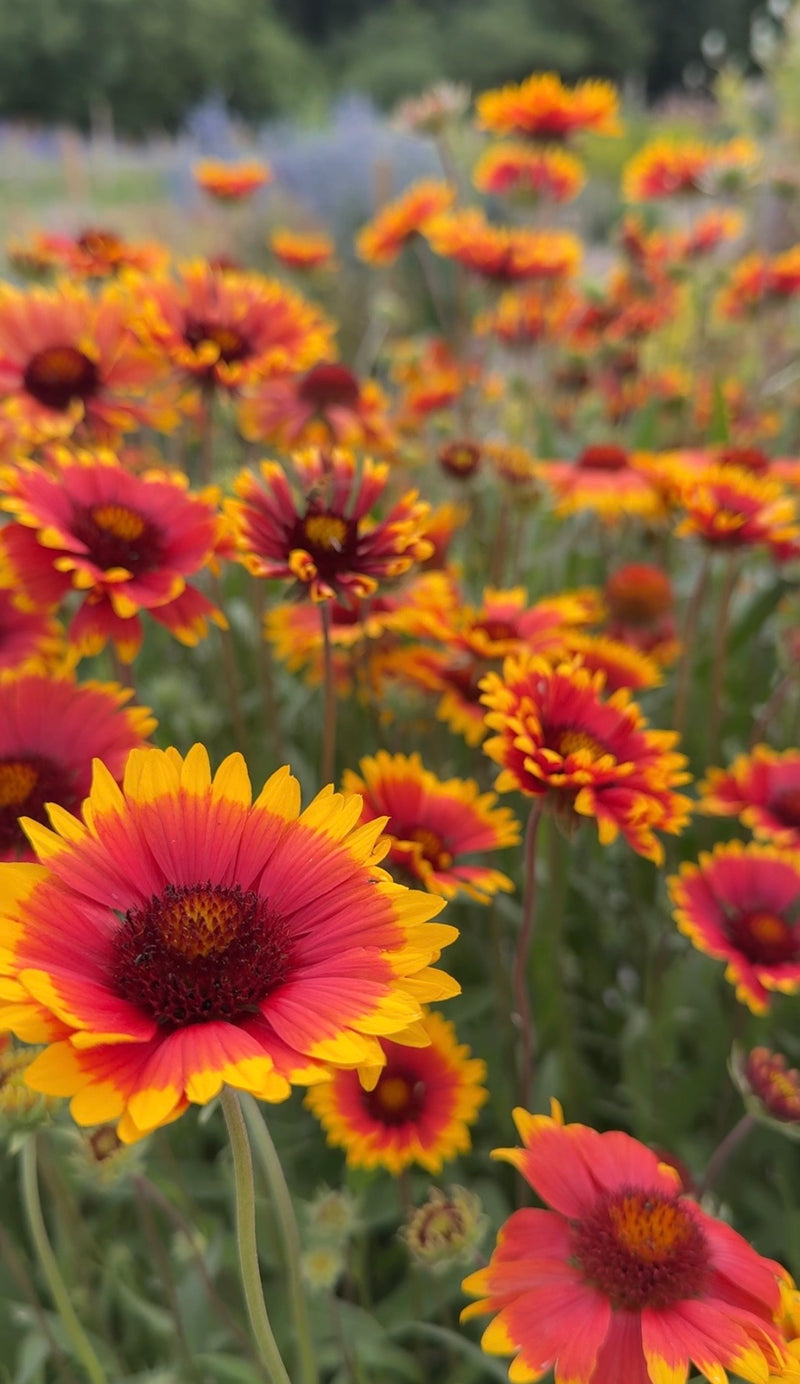
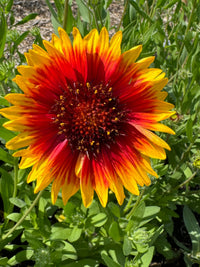
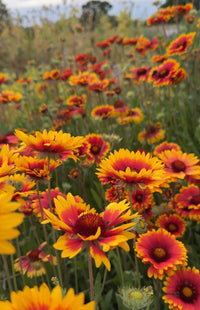
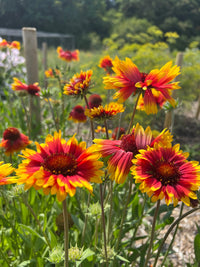
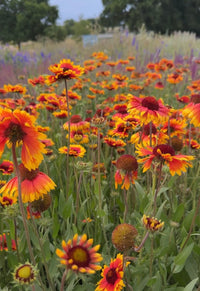
Hot red flame petals etched with golden-yellow tips on compact 30-40cm plants — the cheerful prairie Blanket Flower that delivers warm sunset colour all summer.
About this variety
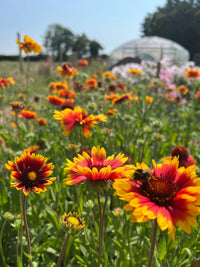
Large daisies of five to seven centimetres, flame-red at the base of each petal running out through orange to a gold tip, around a dark central disc. They sit on dwarf plants at 25 to 30cm, so all that colour is at the front of a border rather than the back.
It comes from the North American prairies and it behaves accordingly. It wants full sun and poor, sharply drained ground, and it flowers from early summer to the frosts without much attention. On heavy or rich soil it makes soft growth, flops and is short-lived. It is one of the better plants for a hot dry spot where nothing else will settle.
Call it a short-lived perennial and plan for it. Two or three good years and then the clump declines, though it self-seeds gently and volunteers usually appear. What those volunteers look like is another matter; seedlings from a bicolour strain often come back plain red or plain yellow rather than banded. Sow a fresh pinch every couple of years if you want the bicolour to stay. It cuts well for a small warm-toned posy.
Plant alongside
Gaillardia Aristata Bicolour Goblin pairs beautifully with these cottage garden classics



RHS Plants for Pollinators
This plant has been assessed by the Royal Horticultural Society and recommended as especially beneficial to bees, butterflies and other pollinators. Growing plants like this directly supports UK pollinator populations — something close to our hearts at Salle Moor Hall Farm, where we see the difference a cottage garden full of the right plants can make.
Learn more at RHS.org.uk →