

Foxglove Primrose Yellow
Digitalis purpurea Primrose Yellow -- yellow foxglove; woodland biennial
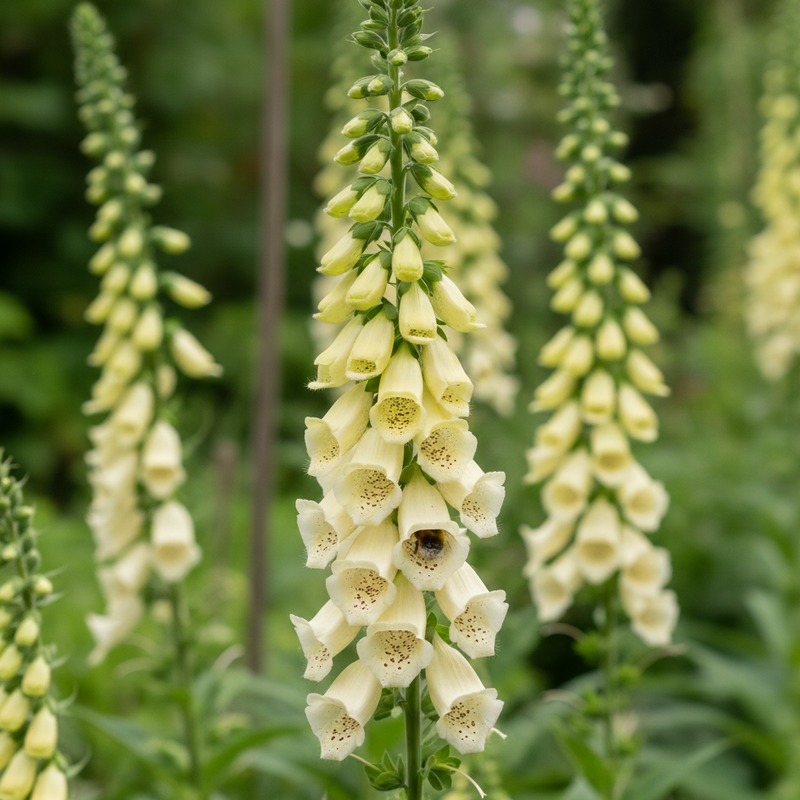
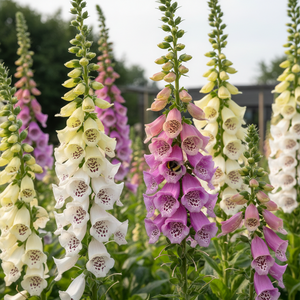
Tall majestic spikes of soft creamy-lemon Foxglove bells with chocolate speckling — the sophisticated pale Foxglove that lights up dark corners. RHS Pollinators.
About this variety
Soft creamy-lemon bells, freckled inside with small chocolate spots, on spires of 1.2 to 1.5m. It is a long way from the usual purple, and it is the one to plant where you need to lift a dark corner, because pale yellow holds light under a tree or against a north wall when stronger colours go flat.
It also does something specific in a colour scheme. Yellow and purple sit opposite each other, so a group of these among ordinary purple foxgloves is about as strong a pairing as cottage planting offers. The common carder bee is particularly attached to foxgloves and works these as hard as any.
The caution is the usual one for a colour selection. Grown near purple foxgloves it will cross, and the seedlings come back purple within a couple of generations. Keep it separate, or accept that you are re-sowing every few years.
Every part of a foxglove is highly toxic and eating any of it can be fatal. Wear gloves to handle the plants and keep the seed away from small children.
Plant alongside
Foxglove Primrose Yellow pairs beautifully with these cottage garden classics
RHS Plants for Pollinators
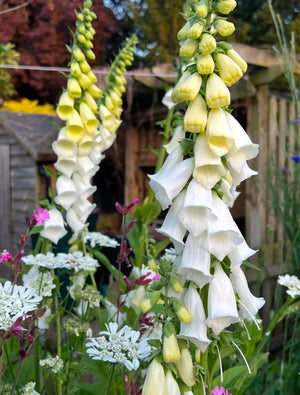
This plant has been assessed by the Royal Horticultural Society and recommended as especially beneficial to bees, butterflies and other pollinators. Growing plants like this directly supports UK pollinator populations — something close to our hearts at Salle Moor Hall Farm, where we see the difference a cottage garden full of the right plants can make.
Learn more at RHS.org.uk →