

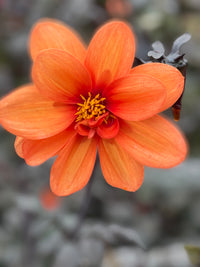
Dahlia Bishops Children Mix
Dahlia × hortensis 'Bishop's Children' — seed progeny of 'Bishop of Llandaff'
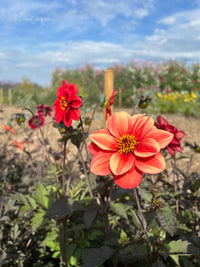
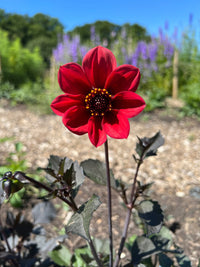
The seedling progeny of 'Bishop of Llandaff' — deep bronze-black foliage with fiery scarlet, tangerine and pink open daisies. Wildlife-friendly dahlia from seed.
About this variety
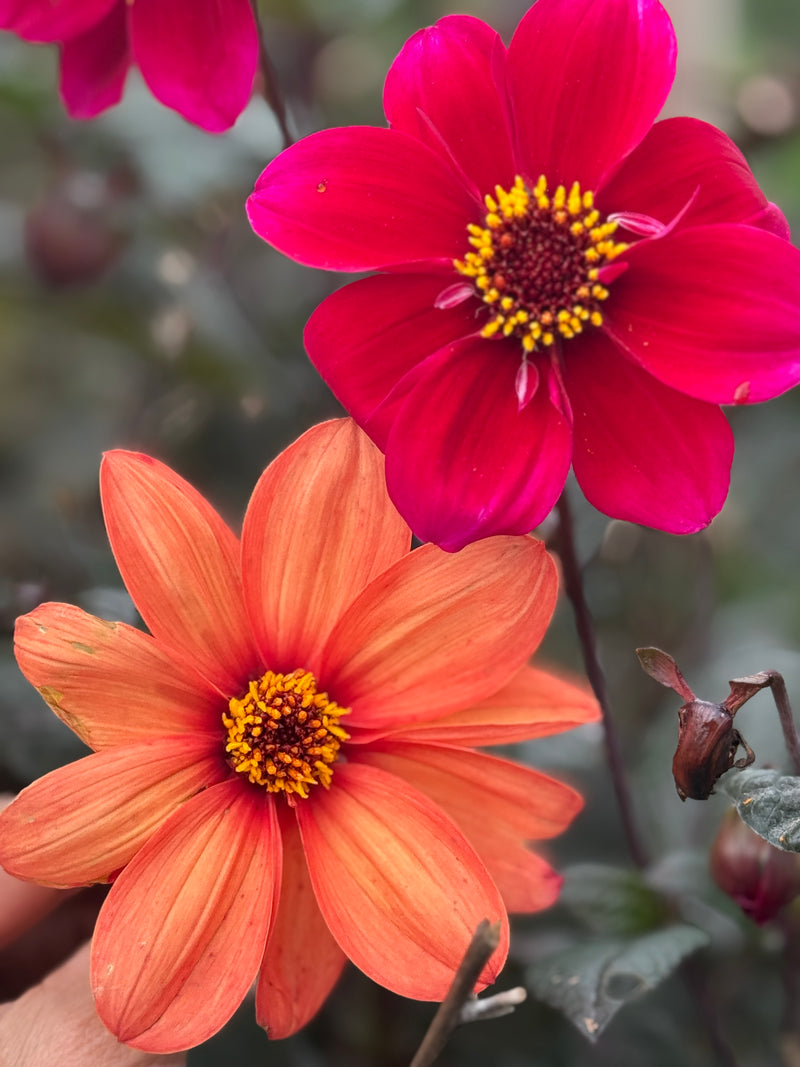
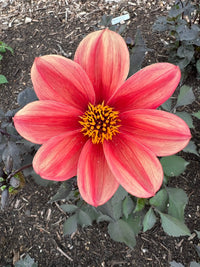
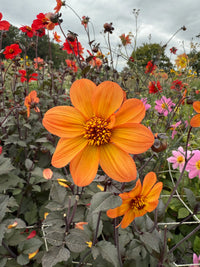
Grown from the seed of the famous 'Bishop of Llandaff' and inheriting most of what makes it good: near-black bronze foliage, and open single or semi-double daisies in scarlet, tangerine, apricot and deep pink that look lit up against it.
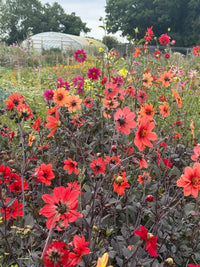
The economics are the argument. A named dahlia tuber costs the better part of ten pounds and gives you one plant. A packet of 'Bishop's Children' gives you a bed of them for less than that, at around a metre tall, flowering from midsummer to the frosts. At the end of the season you can lift the tubers, store them dry and frost-free, and replant bigger plants next spring, so the packet is a one-off cost.
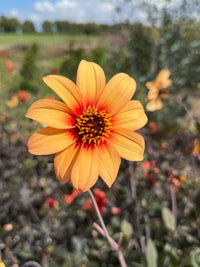
Being seedlings, they vary. Most come with the dark foliage, but a proportion will be greener, and the flower colours are a lottery within the warm range. If you want uniformity, buy a tuber. What you get here instead is a bed of individuals. The open centres are worth noting too: bees and butterflies can actually use these, which is more than can be said for the densely packed show dahlias.
Plant alongside
Dahlia Bishops Children Mix pairs beautifully with these cottage garden classics
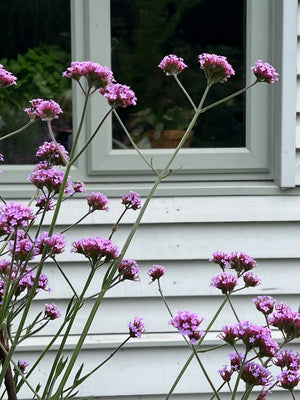

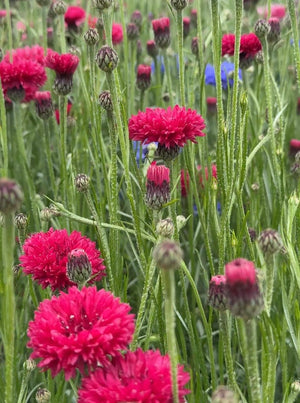
RHS Plants for Pollinators
This plant has been assessed by the Royal Horticultural Society and recommended as especially beneficial to bees, butterflies and other pollinators. Growing plants like this directly supports UK pollinator populations — something close to our hearts at Salle Moor Hall Farm, where we see the difference a cottage garden full of the right plants can make.
Learn more at RHS.org.uk →
RHS Award of Garden Merit
The RHS Award of Garden Merit is given to plants of outstanding excellence for ordinary garden use. To earn this award a plant must be of good constitution, available to the gardening public, and perform reliably across a range of UK growing conditions. It is one of the most trusted plant recommendations in British gardening and a genuine mark of quality.
Learn more at RHS.org.uk →