



Scabious Imperial Mix
Scabiosa atropurpurea 'Imperial Mix'
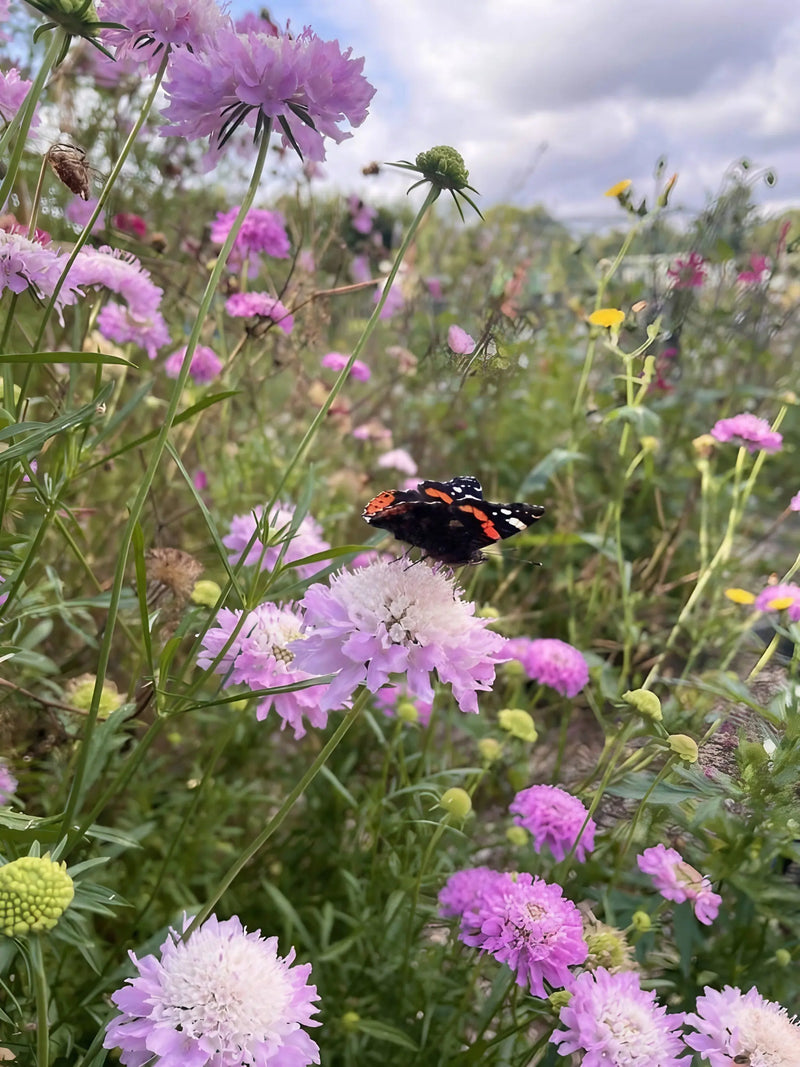
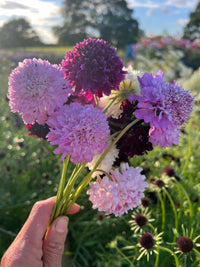
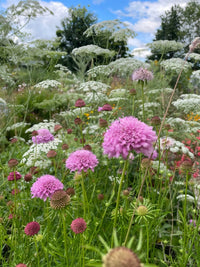
Honey-scented pincushion flowers in deep blackcurrant, crimson, lavender, salmon pink and white on tall wiry stems — the jewel-toned cottage Scabious for cutting and butterflies.
About this variety
Scabiosa atropurpurea 'Imperial Mix' Pincushion Flower 'Imperial Mix' / Cottage Scabious Mixed
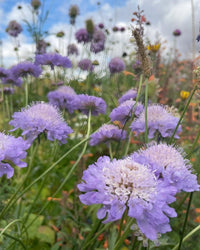
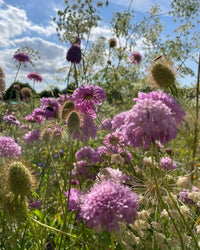
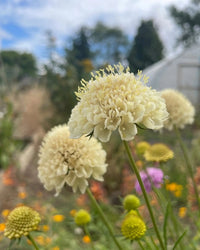
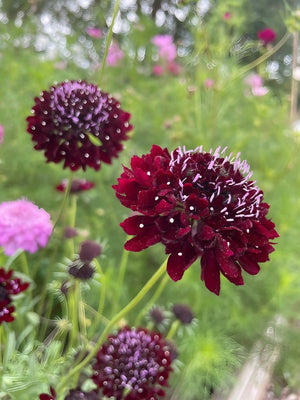
A high-performing cottage staple — tall wiry 90cm stems topped with dome-shaped honey-scented pincushion flowers in a stunning array of jewel tones including deep blackcurrant, rich crimson, soft lavender, salmon pink and pure white. Scabious 'Imperial Mix' delivers cut-and-come-again abundance from mid-summer until the first frosts, butterfly-magnet ecological value, and architectural seed heads for autumn and winter dried arrangements.
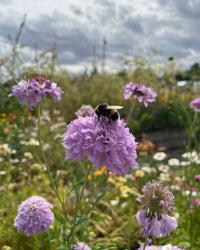
This is the colourful cottage cousin to the moody 'Black Knight'. 'Imperial Mix' delivers the full jewel-tone Scabious palette in a single packet: deep blackcurrant, rich crimson, soft lavender, salmon pink and pure white, all on uniform tall (90cm) wiry-stemmed plants that flower simultaneously from mid-summer through to the first November frosts. The flowers carry the same characteristic dome shape, the same honey-like sweet fragrance that draws butterflies in droves, and the same cut-and-come-again productivity that makes Scabious so valuable in any cutting garden. In late summer, the central "cushion" elongates into architectural globe-like seed heads that look spectacular in the winter garden or harvested for dried arrangements. Hardy annual (H4). RHS Plants for Pollinators.
A note on growing
Robust and easy given good drainage and plenty of sunlight. Sow indoors March or April for the earliest blooms, or September to overwinter for stronger plants the following year. Surface-sow onto moist compost, cover with a light dusting of vermiculite (light needed for germination). Germination 10–14 days at 18–20°C. Alternatively direct sow outdoors in May once soil has warmed.
Plant out late May in full sun. Scabious thrive in neutral to alkaline (chalky) soil and require excellent drainage — they sulk in heavy waterlogged clay. Add grit to the planting hole in clay gardens. Support the 90cm stems early with netting or pea sticks at 20–30cm height. Deadhead regularly to prevent the plant putting all its energy into seeds too early — this keeps the "pincushions" coming all summer long.
For dried seed heads: stop deadheading in late August to allow seed heads to develop. The architectural elongated globes ripen through autumn and dry beautifully for winter arrangements.
Where it shines
In cottage borders for the full jewel-tone cottage palette in a single packet. In the cutting garden as a workhorse cut-and-come-again — Scabious 'Imperial Mix' produces an abundance of cut flowers over a long season from a small garden area. In wildlife gardens for the high butterfly value (the flat dome provides a stable landing platform). As an architectural seed-pod plant. For modern meadow-style cottage borders where the relaxed pincushion form provides effortless elegance.
Plant alongside
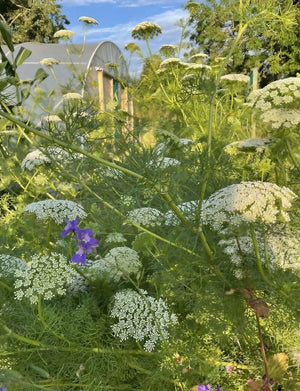
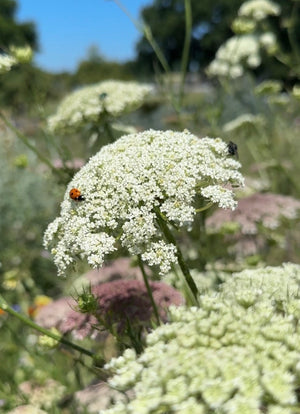
For a textural florist combination, pair 'Imperial Mix' with Ammi majus — the heavy colourful Scabious cushions against the light frothy white Ammi lace creates a sophisticated professional-looking display that's a florist's dream. With Wild Carrot (Daucus carota) for the pollinator buffet — both plants feature flat "landing pads" that butterflies and hoverflies adore, creating a structural naturalistic meadow feel lasting well into winter. With Scabious 'Black Knight' for moody tonal contrast.
Plant alongside
Scabious Imperial Mix pairs beautifully with these cottage garden classics

RHS Plants for Pollinators
This plant has been assessed by the Royal Horticultural Society and recommended as especially beneficial to bees, butterflies and other pollinators. Growing plants like this directly supports UK pollinator populations — something close to our hearts at Salle Moor Hall Farm, where we see the difference a cottage garden full of the right plants can make.
Learn more at RHS.org.uk →