

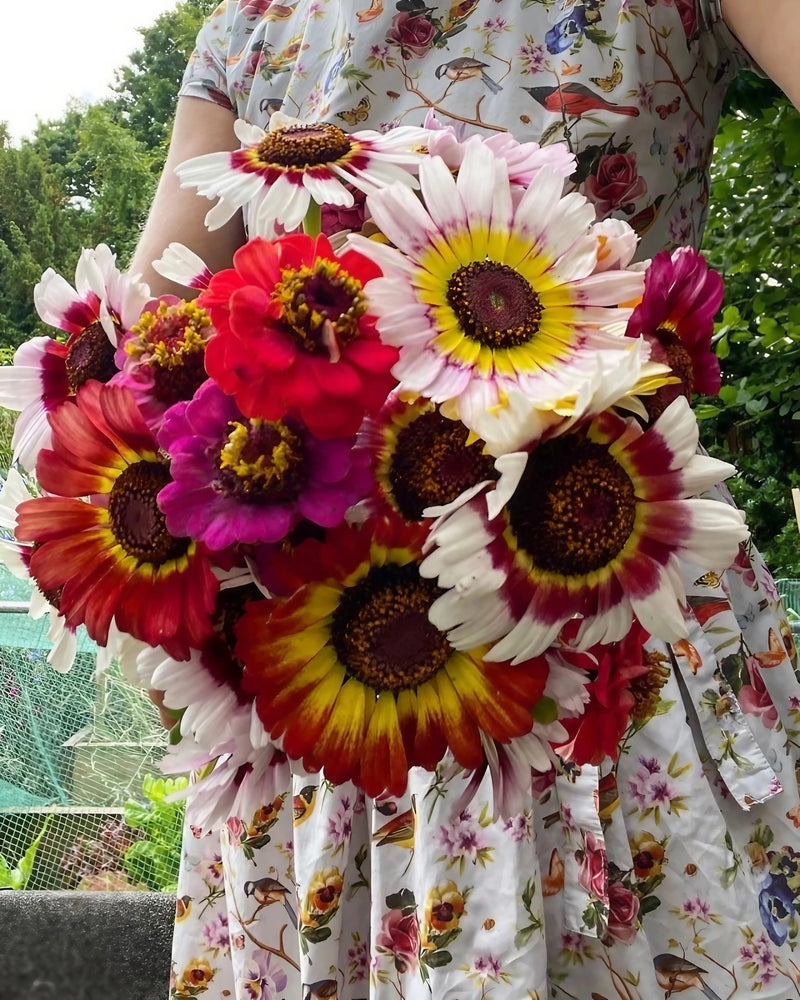

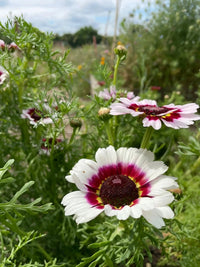
Chrysanthemum Painted Daisies
Ismelia carinata (syn. Chrysanthemum carinatum ) — Painted Daisy, Tricolour Chrysanthemum
Joyful daisies with bold bullseye rings of scarlet, mahogany, yellow, white and purple — playful retro cottage charm and exceptional pollinator value.
About this variety
Ismelia carinata (formerly Chrysanthemum carinatum) Painted Daisy / Tricolour Chrysanthemum
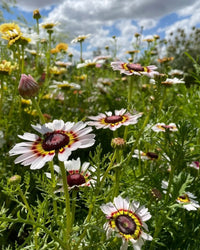
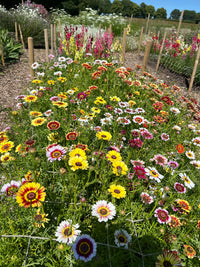
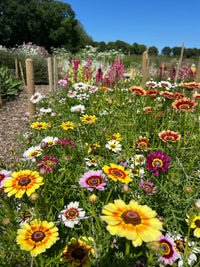
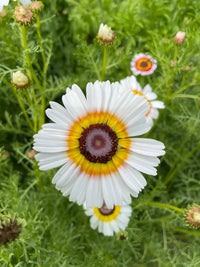
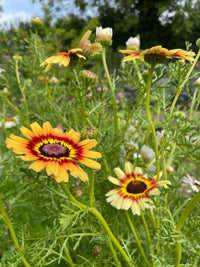
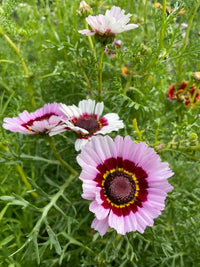
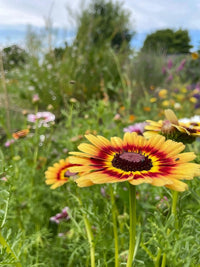
Large, daisy-form flowers with bold concentric rings of scarlet, mahogany, golden-yellow, white and purple — like miniature bullseyes or freeze-frames of a kaleidoscope — produced in genuine abundance from mid-summer through to autumn on bushy, succulent-leafed plants.
Forget everything you think you know about daisies. Painted Daisies are the cottage garden's playful, retro showstoppers — every single bloom is a tiny work of art with sharply-defined concentric rings of contrasting colour radiating out from a dark central eye. Each flower is unique in its exact pattern, and a single plant can produce hundreds across a long summer season. Despite the chrysanthemum association, these are true hardy annuals (botanically Ismelia carinata, often still sold under the older Chrysanthemum carinatum name), completing their entire life in one season — quite unlike the perennial autumn "mums". They grow into bushy, ferny-leafed mounds at 40–50cm with excellent weather resistance, attract bees in genuine numbers on sunny days, and make outstanding cut flowers with proper retro charm. The petals are also entirely edible — a colourful and unexpected garnish for summer salads.
A note on growing
Genuinely easy. Direct sow outdoors from March to May for mid-to-late summer flowers. Scatter onto finely raked soil and cover lightly (about 3mm deep). Germination is fast, typically 7–14 days. For an earlier display, start indoors from February at 18–20°C and transplant once the soil warms. Full sun, in average to lean well-drained soil. Excessive feeding produces lush green foliage at the expense of the bullseye blooms — keep them in lean ground. Space 25cm apart. To encourage bushier, more multi-stemmed plants and increase the number of flowers, pinch out the central growing tip when seedlings reach 10cm. Deadhead regularly to extend flowering.
Where it shines
In cottage borders for masses of joyful, festival-vibe colour — the multi-coloured bullseye effect reads especially well in informal, naturalistic plantings. In meadow-style schemes alongside other annuals. As cut flowers, where the retro pattern works particularly well in casual, cottage-style arrangements (and lasts well in the vase). In children's gardens and beginner plantings, where the easy-going habit and reliable performance build confidence. In wildlife and pollinator gardens, where the bee value is genuinely impressive.
Plant alongside
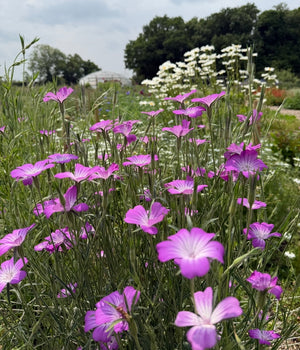
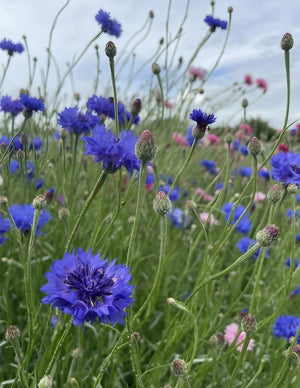
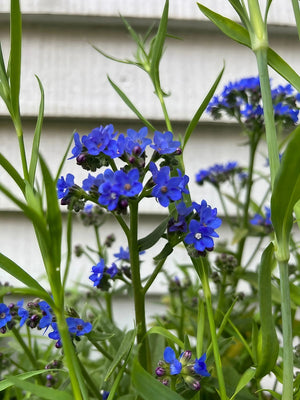
For a classic warm-tone wildflower meadow scheme, combine with the deep magenta of Corncockle (Agrostemma githago) — the colour harmony is genuinely beautiful and historically authentic. For high-contrast colour, the saturated electric blue of Cornflower 'Blue Ball' or Anchusa 'Blue Angel' picks out the blue rings in some of the painted daisy blooms. For autumn warmth, pair with Calendula 'Touch of Red'.
Plant alongside
Chrysanthemum Painted Daisies pairs beautifully with these cottage garden classics

RHS Plants for Pollinators
This plant has been assessed by the Royal Horticultural Society and recommended as especially beneficial to bees, butterflies and other pollinators. Growing plants like this directly supports UK pollinator populations — something close to our hearts at Salle Moor Hall Farm, where we see the difference a cottage garden full of the right plants can make.
Learn more at RHS.org.uk →