

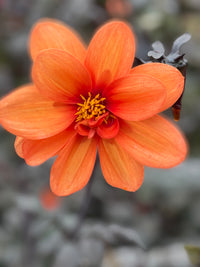
Dahlia Bishops Children Mix
Dahlia × hortensis 'Bishop's Children' — seed progeny of 'Bishop of Llandaff'
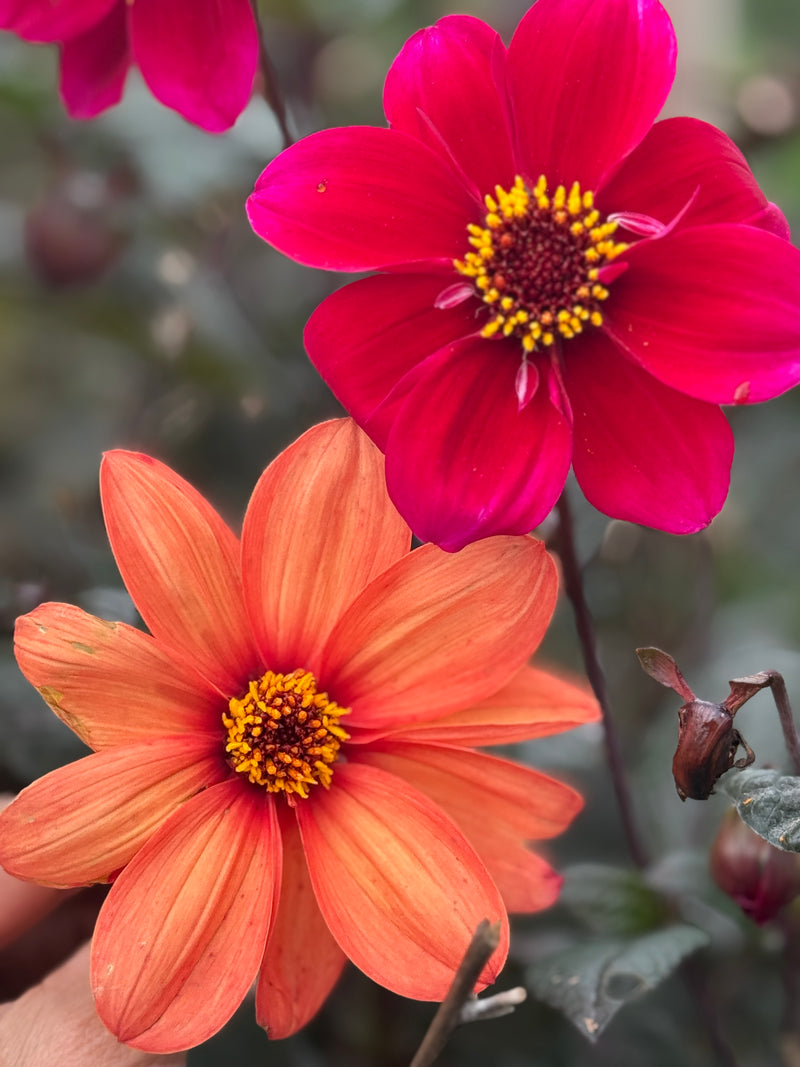
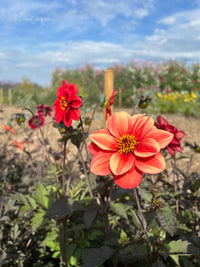
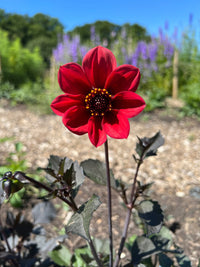
The seedling progeny of 'Bishop of Llandaff' — deep bronze-black foliage with fiery scarlet, tangerine and pink open daisies. Wildlife-friendly dahlia from seed.
About this variety
Dahlia × hortensis 'Bishop's Children' Bishop's Children Mix
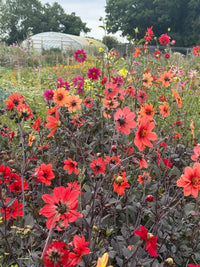
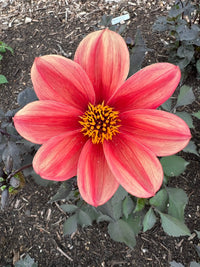
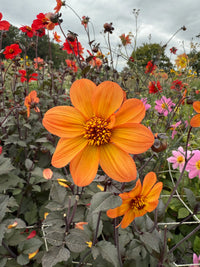
The seedling progeny of the legendary 'Bishop of Llandaff' — inheriting that celebrated deep bronze to purple-black foliage that adds instant moodiness and depth to any border, against which the open daisy flowers in fiery scarlet, tangerine, apricot and rich pink appear to glow like neon lights. 'Bishop's Children' is the dahlia that brings drama, foliage interest and serious pollinator value from a single packet of seed.
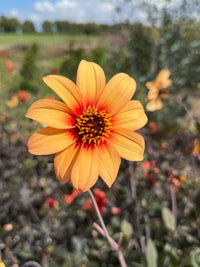
This is the dahlia for gardeners who want to grow many spectacular dahlias inexpensively from seed. While most named dahlia cultivars must be propagated from tubers (which can cost £8-15 each), 'Bishop's Children' produces a generous packet's worth of dramatic dark-foliaged plants for less than the cost of a single tuber. The flowers are mostly single or semi-double — open daisy forms with yellow centres fully accessible to bees and butterflies (unlike densely packed dahlias that lock pollinators out). Standing around 1m tall, the plants bloom from mid-summer until the first autumn frosts, and at the end of the season produce tubers that can be lifted, stored frost-free over winter, and replanted the following spring for an even more majestic display.
A note on growing
Dahlias are fast-growing and rewarding — typically reaching flowering maturity just 12–14 weeks from sowing. Sow indoors from February to April. Surface-sow onto moist seed compost and cover with a thin layer of vermiculite. Maintain 20–25°C for rapid germination — usually 7–14 days. When seedlings have 2–3 pairs of leaves, prick out into individual pots, handling only by the leaves to avoid bruising delicate stems. Harden off carefully and plant out only after all risk of frost has passed (late May or June). Full sun, deep rich fertile soil. Dahlias are hungry plants — dig in plenty of well-rotted organic matter before planting, and feed weekly with a potash-rich (tomato) fertiliser once flower buds form. Note this is the opposite of Cosmos: where Cosmos demands lean soil, Dahlias demand rich. Pinch out the central growing tip once plants reach 15cm to encourage bushy, multi-stemmed growth. Deadhead religiously to maintain continuous flowering. After the first frost blackens the foliage, lift tubers and store frost-free for the following year.
Where it shines
In hot, warm-toned borders where the bronze-black foliage creates a natural shadow-effect that makes scarlet and tangerine flowers appear to vibrate with extra intensity. In wildlife gardens, where the open-centred flowers are genuine bee and butterfly magnets (unlike densely packed double dahlias that lock pollinators out). As a structural anchor for cottage cutting borders. In late-summer planting schemes when many other annuals are winding down. The dark foliage is itself a major design asset — many gardeners grow 'Bishop's Children' as much for the leaves as for the flowers.
Plant alongside
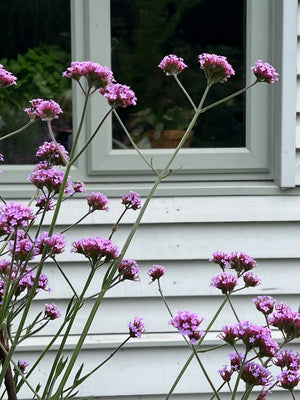
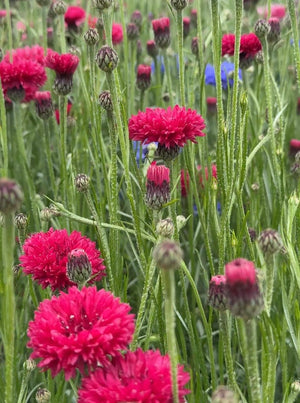
For the classic "high-end designer" combination, plant 'Bishop's Children' with Verbena bonariensis — the electric purple Verbena clusters rising through the dark bronze foliage create a layered, sophisticated effect that buzzes with wildlife. For high-contrast drama, the silk-white saucers of Cosmos 'Purity' make the dark moody foliage look even more defined. For a hot border, combine with Calendula 'Neon' and Cornflower 'Red Boy' for fiery warm tones.
Plant alongside
Dahlia Bishops Children Mix pairs beautifully with these cottage garden classics


RHS Plants for Pollinators
This plant has been assessed by the Royal Horticultural Society and recommended as especially beneficial to bees, butterflies and other pollinators. Growing plants like this directly supports UK pollinator populations — something close to our hearts at Salle Moor Hall Farm, where we see the difference a cottage garden full of the right plants can make.
Learn more at RHS.org.uk →
RHS Award of Garden Merit
The RHS Award of Garden Merit is given to plants of outstanding excellence for ordinary garden use. To earn this award a plant must be of good constitution, available to the gardening public, and perform reliably across a range of UK growing conditions. It is one of the most trusted plant recommendations in British gardening and a genuine mark of quality.
Learn more at RHS.org.uk →