

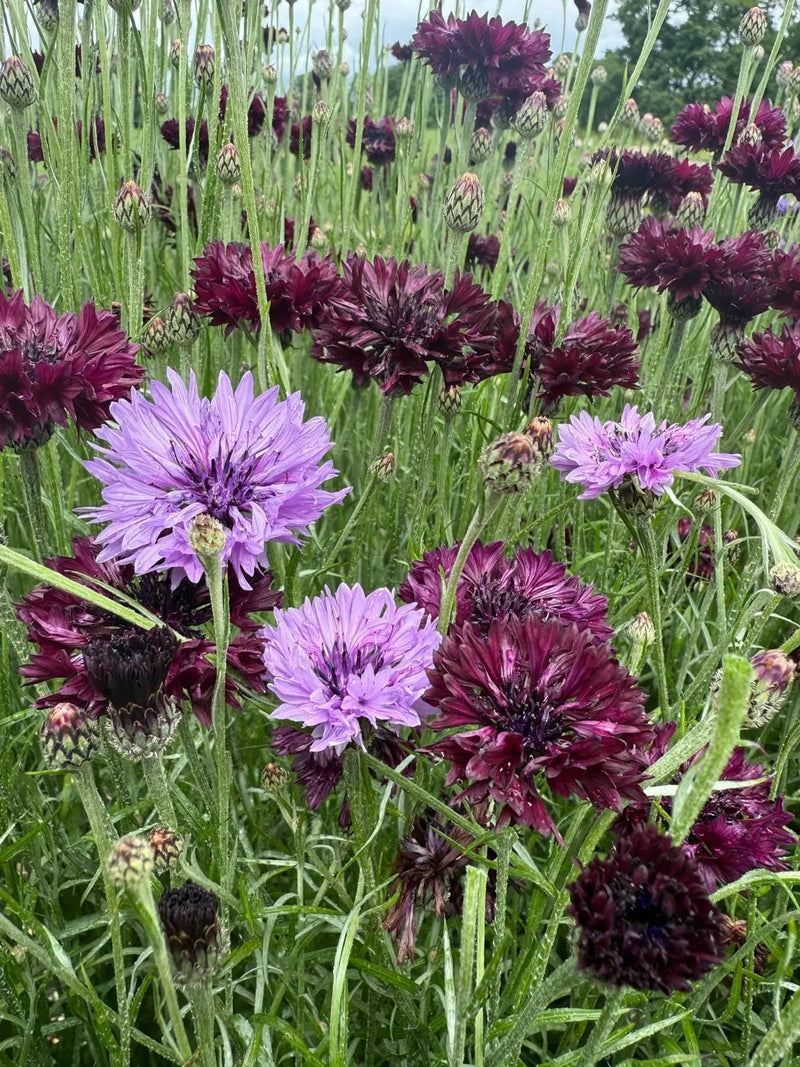
Cornflower Black & Mauve Mix
Centaurea cyanus — Cornflower, Black Ball + Mauve Ball mix
A curated blend of deep maroon 'Black Ball' and dusty lilac 'Mauve Boy' — the vintage cornflower mix that makes ready-made designer bouquets straight from the cutting patch.

About this variety
Centaurea cyanus 'Black & Mauve Mix' Cornflower 'Black & Mauve Mix'
A curated blend of two of the most sophisticated cornflowers in cultivation — the deep velvet-chocolate 'Black Ball' and the soft dusty-lilac 'Mauve Boy' — packaged together to create a vintage-style display that looks like it has been lifted straight from a Dutch oil painting.
This is the cornflower mix for gardeners who want drama and romance in the same bed. The deep maroon adds depth and gravitas; the soft mauve adds an antique glow that prevents the overall effect from feeling too heavy. Both varieties in the mix are double-flowered "Ball" types — far fuller and more substantial than wild cornflowers — with ruffled petals and proper structural presence in the vase. Growing tall on sturdy silver-green stems with characteristic feathery foliage, this mix is essentially a ready-made designer bouquet: cut a handful of stems, drop them in a jug, and you have something that looks impossibly sophisticated for the effort involved. Hardy annual (H7), surviving down to -20°C, RHS Plants for Pollinators recognised, with completely edible petals (mild and slightly sweet, beautiful on cakes and salads).
A note on growing
Like all cornflowers, these have deep taproots and resent being moved — direct sowing into the final position is essential. Sow direct outdoors in September for the strongest, earliest-flowering plants the following year, or in March to May for a continuous mid-to-late summer display. Scatter onto finely raked soil and cover lightly (just 3mm). Germination takes 14–21 days. Full sun is essential, and — counter-intuitively — Cornflowers prefer poor, lean ground. Rich, manured soil produces lush leafy growth and weak floppy stems; sandy or chalky soils are ideal. Both varieties in this mix grow tall (75–90cm), so light twiggy support (hazel or birch sticks) inserted early in the season prevents flopping after heavy rain. Deadhead weekly — or harvest for the vase — to keep the plant flowering through to autumn.
Where it shines
In the cutting garden as ready-to-bouquet substance — these are designer-quality cut flowers from a cottage garden seed packet. In moody, sophisticated cottage borders where the deep maroon and dusty mauve create a vintage aesthetic. As an autumn-sown crop where the strong root system gives genuinely bigger, more floriferous plants the following year. In any cutting patch that wants to produce its own elegant bouquets without buying anything from a florist.
Plant alongside
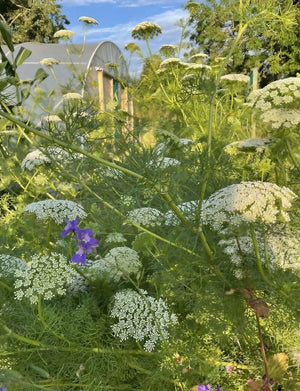
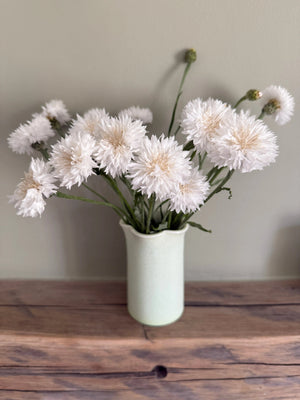
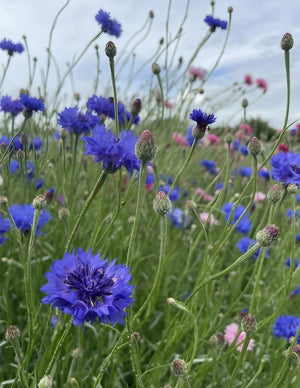
The classic cutting combination: pair this dark vintage mix with the lacy white of Ammi majus for proper florist-style contrast. The pure white snowballs of Cornflower 'Snowman' make an exceptional cool, sophisticated trio. For an all-cornflower cottage palette, combine with the electric blue of 'Blue Ball' to anchor the scheme.
Plant alongside
Cornflower Black & Mauve Mix pairs beautifully with these cottage garden classics

RHS Plants for Pollinators
This plant has been assessed by the Royal Horticultural Society and recommended as especially beneficial to bees, butterflies and other pollinators. Growing plants like this directly supports UK pollinator populations — something close to our hearts at Salle Moor Hall Farm, where we see the difference a cottage garden full of the right plants can make.
Learn more at RHS.org.uk →