

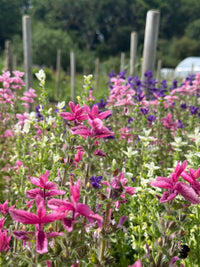
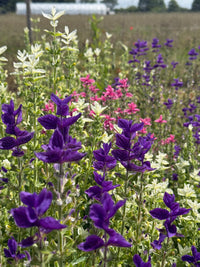
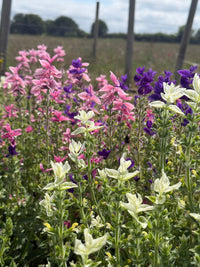
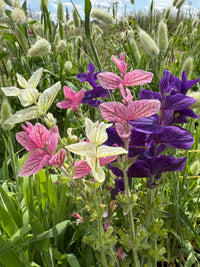
Clary Sage Crown Bouquet Mixed
Salvia viridis (syn. S. horminum ) 'Crown Bouquet Mixed'
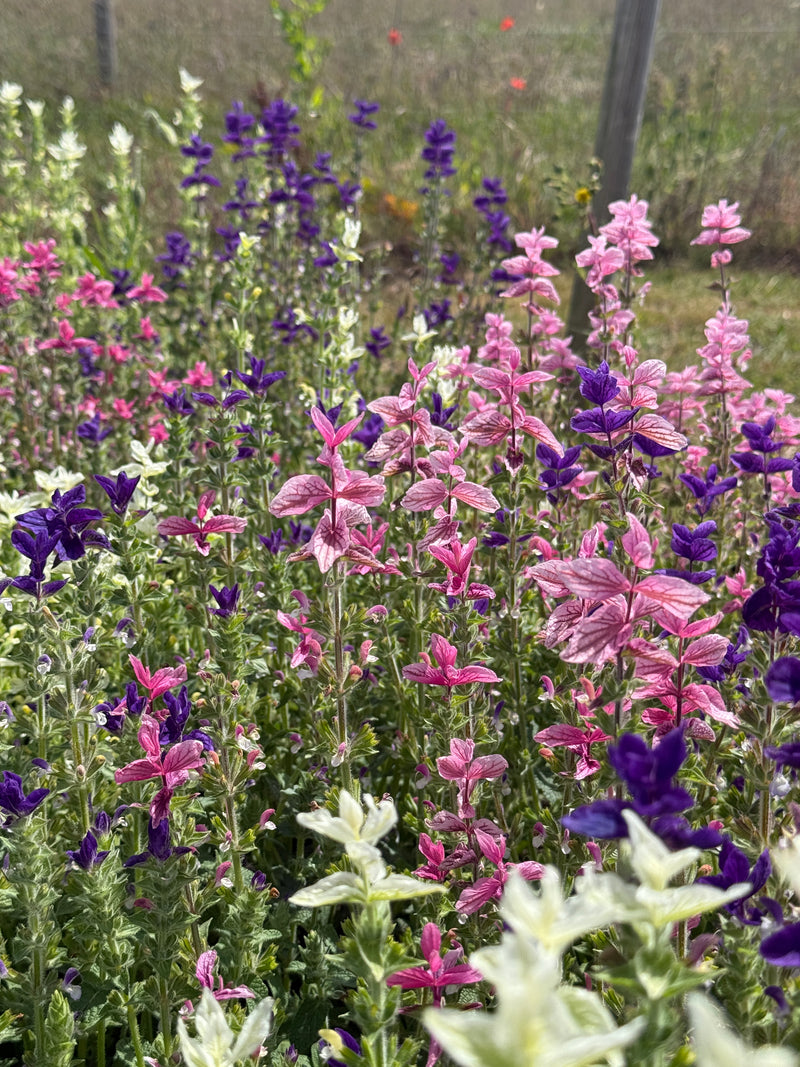
Tall architectural spikes topped with vivid pink, blue and white coloured bracts — the cottage garden's secret structural cut flower, exceptional fresh and dried.
About this variety
Salvia viridis 'Crown Bouquet Mixed' (also identified as Salvia horminum) Annual Clary Sage 'Crown Bouquet Mixed'
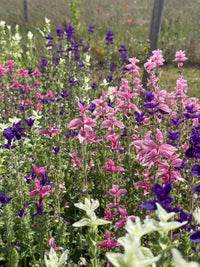
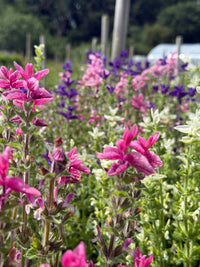
Tall, architectural spikes topped with showy bracts in vivid candy-pink, deep indigo and pure white — Clary Sage is the cottage garden's secret structural plant, providing season-long colour, exceptional pollinator value and stems that hold their colour brilliantly both fresh and dried.
This is one of those plants that surprises everyone who grows it for the first time. The colour you see — those vivid pink, blue and white "flowers" — is not actually flowers at all; it's coloured leaves (botanically, apical bracts) at the top of each stem. The true flowers are tiny and tucked inside the bracts. This biological quirk has a brilliant practical consequence: because the colour comes from leaves rather than petals, it doesn't fade quickly, isn't damaged by rain, and holds remarkably well both in the vase and after drying. Hardy annual that grows to 60–75cm with strong upright stems, flowers from June through to October on a single planting. Important note: this is Salvia viridis (the annual), not Salvia sclarea (the biennial herbal Clary Sage). The annual reaches flowering maturity in its first season. RHS Plants for Pollinators recognised — the small hidden flowers are exceptionally rich in nectar and bees adore them despite the colour being elsewhere.
A note on growing
Clary Sage is a cool-season specialist, establishing its strongest root systems in cool soil. Direct sow outdoors in September for the most architectural plants the following year, or in March to May for a summer display. Scatter onto finely raked soil and cover lightly (about 3mm). Germination takes 14–21 days. Full sun in well-drained soil — Clary Sage is drought-tolerant once established but dislikes sitting in heavy waterlogged clay over winter. If your garden has heavy soil, autumn-sow in modules or add plenty of grit before sowing. To encourage a bushy multi-stemmed habit and more cutting stems, pinch out the central growing tip when seedlings are 10–15cm tall.
Where it shines
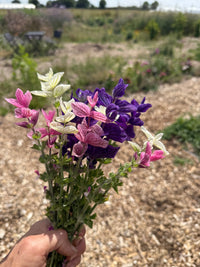
In the cutting garden as a primary structural cut flower — the vivid bracts hold their colour for two weeks or more in the vase, and the strong upright stems work in any arrangement that needs vertical structure. As a dried flower, the bracts retain their colour exceptionally well. In cottage borders, plant in groups for architectural effect. In wildlife gardens, where the high nectar content makes it one of the most useful annuals for bees. The mixed colours give planting flexibility — you can use the whole packet for a bright cottage display, or sort the seedlings as they show colour and use single colours for specific schemes.
Plant alongside
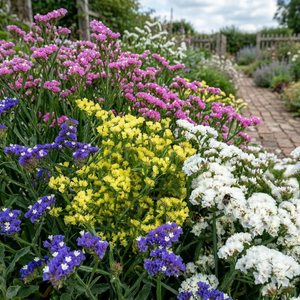
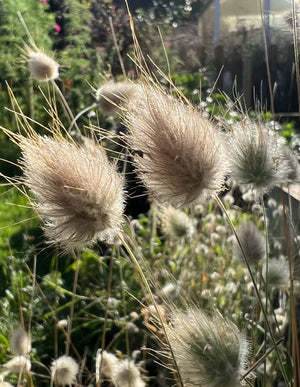
For a romantic cutting garden, combine with the lacy white of Ammi majus, the silky white of Cosmos 'Purity', and the airy clouds of Cornflower for multi-layered cottage-style bouquets. For dried flower harvesting, pair with Statice and Bunny Tails for coordinated drying. In the border, the tall vertical bracts complement the rounded heads of Achillea and the airy plumes of Bronze Fennel beautifully.
Plant alongside
Clary Sage Crown Bouquet Mixed pairs beautifully with these cottage garden classics


RHS Plants for Pollinators
This plant has been assessed by the Royal Horticultural Society and recommended as especially beneficial to bees, butterflies and other pollinators. Growing plants like this directly supports UK pollinator populations — something close to our hearts at Salle Moor Hall Farm, where we see the difference a cottage garden full of the right plants can make.
Learn more at RHS.org.uk →