


Calendula Snow Princess
Calendula officinalis 'Snow Princess' (syn. 'Ivory Princess')
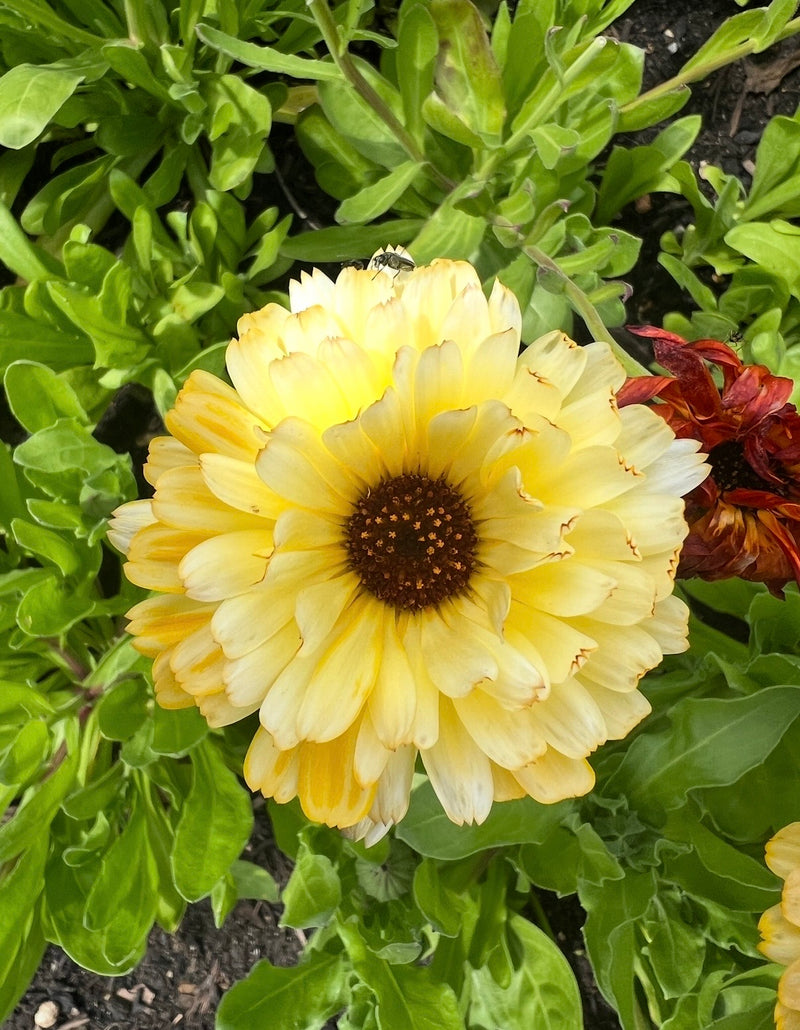
Vanilla-cream petals fading to near-white as flowers age — the breakthrough white pot marigold that brings calendula reliability to elegant pastel borders.
About this variety
Calendula officinalis 'Snow Princess' Pot Marigold 'Snow Princess' (also marketed as 'Ivory Princess')
Vanilla-cream petals with subtle lemon-yellow undersides, opening from softly yellow buds to almost pure white as the flowers age — 'Snow Princess' is a major milestone in calendula breeding, shifting the traditional orange-yellow palette into the realm of soft creams and near-whites. A cottage garden sophisticate.
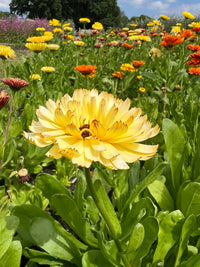
This is the calendula that doesn't look like a calendula. The semi-double, daisy-form flowers open with a gentle gradient of colour — pale yellow buds opening to vanilla-cream upper surfaces with hints of lemon on the petal undersides, fading further to nearly pure white as the flowers age. The result is a single plant carrying flowers in multiple soft tones simultaneously, all of them subtle, sophisticated and a long way from the bright tangerine most gardeners associate with pot marigolds. Tall (50–60cm) and bred for cutting, with strong upright stems and outstanding 7–10 day vase life. Hardy annual, edible petals (genuinely beautiful scattered over white-themed celebration cakes), RHS Plants for Pollinators recognised.
A note on growing
Calendula seeds need darkness to germinate. Sow at 1cm depth, covering well with soil; don't surface-sow. Direct sow from March to May, or in September for autumn-sown plants that produce earlier and bigger flowers the following year. Germination is rapid, 7–14 days at 10–20°C. Full sun, in poor to average well-drained soil. Deadhead or harvest cutting stems regularly. Without deadheading, the plant sets seed and stops flowering after a few weeks. Self-seeded 'Snow Princess' offspring generally hold the pale colouration if grown away from strongly-coloured calendula varieties — but cross-pollination with brighter sorts produces unpredictable shades.
Where it shines
In the cutting garden as a sophisticated, tall cut flower particularly valued in white and pale-scheme arrangements — the rare calendula that genuinely belongs in elegant wedding bouquets. The petals are 100% edible and the pale colour is genuinely beautiful sprinkled over celebration cakes, scattered into champagne, or used to garnish white-themed desserts. In pastel cottage borders, where it provides reliable, generous cream-toned colour through the entire summer.
Plant alongside
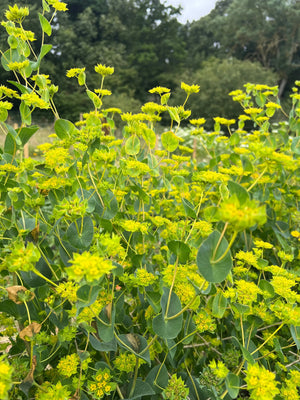
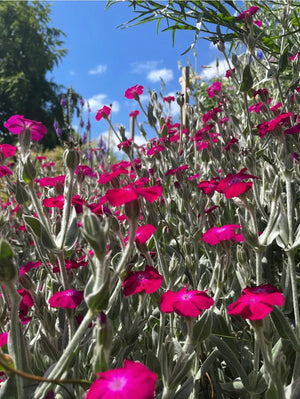
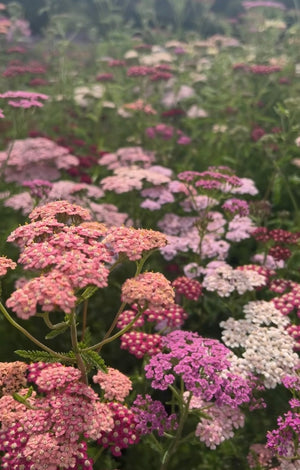
For an all-pale cutting scheme, combine with Ammi majus, Calendula 'Pacific Beauty Cream' and the airy lime-green of Bupleurum 'Griffithii'. For cottage borders, pair with the soft pink Achillea 'Pastel Mixed' and the silvery foliage of Lychnis coronaria.
Plant alongside
Calendula Snow Princess pairs beautifully with these cottage garden classics

RHS Plants for Pollinators
This plant has been assessed by the Royal Horticultural Society and recommended as especially beneficial to bees, butterflies and other pollinators. Growing plants like this directly supports UK pollinator populations — something close to our hearts at Salle Moor Hall Farm, where we see the difference a cottage garden full of the right plants can make.
Learn more at RHS.org.uk →