



Calendula Wintersun
Calendula officinalis 'Wintersun'
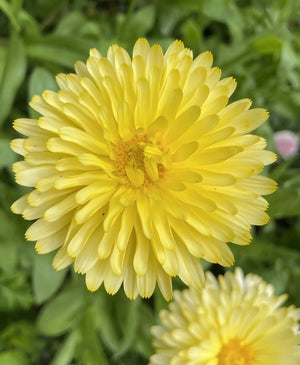
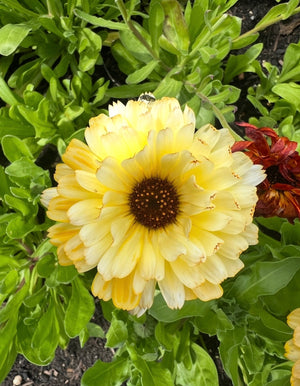
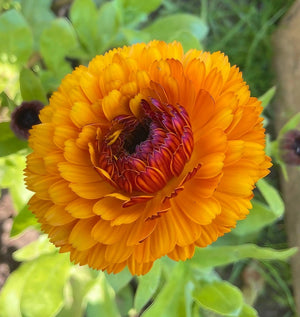
Bright golden flowers through November, December, January and February — the rare cottage annual that brings genuine winter colour from late summer sowings.
About this variety
A calendula bred to flower in winter. Sown in late summer or early autumn, the plants bulk up while there is still warmth in the ground and then produce golden flowers through November, December, January and February, which is an unlikely thing to have in a British garden.
The sowing window is everything. Sow it in spring and you have an ordinary summer pot marigold. Miss the late-summer sowing and the whole point of the variety is lost. Get it in by early September and you have flowers when nothing else is doing anything at all.
Be realistic about what winter flowering means. The blooms are smaller than a summer calendula, around 5cm, and they come in flushes rather than continuously. A hard frost will knock them flat and they pick up again in the next mild spell. What matters is that there is something gold in the garden in January, and that bumblebee queens emerging on a mild winter day have somewhere to feed, which is genuinely scarce at that time of year. It cuts well too, and lasts a surprisingly long time in a cold room.
Plant alongside
Calendula Wintersun pairs beautifully with these cottage garden classics

RHS Plants for Pollinators
This plant has been assessed by the Royal Horticultural Society and recommended as especially beneficial to bees, butterflies and other pollinators. Growing plants like this directly supports UK pollinator populations — something close to our hearts at Salle Moor Hall Farm, where we see the difference a cottage garden full of the right plants can make.
Learn more at RHS.org.uk →