

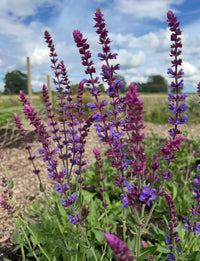
Salvia Violet Queen
Salvia nemorosa 'Violet Queen' -- Woodland Sage
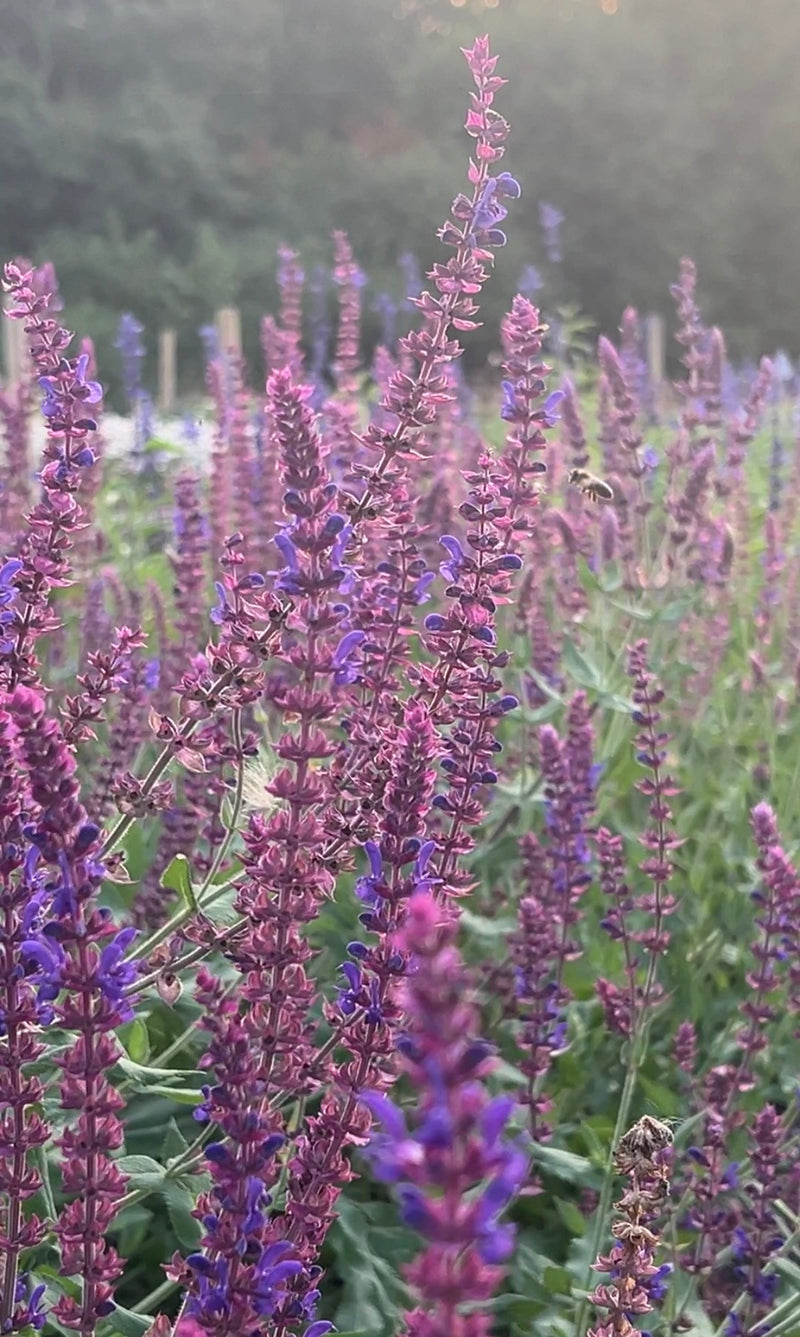
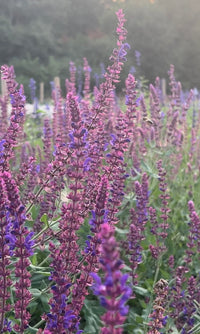
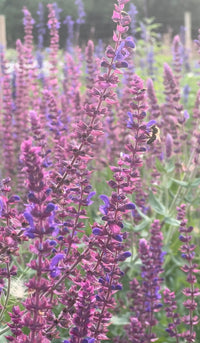
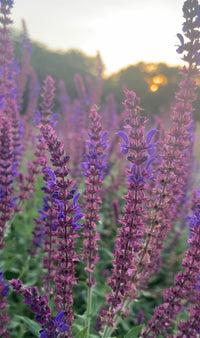
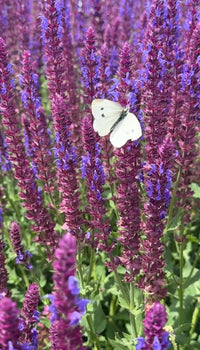
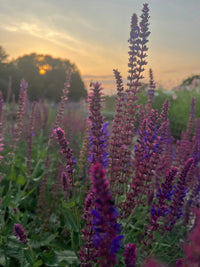
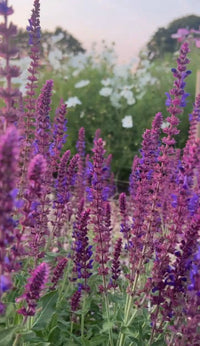
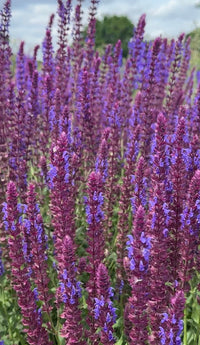
Dense erect violet-purple spikes on sturdy stems — the permanent perennial vertical for the cottage border. Hardy perennial (to -20°C) that flowers in its first year.
About this variety
Dense erect spikes of intense violet-purple on sturdy stems at 45 to 60cm, and about as strong a natural vertical as any perennial will give you. Unusually, it flowers in its first year from an early sowing rather than making you wait until year two.
It is a genuine long-term plant. Hardy well below anything Britain produces, the crown expands each year, and a clump gives more spikes and better structure for a decade or more.
Cold is not what kills it. Winter wet is. It needs free-draining ground, and on clay it wants generous grit in the planting hole, a slight slope or a raised bed. That single decision determines whether it lasts.
Two optional tricks. Cut the developing stems back by a third in late May and you get shorter, sturdier spikes that flower a little later, which is worth doing in an exposed garden. And shear the whole plant to the ground when the first flush finishes in August; it regrows and throws a second flush in September and October, when a good deal else is over.
Plant alongside
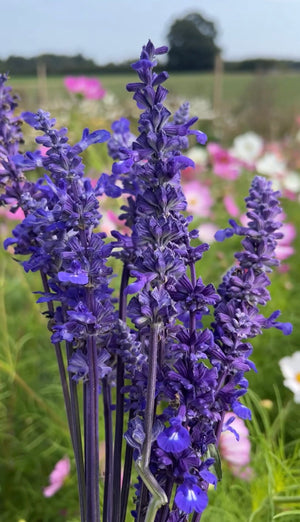
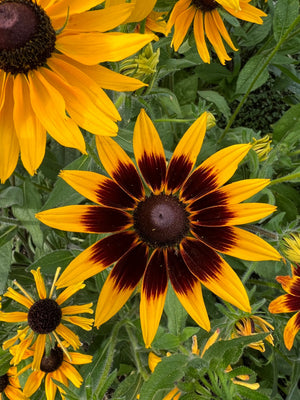
Salvia Violet Queen pairs beautifully with these cottage garden classics


RHS Plants for Pollinators
This plant has been assessed by the Royal Horticultural Society and recommended as especially beneficial to bees, butterflies and other pollinators. Growing plants like this directly supports UK pollinator populations — something close to our hearts at Salle Moor Hall Farm, where we see the difference a cottage garden full of the right plants can make.
Learn more at RHS.org.uk →