
Daucus Carota (Wild Carrot)
Daucus carota — wild carrot; Queen Anne's Lace; ancestor of cultivated carrot
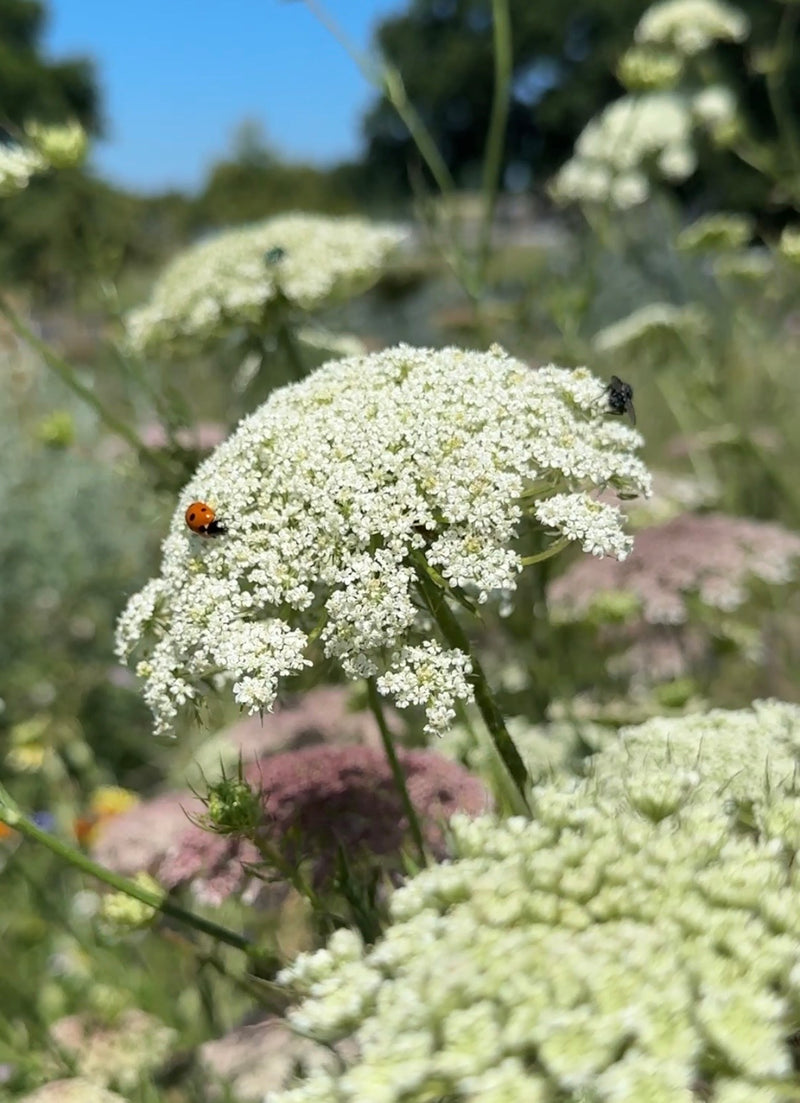
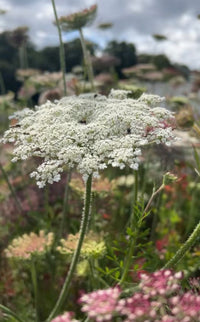
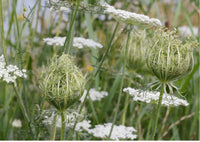
Classic lacy white umbels on tall slender stems, with dramatic "bird's nest" autumn seed heads — the iconic native British hedgerow Wild Carrot for meadows and cottage borders.
About this variety
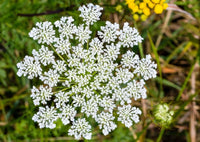
The native wild carrot, the plant every cultivated carrot came from, and the lacy white umbel you see along every country lane in July. Flat heads of dozens of tiny flowers on branching stems at 60 to 90cm above ferny foliage.
Look at the middle of an umbel and you will usually find one single dark purple floret sitting among all the white. Nobody is entirely certain why. The best guess is that it mimics an insect already feeding and draws others in. It is the kind of detail that makes people stop and look twice.
It is a biennial, so a rosette in year one and flowers the next June to August. As the seed sets, the umbels curl inward into tight bird's-nest heads that turn warm brown and stand well into winter, and those are as useful in an autumn arrangement as the flowers are in a summer one.
Two safety points. The sap can irritate skin in sunlight, so wear gloves when cutting in bright weather. More importantly, wild carrot resembles hemlock. Wild carrot has hairy stems and smells of carrot when crushed; hemlock has smooth purple-blotched stems and a foul musty smell. If you are in any doubt at all, do not handle it.
Plant alongside
Daucus Carota (Wild Carrot) pairs beautifully with these cottage garden classics