

Poppy Lilac PomPom
Papaver somniferum (Paeoniflorum group) 'Lilac Pompom'
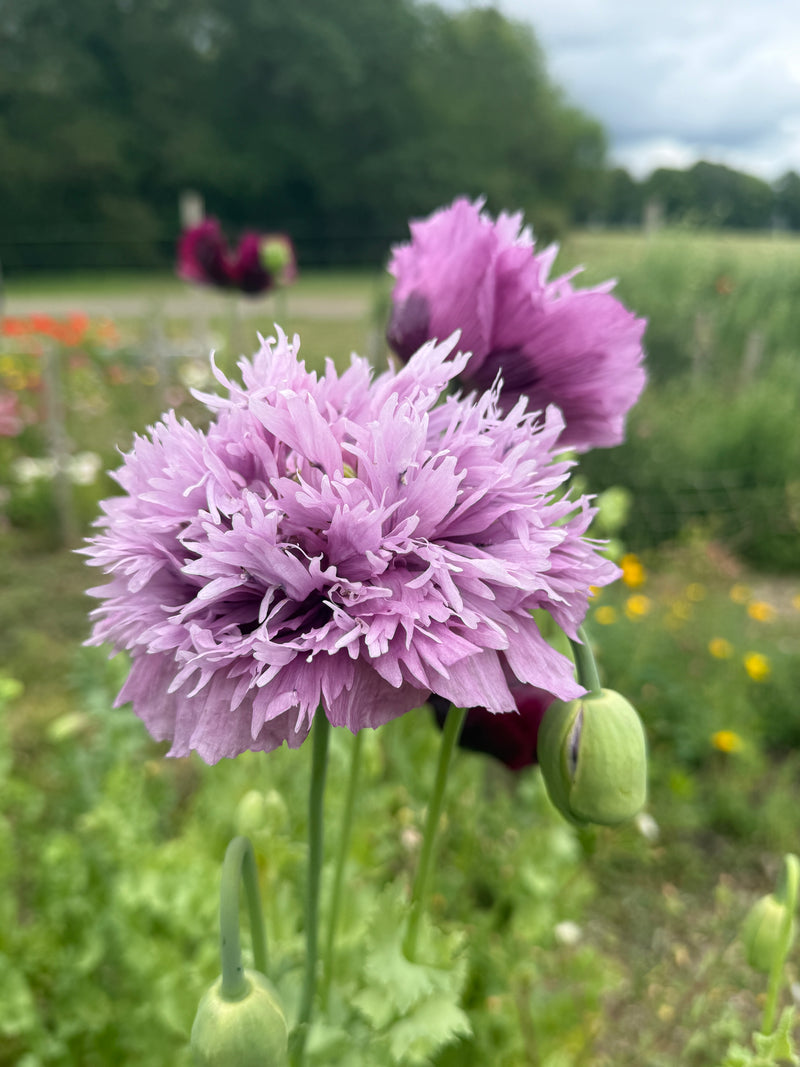
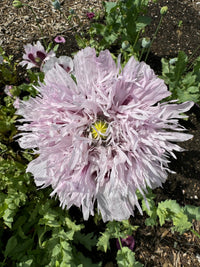
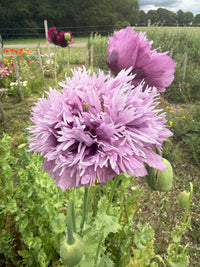
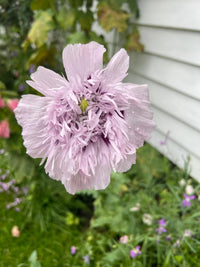
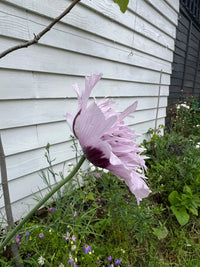
Huge fully-double pom-pom blooms in soft lavender-pink — the most romantic Papaver somniferum, with magnificent architectural pepper-pot dried seed pods.
About this variety
Enormous fully double pom-poms in soft lavender-pink, packed with hundreds of finely ruffled petals into something between a powder puff and a small peony, above the usual silver-blue somniferum foliage at 75cm to a metre.
The colour is the useful thing about it. Clear lavender-pink, neither cold nor warm, which means it sits with almost any cottage palette rather than dictating one, and it is the soft counterpart to the moody 'Black Peony' and 'Lauren's Grape'. The pepper-pot seed heads that follow are among the most reliable architectural stems we cut here for the dried range.
Sow direct, because poppies do not transplant. Surface-sow uncovered, autumn for preference. The thinning matters more on a double than on a single: thin to 30cm when the seedlings are about 5cm tall, or you get spindly plants and half-size heads. To cut it, take the bud as it splits and sear the stem end immediately.
All parts are toxic except the fully dried seed. Keep it from children and pets.
Plant alongside
Poppy Lilac PomPom pairs beautifully with these cottage garden classics

RHS Plants for Pollinators
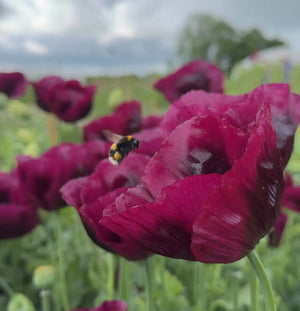
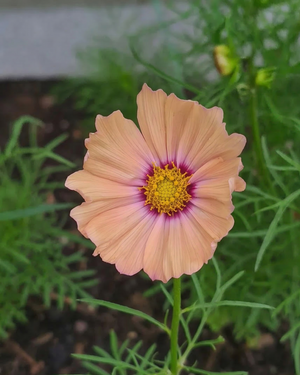
This plant has been assessed by the Royal Horticultural Society and recommended as especially beneficial to bees, butterflies and other pollinators. Growing plants like this directly supports UK pollinator populations — something close to our hearts at Salle Moor Hall Farm, where we see the difference a cottage garden full of the right plants can make.
Learn more at RHS.org.uk →