

Daucus Carota Dara
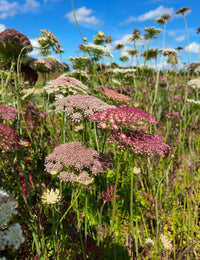
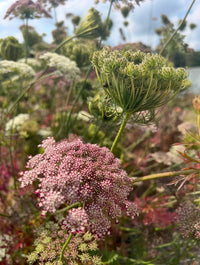
Daucus carota 'Dara' — ornamental wild carrot; the florist's dark umbel
Lacy flat-topped umbels in dusty pink, burgundy and deep chocolate — the trendiest cut flower in modern floristry, with 7–10 day vase life and exceptional pollinator value.
About this variety
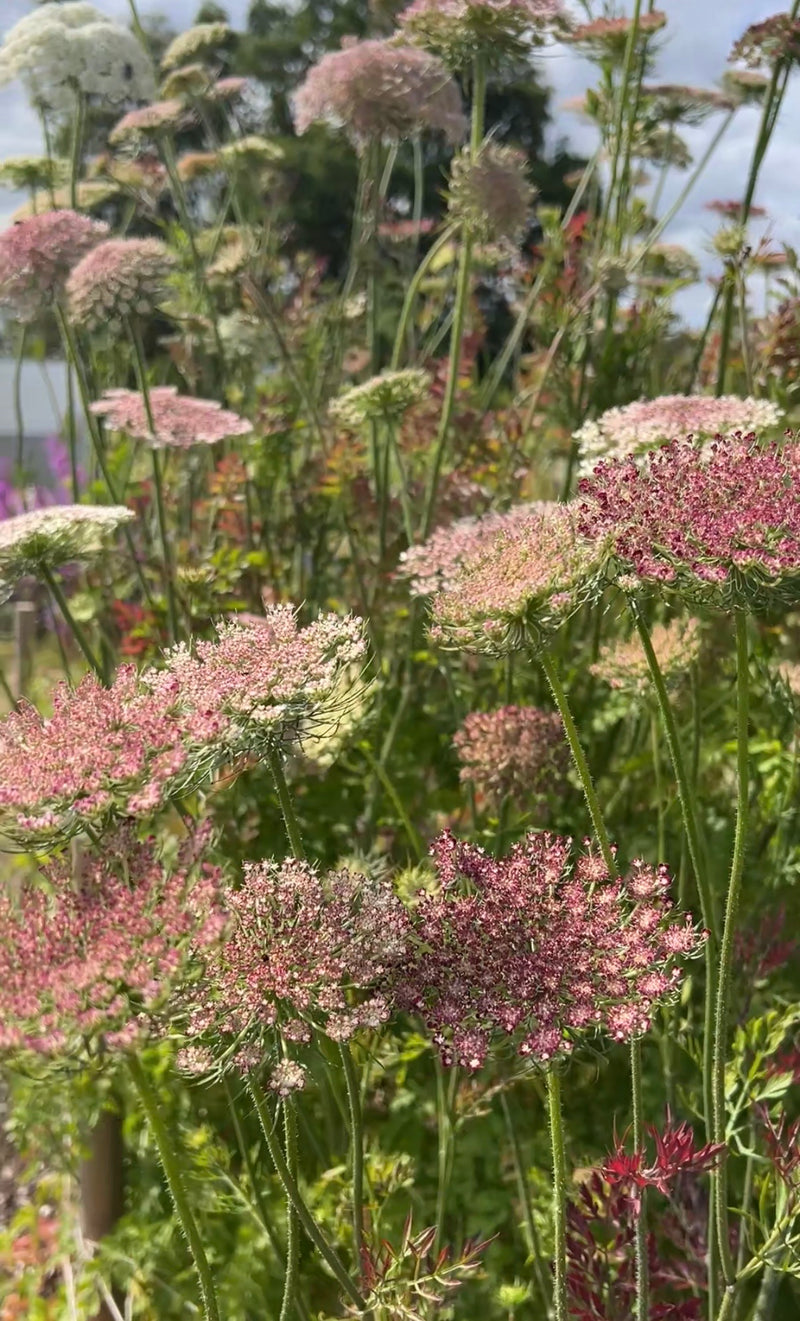
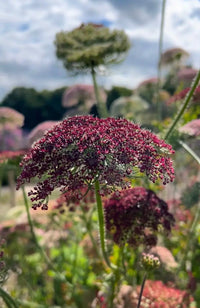
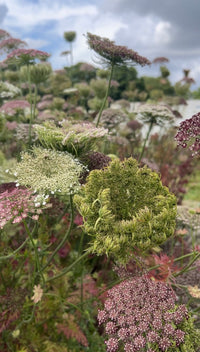
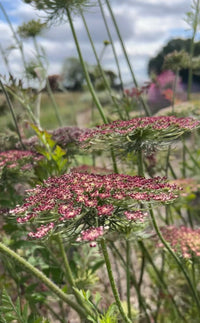
The coloured wild carrot, and currently one of the most asked-for cut flowers there is. Same lacy flat umbel as the white species, but in dusty old-rose, smoky burgundy and deep chocolate brown, often with all three shades on one plant at once as the heads age.
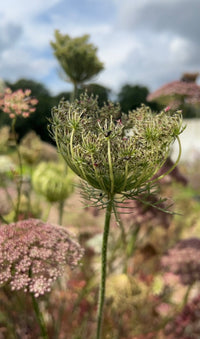
Each umbel holds something close to a thousand tiny flowers in a cluster of five to ten centimetres, on airy stems at 80 to 100cm. Vase life runs seven to ten days and the dried seed heads keep their warm burgundy, so one sowing does duty in summer bouquets and autumn wreaths both.
It is technically a biennial and can be handled either way. Sown in spring it will usually flower the same year as an annual; sown in late summer it overwinters and comes back earlier, taller and heavier the following June. The colour deepens as the season goes on, and in a cool dull summer it can stay disappointingly pale.
The sap can irritate skin in sunlight, so wear gloves when cutting on a bright day. And if you are working anywhere near wild plants, learn to tell wild carrot from hemlock before you touch anything.
Plant alongside
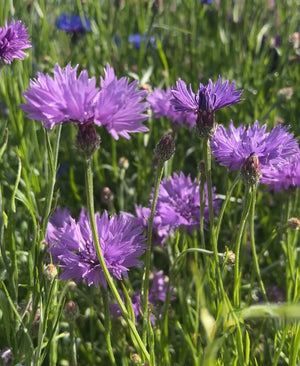
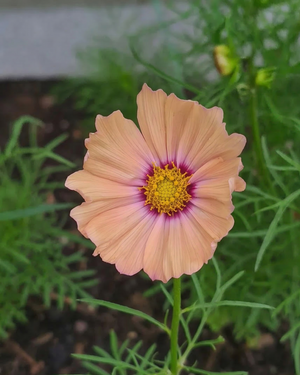
Daucus Carota Dara pairs beautifully with these cottage garden classics


RHS Plants for Pollinators
This plant has been assessed by the Royal Horticultural Society and recommended as especially beneficial to bees, butterflies and other pollinators. Growing plants like this directly supports UK pollinator populations — something close to our hearts at Salle Moor Hall Farm, where we see the difference a cottage garden full of the right plants can make.
Learn more at RHS.org.uk →