

Eryngium (Sea Holly)
Eryngium planum — flat sea holly; native Eastern European steppe
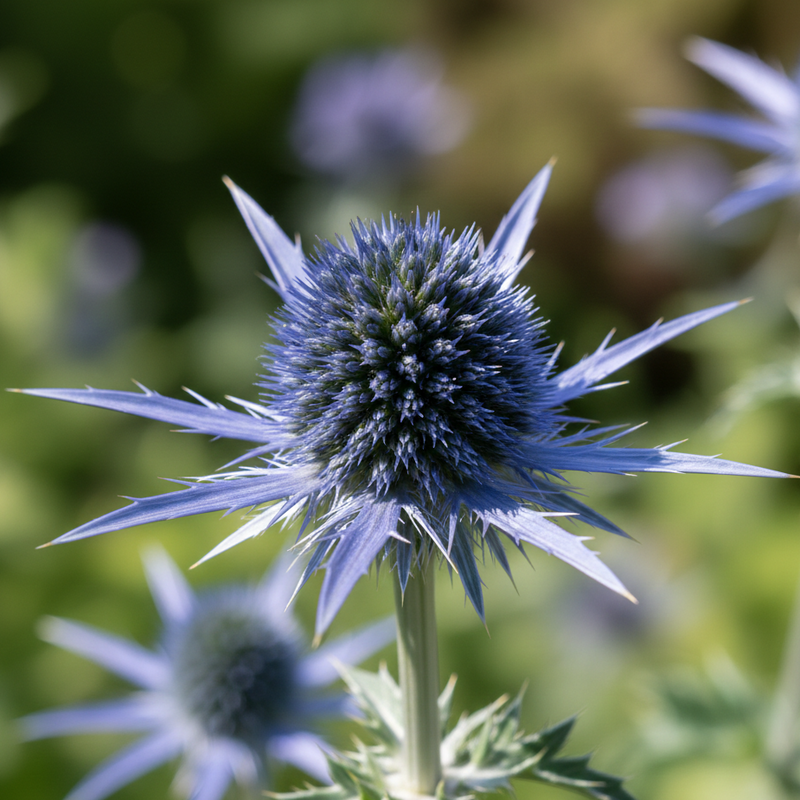
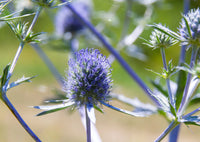
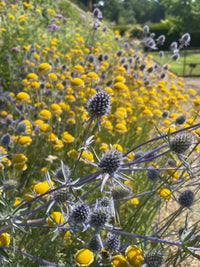
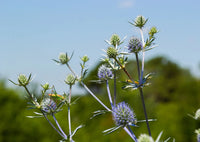
Steel-blue spiky thistle-like flowers above architectural silvery-blue stems — the dramatic Sea Holly that thrives on poor dry ground. Outstanding cut and dried.
About this variety
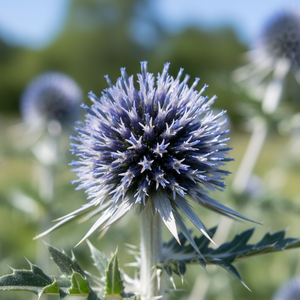
Cones of tiny florets surrounded by a ruff of spiky bracts, the whole thing in metallic steel-blue, above branching silvery-blue stems at 70 to 90cm. It reads as sculpture more than as a flower, which is exactly why it works next to soft rounded things.
The colour arrives in June and the central florets finish by August, but the bracts stay blue and hold their shape well into autumn, so the structural value runs far longer than the flowering. Dried, it keeps that metallic blue for years, and we use a good deal of it in the dried range here.
It is as drought-tolerant as any perennial we sell and it tolerates salt, so it is a genuine coastal plant. What it will not tolerate is wet feet in winter, which is what kills it in a heavy garden. It makes a long taproot early, so it hates being moved and does best sown where it is to grow, or planted out young. Expect two years before it looks like anything.
The bracts are genuinely sharp. Wear gloves to cut it.
Plant alongside
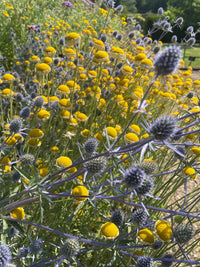
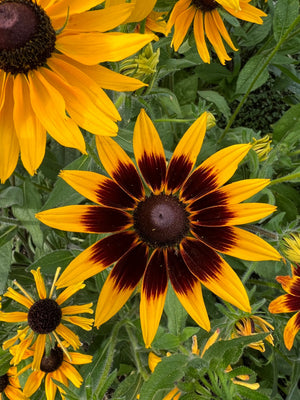
Eryngium (Sea Holly) pairs beautifully with these cottage garden classics

RHS Plants for Pollinators
This plant has been assessed by the Royal Horticultural Society and recommended as especially beneficial to bees, butterflies and other pollinators. Growing plants like this directly supports UK pollinator populations — something close to our hearts at Salle Moor Hall Farm, where we see the difference a cottage garden full of the right plants can make.
Learn more at RHS.org.uk →