

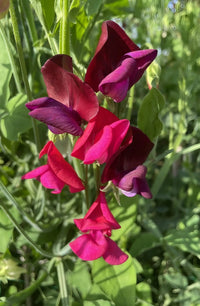
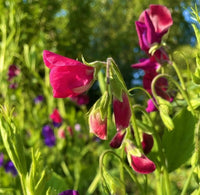
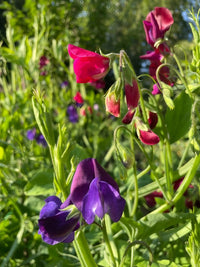
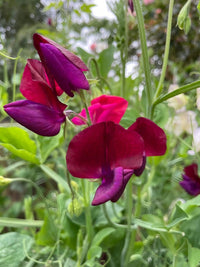
Sweet Pea Old Spice Starry Night
Lathyrus odoratus 'Old Spice Starry Night' — Grandiflora type; Old Spice series
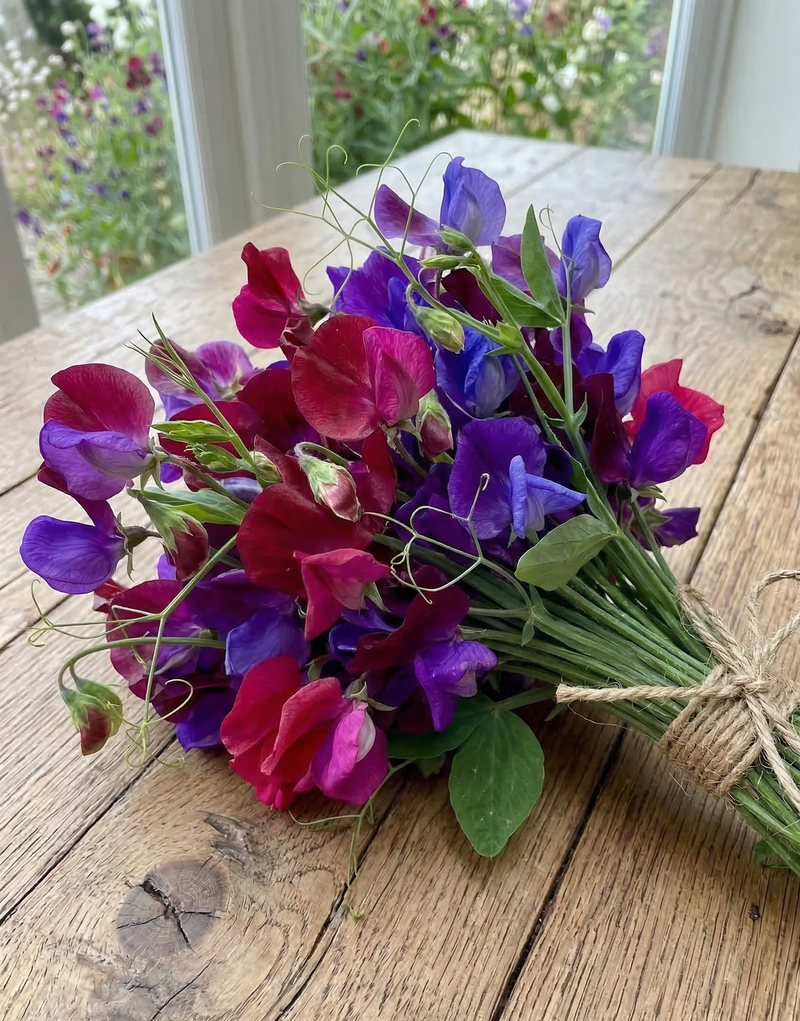
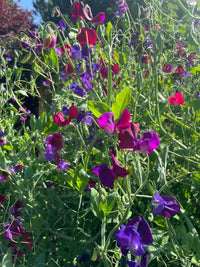
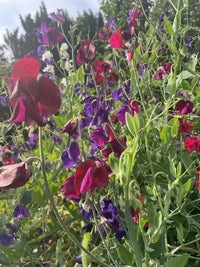
Velvety bicolour blooms in deep violet, indigo, maroon and purple — the heritage Old Spice Sweet Pea with double the perfume of modern types and superior heat tolerance.
About this variety
Lathyrus odoratus 'Old Spice Starry Night' Heat-Tolerant Grandiflora Sweet Pea 'Starry Night'
The heat-tolerant, intensely-fragrant heritage Sweet Pea — velvety bicolour blooms in moody shades of deep violet, indigo, maroon and purple. Sweet Pea 'Old Spice Starry Night' is the most powerfully fragrant variety in the cottage range, combining heritage Grandiflora scent intensity with modern heat tolerance, ensuring blooms and that incredible perfume long after standard varieties have faded in July heat.
The 'Old Spice' series is famous for bringing back the original powerful fragrance of wild Sweet Peas, combined with modern heat tolerance. The 'Starry Night' selection focuses on the moodiest, most dramatic shades in the spectrum: velvety bicolours of deep violet, indigo, maroon and purple — making it Bishy's most-loved Sweet Pea (the staff favourite). These are "Grandiflora" types — meaning the flowers are slightly smaller than the frilly Spencer exhibition types but they pack double the perfume. Uniquely, they are bred to withstand summer heat better than standard varieties, ensuring continued flowering and fragrance long after other Sweet Peas have faded in the July sun. Hardy annual.
Heat tolerance advantage: in increasingly hot UK summers, the 'Old Spice' advantage is genuine and increasingly valuable — gardeners in southern England specifically value 'Starry Night' for extending the Sweet Pea season into August when standard Spencer types have stopped flowering.
A note on growing
Standard Sweet Pea cultivation (autumn sow October–November for strongest plants, or spring sow January–March; soak seeds 2–4 hours; plant out April–May in full sun in rich fertile soil; provide sturdy support immediately; pick daily).
⚠️ Toxicity warning: seeds toxic if eaten in large quantities. Unlike vegetable garden peas, these pods are not for eating.
Where it shines
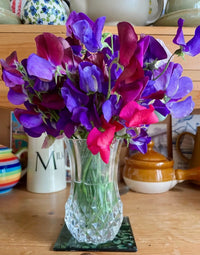
In cottage cutting gardens specifically as the fragrance variety — Old Spice types pack the most powerful Sweet Pea perfume. In heatwave-resilient cottage borders — 'Starry Night' continues flowering in conditions that defeat standard Sweet Pea types. As a moody dark anchor in any climbing scheme, where the deep velvet bicolours provide depth and sophistication. As cut flowers in the kitchen — a small bunch in a jam jar provides days of room fragrance.
Plant alongside
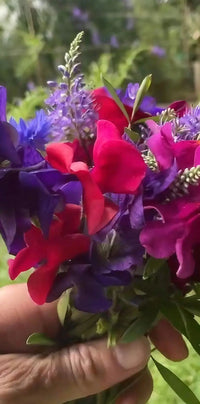
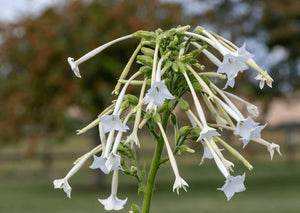
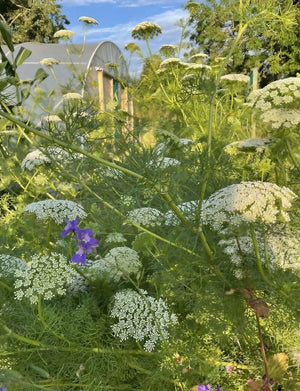
For a scented evening garden, combine 'Starry Night' with Nicotiana 'White Trumpets' — the pure white provides a stark high-contrast backdrop to the dark violet Sweet Peas, and both release powerful scents in the evening. With Ammi majus (Queen Anne's Lace) — the vase essential: if you're cutting these dark flowers for the house, you need a light filler to lift them; growing Ammi majus nearby ensures you always have the perfect white lace to arrange with your dark velvets. With Cornflower 'Black Ball' for matching moody cottage drama in two different cottage flower forms.
Plant alongside
Sweet Pea Old Spice Starry Night pairs beautifully with these cottage garden classics


RHS Plants for Pollinators
This plant has been assessed by the Royal Horticultural Society and recommended as especially beneficial to bees, butterflies and other pollinators. Growing plants like this directly supports UK pollinator populations — something close to our hearts at Salle Moor Hall Farm, where we see the difference a cottage garden full of the right plants can make.
Learn more at RHS.org.uk →