

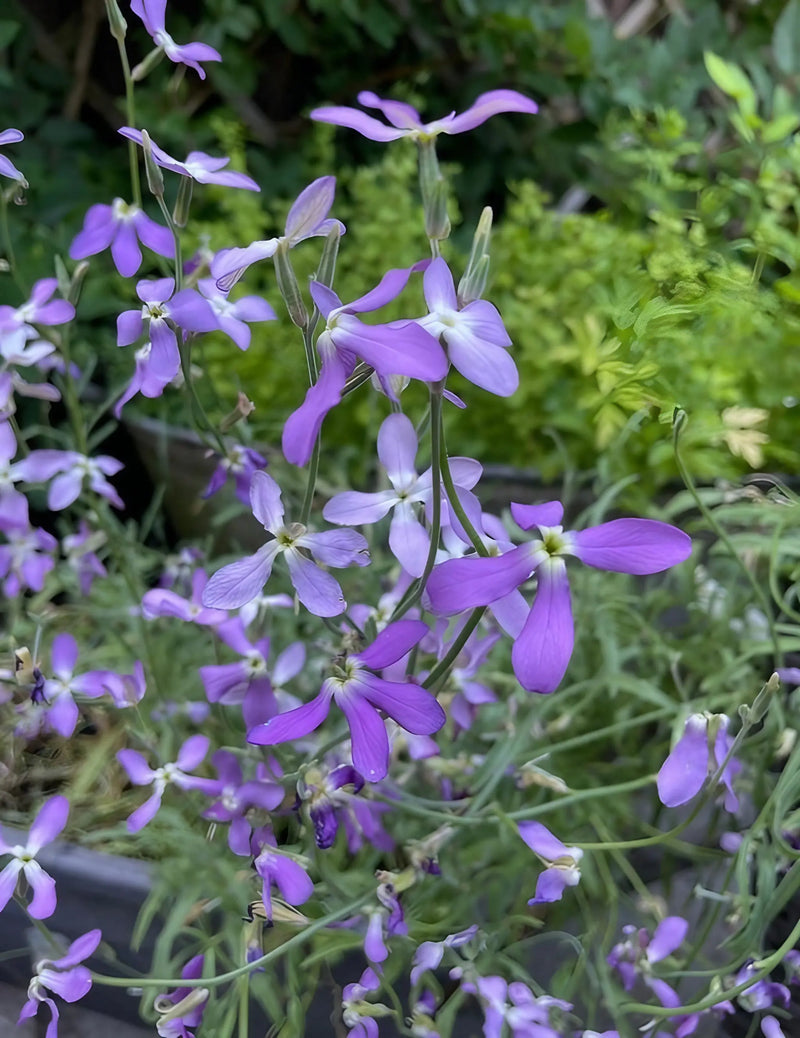
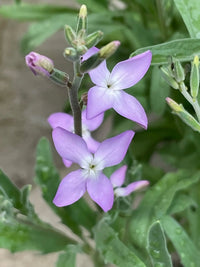
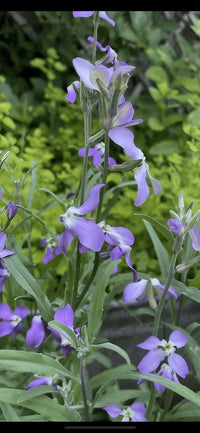
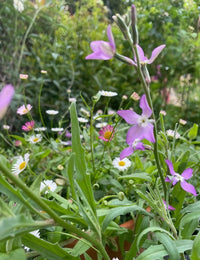
Stocks Night Scented Lavender
Matthiola longipetala (syn. M. bicornis) -- Night-Scented Stock
Humble by day, intoxicating by night — pale-lavender Night Scented Stock releases a powerful vanilla-spice perfume at dusk. The most fragrant cottage annual you can grow.
About this variety
Matthiola longipetala bicornis Night Scented Stock 'Lavender' / Evening Stock
Humble by day, intoxicating by night — Night Scented Stock is genuinely the most fragrant flower you can grow from seed. Small, modest pale-lavender flowers open at dusk and release a powerful sweet vanilla-spice perfume that perfumes an entire garden, terrace, or open kitchen window. The single most fragrant cottage annual any UK gardener can sow.
Day and night, this plant is two completely different propositions. By day, Matthiola longipetala bicornis is genuinely unremarkable: a low, slightly straggly mound (30–45cm) of slim grey-green leaves with small pale-lavender flowers that are partially closed against the heat and sun. By dusk, as temperatures cool and humidity rises, the flowers fully open and release a powerful sweet vanilla-spice fragrance that fills the surrounding air — designed by evolution to attract night-flying moths and pollinators. The perfume is genuinely extraordinary: a few square metres of Night Scented Stock can scent an entire garden or open through a window into a kitchen or bedroom. Hardy annual. Easy to grow, exceptional value for the fragrance investment, and one of the most universally-recommended evening-fragrant plants in the cottage garden canon. Pollinator-friendly — the dusk-released fragrance attracts moths and the open accessible flowers support evening pollinators.
The garden trick: because the plant itself is visually modest, the traditional cottage trick is to interplant Night Scented Stock with a more visually attractive companion that flowers at the same time (Virginian Stock is the classical partner) — the showier plant provides daytime garden appeal while Night Scented Stock provides the evening perfume. Or simply plant it in positions where the daytime appearance doesn't matter — close to seating areas, beneath kitchen windows, along path edges — and let the evening perfume earn its place.
A note on growing
Genuinely one of the easiest hardy annuals to grow. Direct sow outdoors from March to July at intervals for succession flowering. Surface-sow and cover lightly (3mm). Germination 10–14 days. Full sun or partial shade. Average garden soil; not fussy. Succession-sow every 3–4 weeks from March through July for continuous evening fragrance throughout summer. Don't over-fertilise — like most cottage annuals, lean soil produces stronger flowering.
Where it shines
The most fragrant cottage plant for outdoor seating areas, patios, garden benches, kitchen and bedroom windows. In paths and walkways where the evening scent rises as you walk past. In window boxes immediately under windows that open into living spaces. In children's gardens for the magic of "a flower that smells better at night". Combined with Nicotiana 'Sensation Mixed' and Hesperis 'White' (Sweet Rocket) for layered dusk-to-midnight fragrance hierarchy. In small gardens specifically — Night Scented Stock provides disproportionate sensory value for its modest garden footprint.
Plant alongside
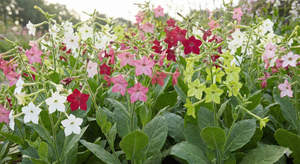
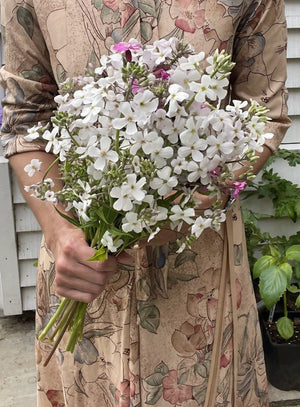
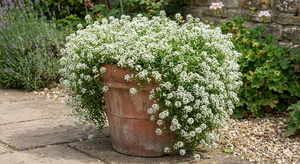
For the complete evening-scented cottage scheme, combine Night Scented Stocks with Nicotiana 'Sensation Mixed' (taller, jasmine-scented from dusk) and Hesperis 'White' (violet-and-clove fragrance from dusk) — together they cover dusk-through-midnight fragrance with three different perfume notes. For interplanted visual partnership, pair with Virginia Stock (if stocked) or Alyssum 'Carpet of Snow' (matching low mounded habit, daytime honey scent for visual and olfactory all-day appeal).
Plant alongside
Stocks Night Scented Lavender pairs beautifully with these cottage garden classics

RHS Plants for Pollinators
This plant has been assessed by the Royal Horticultural Society and recommended as especially beneficial to bees, butterflies and other pollinators. Growing plants like this directly supports UK pollinator populations — something close to our hearts at Salle Moor Hall Farm, where we see the difference a cottage garden full of the right plants can make.
Learn more at RHS.org.uk →