

Poppy Black Peony
Papaver somniferum 'Black Peony' -- Peony Poppy
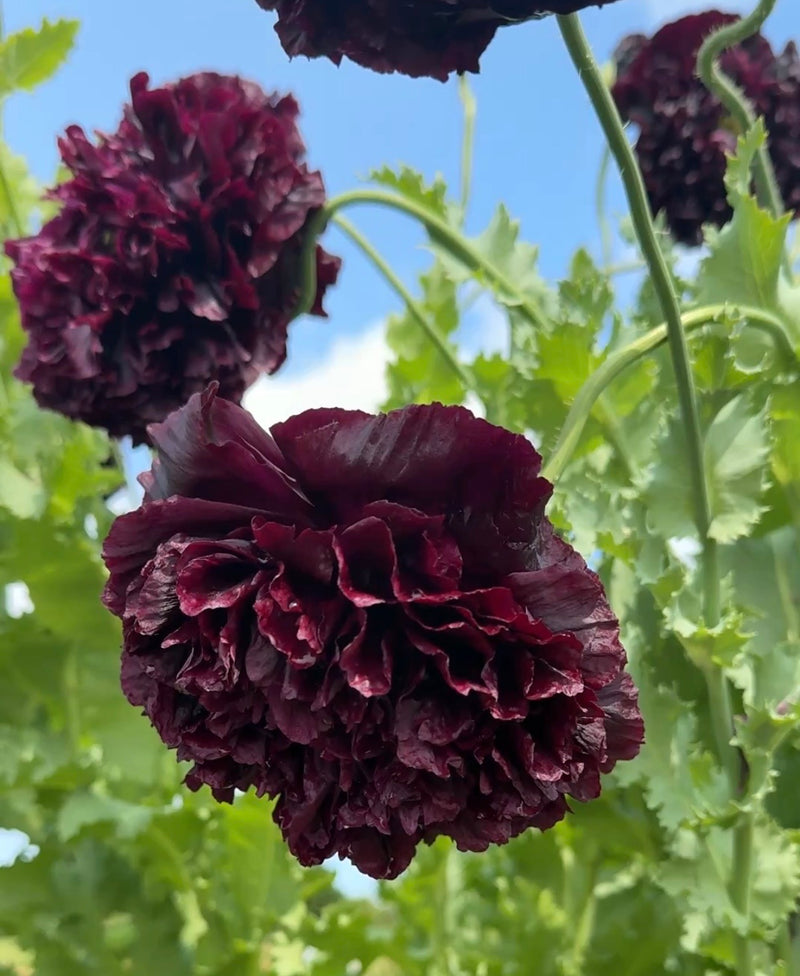
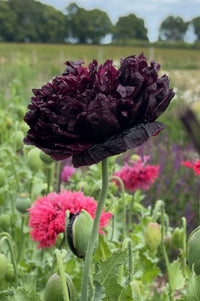
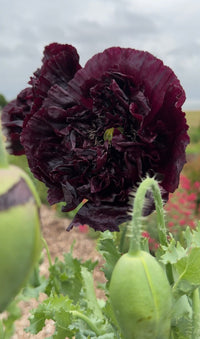
Huge fully-double peony-form blooms in the deepest velvet maroon-black, followed by magnificent architectural pepper-pot seed heads. The Gothic cottage drama poppy.
About this variety
Papaver somniferum 'Black Peony' Black Peony Poppy 'Black Peony'
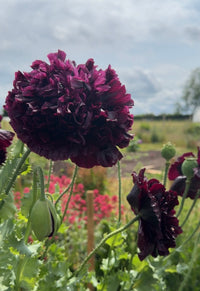
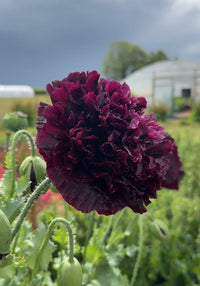
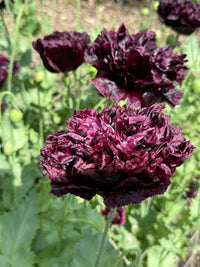
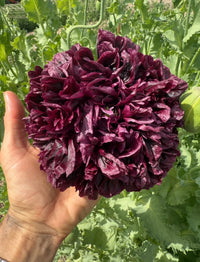
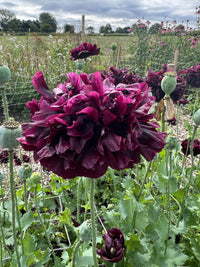
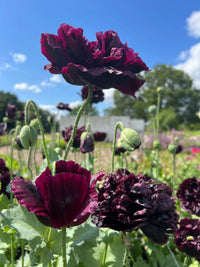
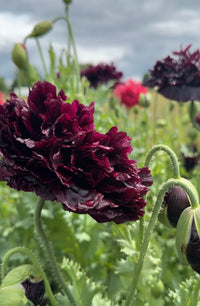
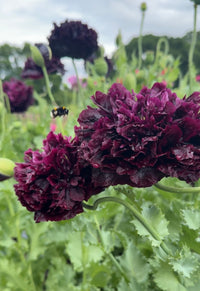
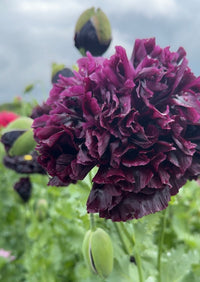
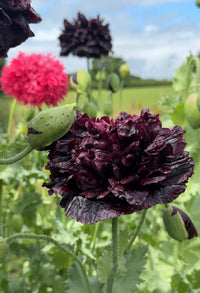
Huge fully-double mesmerising blooms in the deepest velvety maroon-black — so dark the colour appears to absorb light rather than reflect it — densely packed with ruffled silky petals that look more like a luxurious peony than a traditional poppy. After the petals fall, magnificent architectural "pepper-pot" seed heads stand through autumn, providing winter interest and serving as one of the most prized dried-flower stems in the cottage garden.
This is a show-stopping variety of Papaver somniferum that produces huge, sumptuous blooms so densely packed with ruffled silky petals that they more closely resemble a luxurious peony than a traditional poppy. The colour is the closest to true black any garden flower achieves — a mesmerising deep velvety maroon that genuinely seems to absorb the light, providing a dramatic focal point that anchors any cottage border or modern monochrome scheme. Beyond the flowers, this variety is highly prized for its architectural beauty: stout upright stems, glaucous blue-green serrated leaves, and after the petals fall, the magnificent large "pepper-pot" seed heads that are a favourite for dried flower arrangements and provide winter interest in the garden if left standing. Hardy annual (H5). Height 75–100cm.
The pollinator paradox: though the flowers are double, they still provide a massive amount of dark soot-coloured pollen. Bumblebees crawl deep into the ruffled petals and emerge covered in dark dust — a particularly photogenic moment in any cottage garden. RHS Plants for Pollinators.
A note on growing
Like all poppies, 'Black Peony' has a sensitive taproot and must be sown directly where it is to flower — never started indoors and transplanted. Sow direct outdoors in March–May for summer blooms, or in August–September to overwinter as a small rosette of leaves for much larger plants and earlier flowers the following year. Autumn sowing is the traditional cottage method and gives genuinely better results.
Rake soil to a fine tilth. Scatter seeds thinly on the surface — do not cover, as poppy seeds need light to germinate. Press them firmly into the soil surface. Seedlings appear in 14–21 days.
The critical thinning step: to get those massive peony-like heads, you must thin the seedlings. When they are roughly 5cm tall, thin to 30cm apart. If left too crowded, the plants will remain spindly with much smaller flowers. This single intervention is the difference between disappointing poppies and the dramatic peony-form display the variety is capable of producing.
Full sun and well-drained soil.
Edible seeds note: while the plant itself is toxic if eaten, the tiny blue-black seeds produced by Papaver somniferum are edible once the pod is dry. They are the same "breadseed" poppies used in lemon poppyseed cakes and on bagels.
⚠️ Toxicity warning: all parts of Papaver somniferum except the fully-dried seeds are toxic if ingested. Keep packets and plants away from children and pets.
Where it shines
In sophisticated cottage borders that lean modern or moody — the deep black-maroon adds proper Gothic drama to any scheme. As an architectural seed-pod plant — the "pepper-pot" heads are among the most distinctive structural elements in any cutting garden, equally outstanding fresh, dried, or simply standing in the autumn-winter border. In any cutting garden where dried flower harvest matters. As a contrast plant alongside warm colours and whites.
Plant alongside
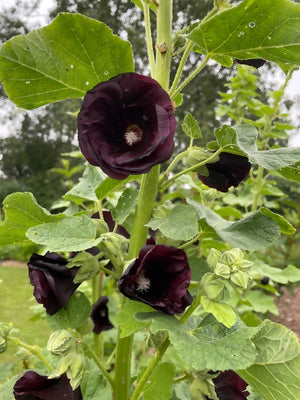
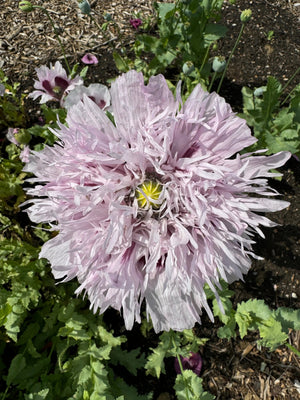
For high-impact monochrome cottage drama, pair 'Black Peony' with Hollyhock 'Nigra' (matching deep velvet maroon at greater height) and Cornflower 'Black Ball' (matching dark cottage drama at smaller scale). For colour contrast, the black against the pure white of Cosmos 'Purity' or Ammi majus creates a sophisticated cottage cutting combination. With the other Papaver somniferum varieties — 'Lauren's Grape' (deep purple-plum) and 'Lilac PomPom' (lavender) — for an entire somniferum collection.
Plant alongside
Poppy Black Peony pairs beautifully with these cottage garden classics


RHS Plants for Pollinators
This plant has been assessed by the Royal Horticultural Society and recommended as especially beneficial to bees, butterflies and other pollinators. Growing plants like this directly supports UK pollinator populations — something close to our hearts at Salle Moor Hall Farm, where we see the difference a cottage garden full of the right plants can make.
Learn more at RHS.org.uk →