Chrysanthemum Painted Daisies in a bright bouquet with sunflowers and zinnias held in a garden

Chrysanthemum Painted Daisies

£2.30
Skip to product information
Chrysanthemum Painted Daisies in a bright bouquet with sunflowers and zinnias held in a garden
RHS Plants for Pollinators

Chrysanthemum Painted Daisies

Ismelia carinata (syn. Chrysanthemum carinatum ) — Painted Daisy, Tricolour Chrysanthemum

Joyful daisies with bold bullseye rings of scarlet, mahogany, yellow, white and purple — playful retro cottage charm and exceptional pollinator value.

£2.30

Free UK delivery on seed orders over £40

Dispatched from our Norfolk farm by Royal Mail, usually within one working day.

Your growing year

Sow, plant out and flowering months for this variety

Jan
Feb
Mar
Apr
May
Jun
Jul
Aug
Sep
Oct
Nov
Dec
Sow
Plant out
In flower
SowPlant outIn flower

At a glance

Height
40–60cm
Spread
40cm
Position
Full sun
Colour
Mixed
Seeds per packet
400
Soil
Lean to average soil
Grow guide How to grow Chrysanthemum Painted Daisies Read the full guide →

About this variety

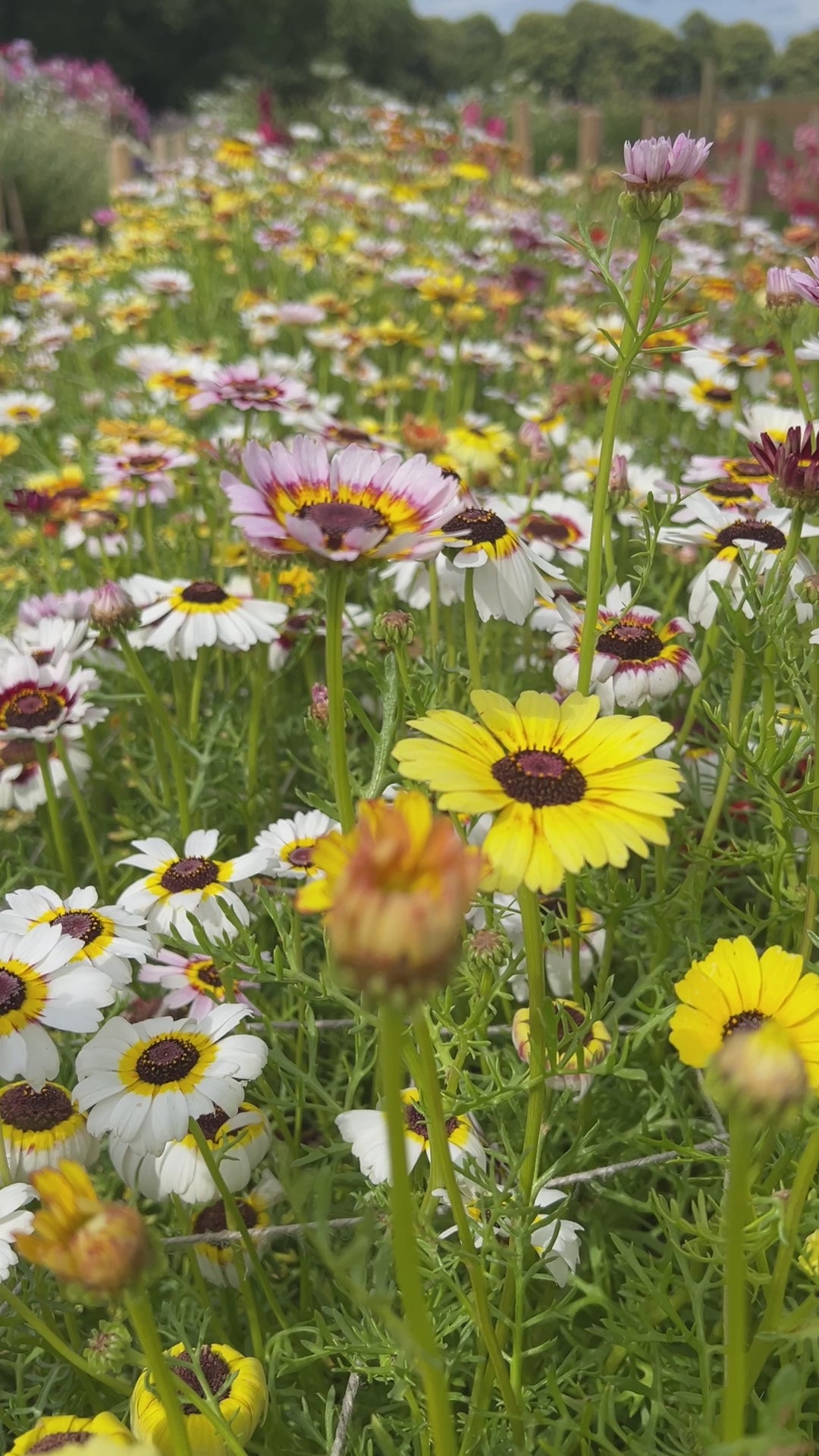
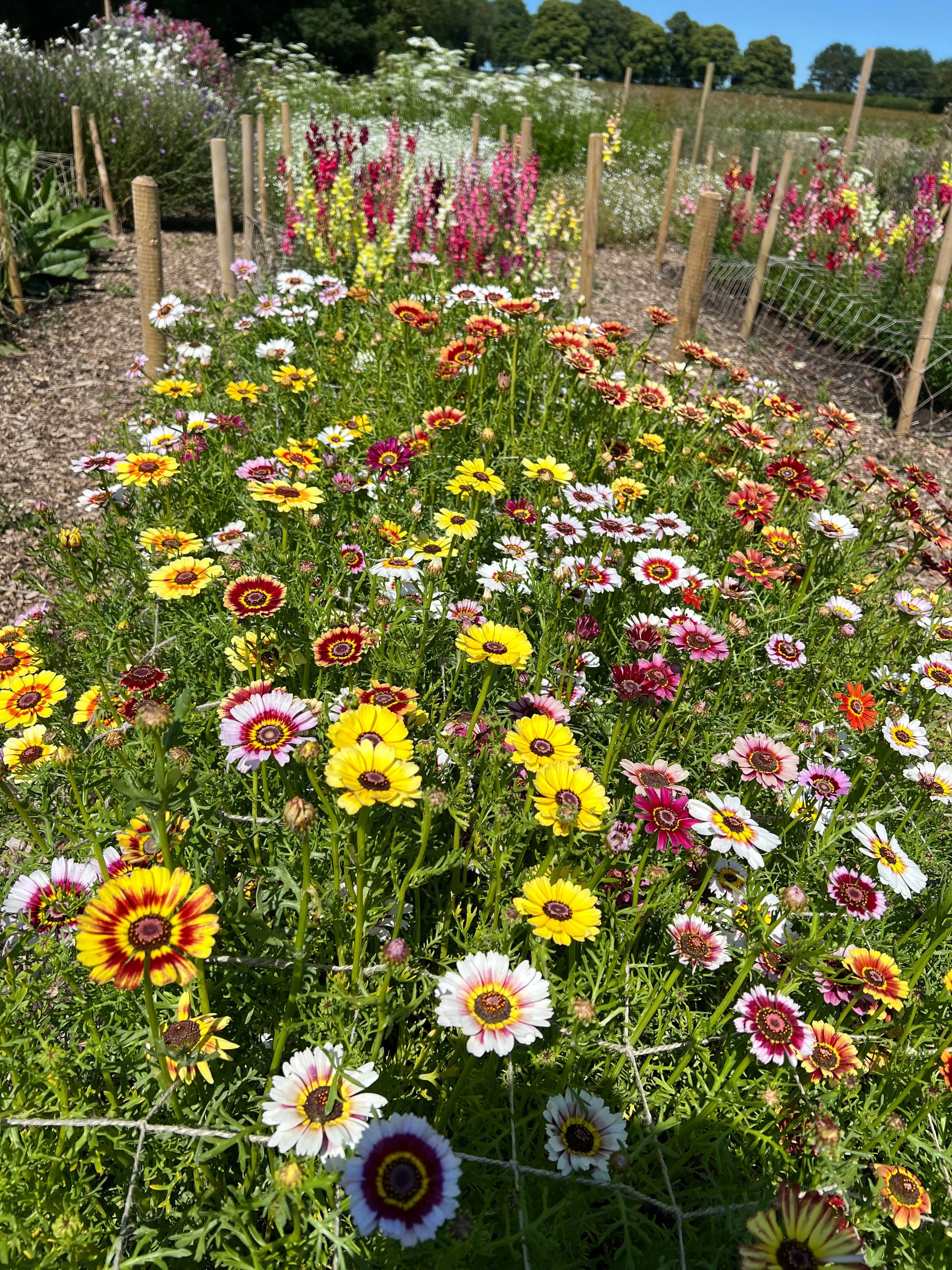
Big daisies with sharply defined concentric rings of scarlet, mahogany, gold, white and purple radiating out from a dark eye, like a bullseye or a stopped kaleidoscope. Every flower is patterned slightly differently and one plant will produce hundreds across a season.

Worth clearing up the name. These are true hardy annuals, botanically Ismelia carinata and still often sold as Chrysanthemum carinatum, and they have nothing to do with the perennial autumn chrysanthemums people buy in pots. They go from seed to flower to finished in a single season, sown in spring and gone by the first hard frost.

Bushy mounds at 40 to 50cm with succulent ferny leaves, and unusually good weather resistance for something this showy. The habit does get sprawling by late summer, particularly on rich ground, so they suit an informal meadow-style planting better than a tidy border edge. Bees work them hard on a sunny day, the petals are edible, and they cut well for a casual arrangement. The retro bullseye look either delights people or does not; there is not much middle ground.
Plant alongside

Chosen by us, not by an algorithm

RHS Plants for Pollinators

This plant has been assessed by the Royal Horticultural Society and recommended as especially beneficial to bees, butterflies and other pollinators. Growing plants like this directly supports UK pollinator populations — something close to our hearts at Salle Moor Hall Farm, where we see the difference a cottage garden full of the right plants can make.

Learn more at RHS.org.uk →