

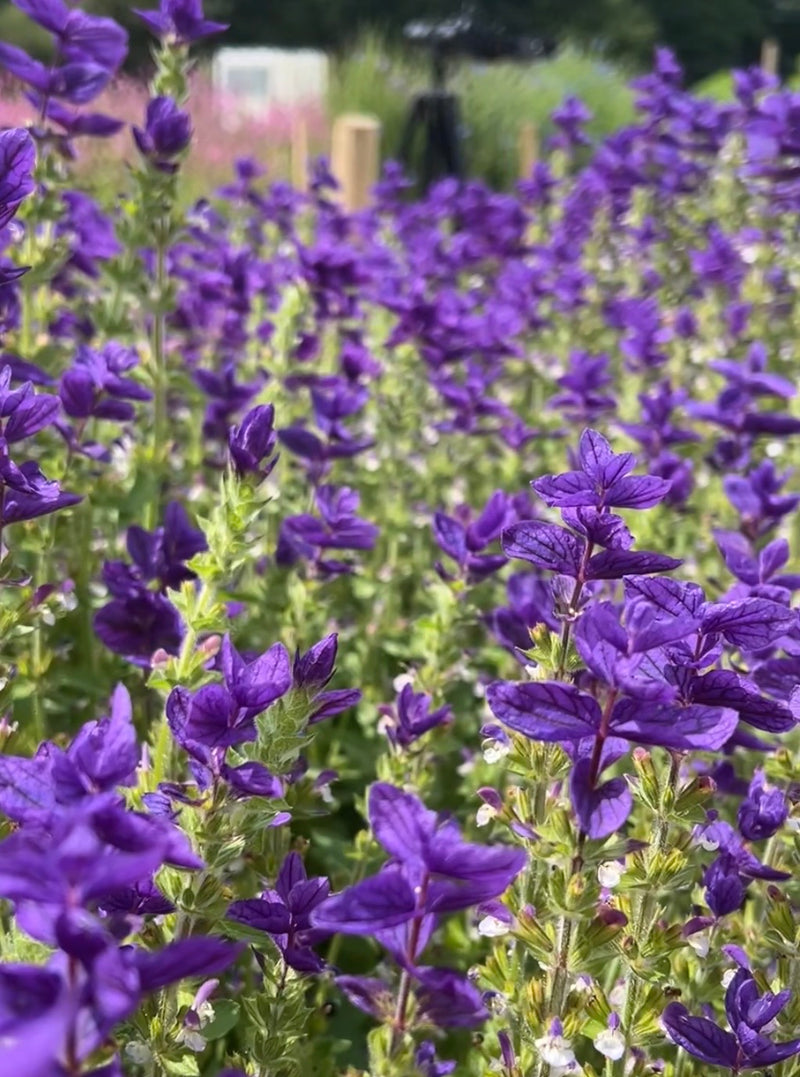
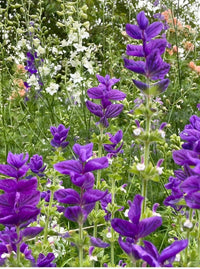
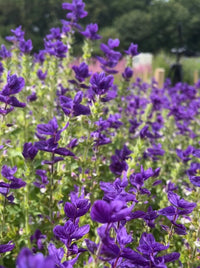
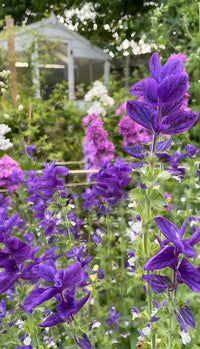
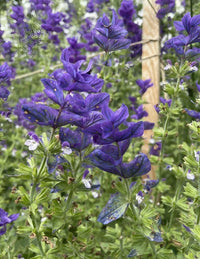
Clary Sage Oxford Blue
Salvia viridis 'Oxford Blue' — annual clary sage, single indigo-blue selection
Tall sturdy spikes topped with deep, velvety indigo-purple bracts — the longest-lasting blue in the cottage garden, exceptional fresh and dried.
About this variety
Salvia viridis 'Oxford Blue' Annual Clary Sage 'Oxford Blue'
Tall, sturdy spikes topped with intense, velvety, deep indigo-purple bracts that hold their saturated colour for weeks — the longest-lasting blue in the cottage garden, and one of the most prized cut flowers any cutting patch can produce.
If 'Crown Bouquet Mixed' is the carnival, 'Oxford Blue' is the soloist. This is the single-colour selection from the Salvia viridis family, producing tall 60–75cm spikes topped exclusively with deep, almost-violet indigo bracts that look as if they have been varnished. The intensity of the colour — and the fact that it's leaf-pigment rather than petal-pigment — means 'Oxford Blue' holds its display exceptionally well through summer rain, hot sun and (eventually) the vase. A florist's favourite for any arrangement that needs proper deep blue, and one of the very best annuals for drying. Hardy annual flowering June to October. RHS Plants for Pollinators recognised.
A note on growing
Direct sow outdoors in September for the strongest, earliest-flowering plants the following year, or March to May for a summer display. Sow at 3mm depth in well-drained soil. Full sun. Germination takes 14–21 days. Like its mixed-colour relative, 'Oxford Blue' is a cool-season specialist that establishes its best root systems in cool soil. Drought-tolerant once established but dislikes waterlogged winter ground — if you have heavy clay, sow in autumn into modules and overwinter under cover. Pinch out the growing tip at 10–15cm to encourage bushier growth and more cutting stems.
Where it shines
In the cutting garden as a structural deep-blue stem — there is nothing quite as useful as a saturated indigo for making warm-toned arrangements sing. As a dried flower, the colour holds exceptionally well if dried out of direct sunlight (UV degrades green and blue dried-flower pigments). In cottage borders, plant in generous drifts where the deep colour can do its work as a backdrop to warmer tones. In wildlife gardens, the small hidden flowers are exceptionally nectar-rich and reliably attract bees through the long flowering period.
Plant alongside
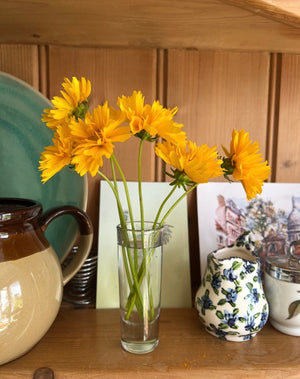
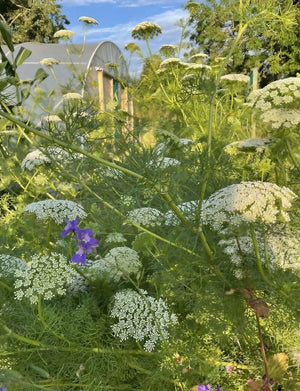
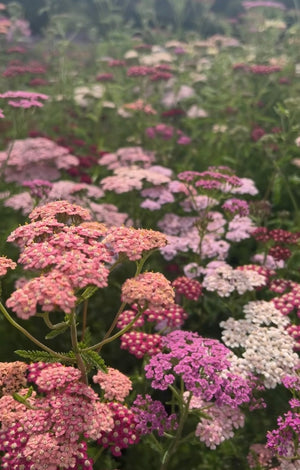
For maximum cutting-garden colour drama, pair the deep indigo of 'Oxford Blue' with the sunshine gold of Coreopsis 'Early Sunrise' or the pure white lace of Ammi majus — both are classic florist combinations that exploit the strength of the blue. In cottage borders, combine with Achillea 'Pastel Mixed' and the silvery Lychnis coronaria. For dried flower harvesting, pair with Statice in matching tones.
Plant alongside
Clary Sage Oxford Blue pairs beautifully with these cottage garden classics
RHS Plants for Pollinators
This plant has been assessed by the Royal Horticultural Society and recommended as especially beneficial to bees, butterflies and other pollinators. Growing plants like this directly supports UK pollinator populations — something close to our hearts at Salle Moor Hall Farm, where we see the difference a cottage garden full of the right plants can make.
Learn more at RHS.org.uk →