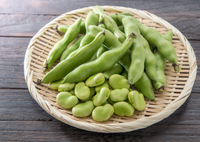


Broad Bean 'Aquadulce Claudia'
Vicia faba 'Aquadulce Claudia' — The classic autumn-sown longpod broad bean, RHS AGM winner
The queen of overwintering broad beans — sow in autumn, harvest in June, three weeks ahead of spring-sown crops. Long white-seeded pods on tall reliable plants that shrug off the worst of a British winter.
About this variety
Vicia faba 'Aquadulce Claudia' Classic autumn-sown longpod broad bean, RHS AGM winner
Some vegetables reward the gardener who plans ahead. Aquadulce Claudia is one of them. Sown in October or November — while everything else is winding down — this properly hardy heritage broad bean sits quietly through the winter, growing slowly through the cold months, and rewards you the following June with tender pods three weeks earlier than any spring sowing could manage. First proper harvest of the year, straight out of soil that was empty in October. Genuinely one of the most satisfying vegetables in the kitchen garden calendar.
The name is Spanish-Italian — "sweetwater Claudia" — but the variety has become properly British in habit, holding an RHS Award of Garden Merit for its reliable performance in UK gardens. Long white-seeded pods (20cm plus), six to eight seeds in each, held on tall upright plants of around 100 to 120cm. The white seeds cook to a soft creamy texture and mild sweet flavour — noticeably gentler than the greener-seeded varieties, and particularly good in the classic broad bean uses.
A note on growing
What sets Aquadulce Claudia apart is properly its winter hardiness. Most broad beans can only be sown in spring. This one can be sown from October right through to April, giving you two distinct approaches:
- Autumn sowing (October–November) is the classic approach and the reason to grow this variety. Plants overwinter as small seedlings, tough enough to shrug off temperatures down to around -10°C once established, and get away quickly in spring. First pods usually ready by early to mid June — a full three weeks ahead of spring-sown crops.
- Spring sowing (February–April) works well too, giving harvests through July and August. Useful if you missed the autumn window or want a succession.
Broad beans are one of the great beginner-friendly vegetables. Large easy-to-handle seeds, quick reliable germination, minimal fuss through the growing season. They fix nitrogen at their roots — properly generous for the soil. And they are one of the few crops that will genuinely improve your soil while cropping.
Where it shines
Aquadulce Claudia is at its best as the first proper vegetable of the year — the crop that breaks the long hungry gap between winter storage vegetables and the summer abundance. Pods start swelling in late May, and by mid June you have proper harvests coming in. Young pods can be picked whole and eaten like French beans; medium pods are shelled for the classic broad bean; and if you leave a few to fully develop, the older beans can be dried and stored for winter soups and stews. Few vegetables give you quite this much across a single crop.
How to sow
Broad beans are direct-sown outdoors — they resent transplanting and the large seeds germinate reliably in cool soil. Two windows work well:
- Autumn (October–November): Sow direct into prepared soil at 5cm depth, 20cm apart, in double rows 20cm apart with 60cm between each double row. Water in gently, then leave the plants to establish through late autumn and winter. Cover with fleece or cloches if temperatures drop below -5°C for extended periods, but generally they cope well.
- Spring (February–April): Same spacing and depth. Earlier spring sowings can be started in modules under cover if the soil is too cold or wet, then planted out at 15cm tall.
Germination typically takes 7–14 days depending on soil temperature. Mice can be a serious problem in autumn plantings — they love broad bean seeds and will dig them up. If mice are known local visitors, either start seeds in modules and plant out established seedlings, or lay chicken wire flat over the sown row until germination.
Ongoing care
Broad beans need proper support as they grow — the tall plants topple in wind and rain if left unstaked. Push canes or sticks in at each corner of a double row, then run string or twine around the outside at 30cm and 60cm heights to keep the plants upright. Simple and effective.
Once the plants are flowering and pods are starting to form, pinch out the top 10cm of growth from each plant. This does two things at once: encourages the plant to put energy into pod production rather than more foliage, and removes the tender growing tips that blackfly (aphids) find irresistible. The pinched tips themselves are delicious — steamed briefly and served with butter, they are one of the small secret pleasures of broad bean growing.
Water regularly during dry spells, particularly once the flowers appear and the pods are forming. Harvest young — pods are at their sweetest when picked while the seeds inside are still small and tender. Regular picking keeps the plants productive for several weeks.
In the kitchen
Aquadulce Claudia's white seeds cook to a soft, creamy texture with a mild sweet flavour. Some cooking notes worth knowing:
- Young whole pods (before the seeds have swelled) can be topped, tailed, and steamed or stir-fried whole like French beans
- Medium pods — the classic broad bean stage. Shell the seeds, blanch for 2 minutes, and slip off the outer skin of the seed if you want the properly tender inner bean (this is the traditional Italian approach and it does make a difference)
- Older seeds can be dried for winter storage — spread on trays in a warm airy place until fully dry, then stored in jars for soups, stews, and dried broad bean recipes
- Growing tips, when pinched out to prevent blackfly, are delicious steamed briefly and eaten as a leaf vegetable — a small annual bonus most gardeners don't know about
Broad beans pair beautifully with mint, lemon, feta, mint pesto, salty ham, spring peas, and new potatoes. The Italian and Middle Eastern kitchens both do wonderful things with them — worth exploring beyond the traditional British broad-beans-in-parsley-sauce approach if you want to see this vegetable at its best.
Plant alongside
Broad beans fix nitrogen at their roots and are properly generous garden neighbours. They pair beautifully with brassicas (which appreciate the nitrogen boost as the beans grow), leafy greens, and other legumes. Calendula 'Neon' planted nearby draws hoverflies and ladybirds — the natural predators of blackfly, which are the main pest for broad beans. Borage brings in the bumblebees for excellent pollination and is a companion plant with long tradition alongside legumes. Avoid planting near alliums (onions, garlic, leeks) which don't get on well with beans and peas. If you're growing Pea Mangetout 'Carouby de Maussane' too, the two make natural companions in the kitchen garden — both legumes, both undemanding, both quietly enriching the soil while they crop.
Plant alongside
Broad Bean 'Aquadulce Claudia' pairs beautifully with these kitchen garden companions