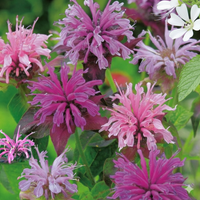
Monarda didyma Mixed (bee balm) – red and lilac flower heads in a summer border

Monarda didyma Mixed

£2.40
Skip to product information
Monarda didyma Mixed (bee balm) – red and lilac flower heads in a summer border
RHS Plants for Pollinators

Monarda didyma Mixed

Monarda didyma Mixed -- Bee Balm; Bergamot; Oswego Tea

2 reviews

Shaggy crown-like flower whorls in scarlet, red, pink and white above Earl Grey-scented foliage — the cottage bee magnet that prefers damp clay where other perennials struggle.

£2.40

Free UK delivery on seed orders over £40

Dispatched from our Norfolk farm by Royal Mail, usually within one working day.

Your growing year

Sow, plant out and flowering months for this variety

Jan
Feb
Mar
Apr
May
Jun
Jul
Aug
Sep
Oct
Nov
Dec
Sow
Plant out
In flower
SowPlant outIn flower

At a glance

Height
60-90cm
Spread
45cm
Spacing
45cm
Position
Sunny position
Colour
Mixed
Seeds per packet
90
Soil
Moist, fertile, and well-drained soil
Grow guide How to grow Monarda didyma Mixed Read the full guide →

About this variety

Shaggy crown-like whorls of tubular flowers in scarlet, deep red, rich pink, rose and white, on stems of 90 to 120cm above foliage that smells unmistakably of Earl Grey. That is not a coincidence; the bergamot oil in the leaves is the same note.

There is some history in it. After the Boston Tea Party in 1773, when American colonists stopped buying British tea, this is what they drank instead, which is why it is still called Oswego tea. The young leaves make a decent herbal tea and the flowers are edible with the same flavour. For bumblebees it is one of the best things you can grow; the nectar tubes are deep and an established clump hums through a July afternoon.

It also breaks the usual perennial rule. Monarda wants damp, heavy ground and grows happily in moisture-retentive clay or beside a pond, where most cottage perennials would rot. In dry soil it gets powdery mildew badly, which is disfiguring rather than fatal but not pleasant. Give it moisture, give it space for air to move, and divide it every three years.
RHS Plants for Pollinators

This plant has been assessed by the Royal Horticultural Society and recommended as especially beneficial to bees, butterflies and other pollinators. Growing plants like this directly supports UK pollinator populations — something close to our hearts at Salle Moor Hall Farm, where we see the difference a cottage garden full of the right plants can make.

Learn more at RHS.org.uk →
  • 5 stars: 2 (100%)
  • 4 stars: 0 (0%)
  • 3 stars: 0 (0%)
  • 2 stars: 0 (0%)
  • 1 star: 0 (0%)
I
Ian Southard
Didn't take as long as I thought they would.

Sowed a few seeds into small 2" pots of John innes seed sowing compost.
Was pleasantly surprised when the poked their heads through after Eight days.
Extremely happy will now plant a few more at a better time.
Will wait to plant these on and see how they progress into fine plants (can't wait)