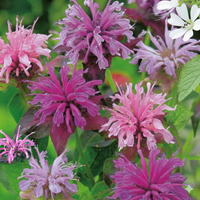
Monarda didyma 'Mixed' Seeds
If you love the smell of Earl Grey tea, you need this plant. Monarda didyma (commonly known as Bee Balm or Bergamot) is a stunning hardy perennial that produces whorls of tubular flowers that look like funky, shaggy crowns in vibrant shades of scarlet-red, pink, violet, and white.
But the real magic is in the leaves. Brush past them, and they release a powerful, citrus-spice aroma exactly like the bergamot orange used to flavour tea. It is a plant that works hard on every level: it looks architectural, smells divine, and is widely considered one of the top five plants for attracting bees and butterflies in the UK.
Read More
🌿 Understanding the Plant
Monarda didyma is a clump-forming Hardy Perennial (H4). It is a reliable performer in the UK, dying back to the ground in winter and shooting back up with vigorous fresh growth every spring, slowly expanding to form a large, impressive colony.
The Moisture Lover: Monarda is famous for its shaggy, "crown-like" flower heads, but it is also known for its love of moisture. To prevent powdery mildew—a common issue in dry UK summers—ensure the soil remains consistently damp and avoid planting it in exceptionally dry, sandy spots.
Biodiversity Star: Listed on the RHS Plants for Pollinators list, it is a high-value nectar source. The tubular flowers are perfectly adapted for long-tongued bumblebees and butterflies, making your borders come alive with movement.
🌱 Growing Guide
Monarda is easy to raise from seed, though it requires a little patience to establish into its full flowering glory.
How to Sow:
Sow indoors from February to May. Surface sow the seeds onto moist seed compost. Do not cover the seeds with soil (or use only the finest dusting of vermiculite) as they require light to trigger germination. Keep them at 20°C; seedlings typically appear in 10-21 days.
Where to Plant:
They thrive in full sun or partial shade. Monarda is one of the few flowers that actually prefers heavy clay soil that stays damp, making it an excellent choice for difficult parts of the garden or woodland edges where the light is dappled.
Ongoing Care:
To keep the plants vigorous, divide the clumps every three years in early spring. Replant the healthy outer sections and discard the old, woody centre. A thick layer of mulch (compost or bark) applied in spring will help lock moisture into the soil and keep the foliage lush and mildew-free.
📋 Plant Specifications
| Botanical Name | Monarda didyma |
| Common Name | Bee Balm / Bergamot |
| Plant Type | Hardy Perennial |
| Hardiness | H4 (Hardy Perennial) |
| Light Requirements | Full Sun / Part Shade ⛅ |
| Height | 80cm - 90cm |
| Spread | 45cm |
| Spacing | Plant 45cm apart |
| Flowering Period | July to September |
| Perfect For | 🐝 Bee & Butterfly Buffet 🍵 Aromatic Herb Gardens 🧱 Damp Clay Soils 🥗 Edible Salad Toppers |
| Seeds per Packet | Approximately 90 seeds |
🤝 Beautiful Garden Combinations
Monarda's unique shaggy appearance looks spectacular when paired with structured plants from our range:
- 🍂 Rudbeckia 'Autumn Forest': The Prairie Look. The warm bronze and golden tones of Rudbeckia contrast beautifully with the vibrant reds and pinks of Monarda. Both thrive in similar UK garden conditions and provide a robust late-summer display.
- 💜 Verbena Bonariensis: The Pollinator Pair. Create the ultimate nectar station by planting these two together. The airy, see-through purple wands of Verbena float above the dense, leafy clumps of Monarda, adding height and movement to the border.
📅 Sowing & Flowering Calendar
Sow indoors in spring; plants typically flower fully from their second year onwards.
| Month | J | F | M | A | M | J | J | A | S | O | N | D |
|---|---|---|---|---|---|---|---|---|---|---|---|---|
| Sow Indoors | ✓ | ✓ | ✓ | ✓ | ||||||||
| Flowering | ✓ | ✓ | ✓ |
🥗 Edible Blooms
The funky flower tubes are 100% edible! Pull the individual flower stems from the head and sprinkle them over summer salads for a spicy, vibrant pop of colour.
🏆 RHS Plants for Pollinators
Monarda is one of the most valuable nectar sources for the UK garden. Listed on the RHS Plants for Pollinators list, it is a particular favourite of long-tongued bumblebees and hummingbird hawk moths.
📖 Want more detailed growing advice?
View our Complete Growing Guide for Perennials →
- Regular price
-
£2.40 - Regular price
-
- Sale price
-
£2.40
Couldn't load pickup availability


Monarda didyma Mixed (Bee Balm/Bergamot)
- Regular price
-
£2.40 - Regular price
-
- Sale price
-
£2.40