

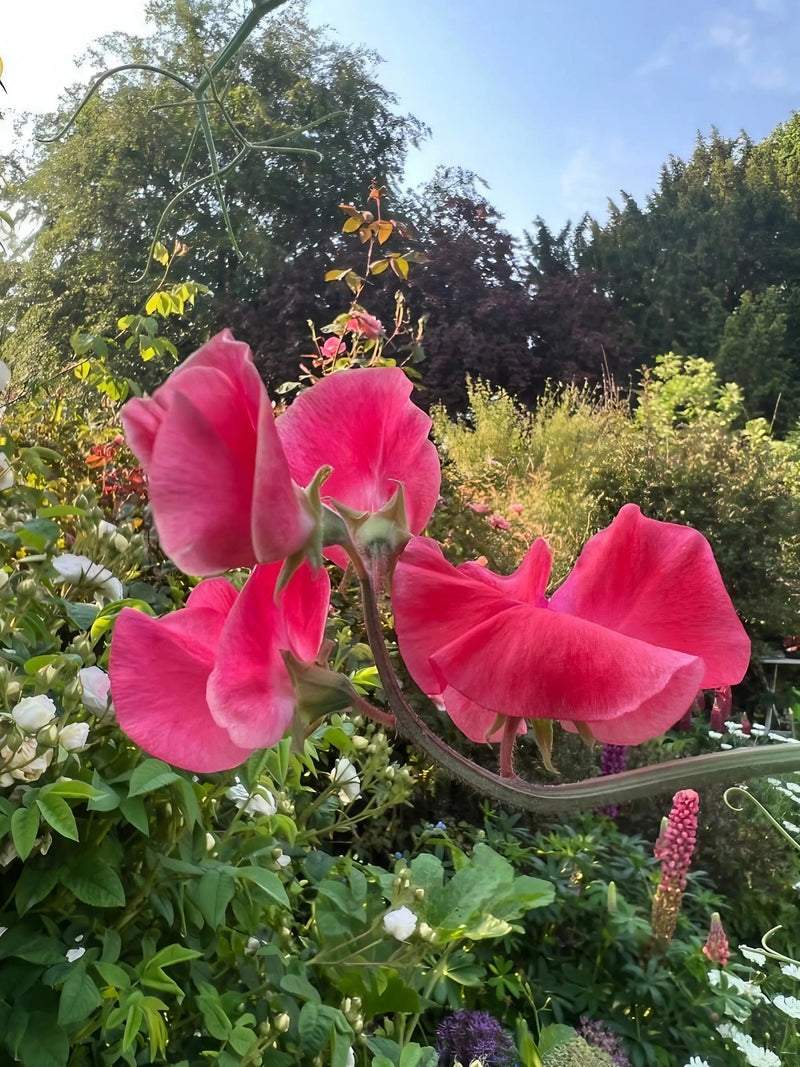
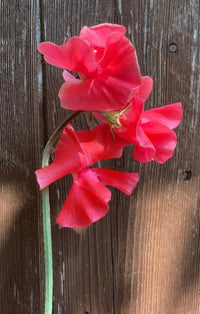

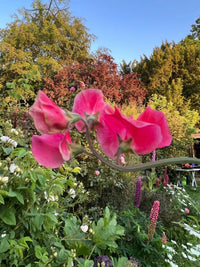
Sweet Pea Mammoth Rose Pink
Lathyrus odoratus 'Mammoth Rose Pink' — Early Multiflora Gigantea type
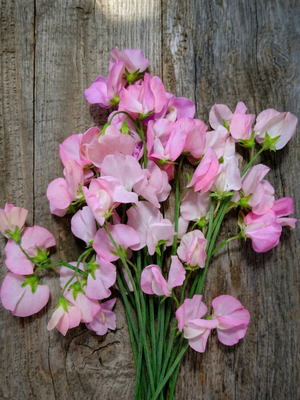
Extra-large deep rose-pink Sweet Pea on long sturdy stems — the giants of the Sweet Pea world, built for substantial cutting and exhibition use.
About this variety
The giant. Some of the largest sweet pea blooms available from seed, in a deep rose-pink that holds through the season, on long and unusually sturdy stems.
Be clear about the trade. This is a size variety. It is scented, but not in the way 'Heaven Scent' or the Old Spice types are, and if fragrance is your first requirement you would be better served elsewhere. What it gives you instead is flowers with real visual weight, which a big arrangement needs and a delicate variety cannot supply.
If you want the biggest possible blooms, grow it on the cordon system exhibitors use: allow only two or three main shoots per plant and rub out every sideshoot as it appears. All the plant's energy then goes into fewer, larger flowers. It is more work, and the difference is considerable.
It climbs to about two metres and flowers June through October. Pick daily, and more religiously with a mammoth type than any other, because bloom size drops off fast once a plant starts setting seed.
Plant alongside
Sweet Pea Mammoth Rose Pink pairs beautifully with these cottage garden classics


RHS Plants for Pollinators
This plant has been assessed by the Royal Horticultural Society and recommended as especially beneficial to bees, butterflies and other pollinators. Growing plants like this directly supports UK pollinator populations — something close to our hearts at Salle Moor Hall Farm, where we see the difference a cottage garden full of the right plants can make.
Learn more at RHS.org.uk →