


Comfrey
The kitchen gardener's secret weapon - the plant grown for the soil, not the plate
One of the most useful plants in the organic kitchen garden - deep-tap-rooted comfrey draws minerals up from the subsoil and turns them into liquid feed, mulch, compost activator and a beloved bumblebee plant. Not for the kitchen; for everything else.
About this variety
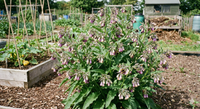
The genuine outlier in a herb catalogue — the one you grow to feed everything else rather than to eat. Comfrey is a deep-rooted mineral accumulator, drawing potassium, calcium and magnesium up from the subsoil and turning them into vast quantities of leaf. A patch at the back of the kitchen garden is worth a winter's worth of bought plant feed.
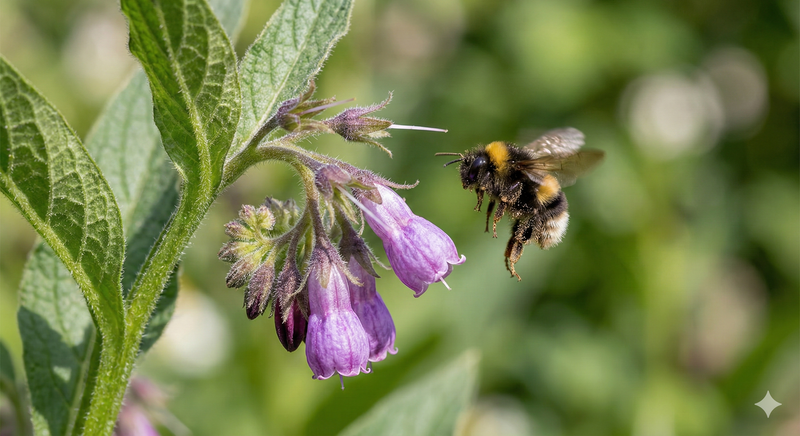
Cut leaves stuffed into a barrel with water make the dark, thoroughly unpleasant-smelling liquid feed that tomatoes, beans and fruit bushes thrive on. The same leaves wilted and laid round hungry crops make an excellent mulch, and a barrowful thrown through a compost heap speeds the whole thing up noticeably. The flowers, meanwhile, are among the best bumblebee plants you can grow.
Two things to know before you plant it. Comfrey is not edible — it contains pyrrolizidine alkaloids that can damage the liver, and despite the old name knitbone it is no longer considered safe to take internally. And it is close to impossible to remove once established, since the taproot regenerates from the smallest fragment. Put it somewhere you mean to keep it.