

Cayenne Chilli
The classic kitchen-garden chilli - reliable, productive, and properly hot
The cayenne powder of the spice rack, grown fresh - a reliable, productive, properly hot kitchen-garden workhorse. Dries beautifully into one of the genuine pleasures of growing your own chillies.
About this variety
Capsicum annuum 'Cayenne' The classic kitchen-garden chilli — reliable, productive, and properly hot
Of all the chillies in the world, the Cayenne may be the most quietly useful. Its name is so familiar that most people don't even think of it as a variety any more — it's just cayenne pepper, the orange-red powder in the spice rack, the heat in a thousand recipes, the standard by which most cooks measure their tolerance for chilli. But Cayenne is a specific cultivar, a long-established cottage-kitchen workhorse, and it remains one of the most rewarding hot chillies you can grow in a UK greenhouse or sunny corner.
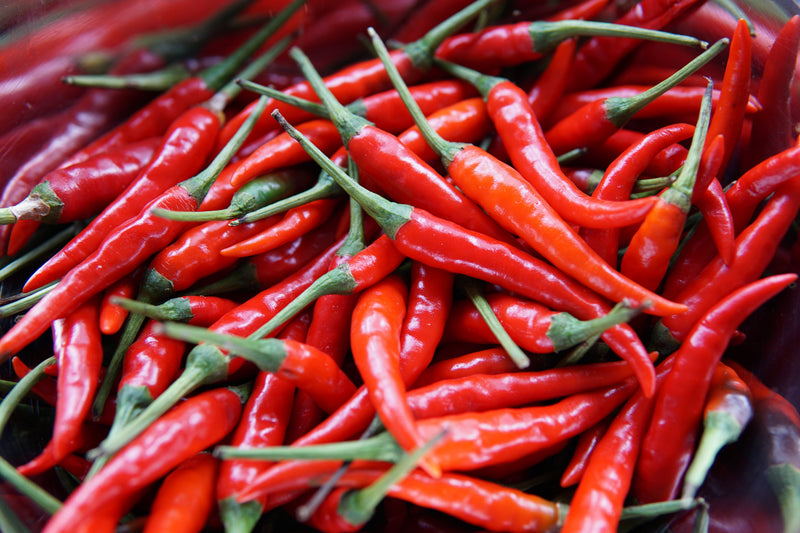
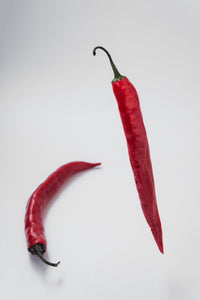
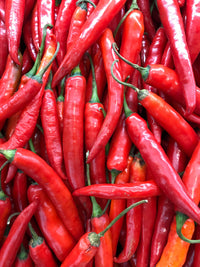
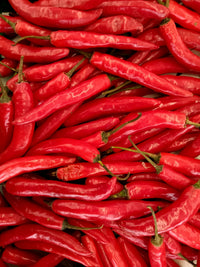
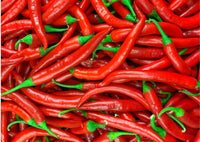
The pods are unmistakable: long, slim, slightly curved, tapered to a point, ripening from a glossy green to bright scarlet red. At 10 to 25 centimetres long, they are larger than most chillies in the catalogue, and a single mature plant can produce dozens of them in a good summer. The plant itself is a bushy Capsicum annuum of around 60 to 120 centimetres — easygoing, manageable, and far quicker and more straightforward to grow than the slow superhots.
Heat-wise, Cayenne sits firmly in the 30,000 to 50,000 Scoville range — properly hot, but not extreme. It's about ten times the heat of a jalapeño, comfortably in the territory where most hot-sauce makers and home cooks like to live. The flavour is the classic cayenne profile that anyone who's ever shaken cayenne powder into a soup will recognise: sharp, clean, peppery, direct, with a bright fresh-acid finish. There's no smoke, no sweetness, no fruity complication — just a properly straightforward chilli heat that lifts almost any savoury dish.
Which is what makes Cayenne so quietly indispensable. It's not the most dramatic chilli, the prettiest, or the rarest. But if you only grow one hot chilli, this is the sensible choice — the reliable, productive, useful workhorse that earns its space in the greenhouse every single year.
A note on growing
Sow indoors from February to April, about six to eight weeks before the last expected frost. As an annuum, Cayenne is one of the more straightforward chillies to start — a heated propagator or warm windowsill at 22 to 28°C will usually see seedlings up within one to three weeks. Sow on the surface or barely covered, and keep the compost moist but not wet.
Prick out into 9cm pots once the seedlings have two true leaves, and grow on in good light at a minimum of 18 to 20°C. Pot on progressively to a generous final pot — Cayenne is a productive plant and rewards a decent root run. It does best in a greenhouse, polytunnel, or conservatory in the UK, where the longer warm season really pays off, but it also performs well in a warm, sheltered, sunny spot outdoors once all danger of frost has passed.
Water consistently and feed weekly with a balanced or high-potash tomato food once the first flowers set. Pinch out the growing tip early to encourage a bushier, heavier-cropping plant, and stake or cane if the branches grow heavy with fruit. Harvest from late summer into autumn, picking the pods green for milder flavour or fully red for full heat and the best drying potential. Regular picking keeps the plant producing right up to the first frosts. As with any hot chilli, it's sensible to wash your hands after handling the cut fruit and to keep it away from your eyes.
Where it shines
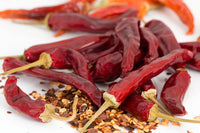
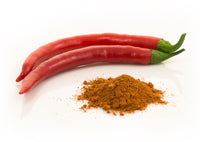
Cayenne is, above all, the great drying chilli. The slim pods have thin walls that dry beautifully and quickly — on a string in a warm kitchen, on a tray in the airing cupboard, or in a dehydrator — and the dried pods grind into a fragrant, fiery powder that's a world apart from anything you'll buy in a supermarket jar. A small jar of home-ground cayenne powder, made from your own summer plants, is one of the genuine pleasures of growing chillies; it lifts soups, stews, eggs, marinades, hot sauces and rubs throughout the winter, and tastes vastly better than the year-old industrial alternatives.
Fresh, the pods are excellent chopped into salsas, simmered into hot sauces, infused into vinegars and oils, or pickled whole. They freeze well too — pop a few onto a tray, freeze hard, then bag up for the freezer for a year-round supply.
In the garden, a productive Cayenne plant in late summer, hung with fifty or more bright red pods at every stage of ripening, is a properly handsome thing — ornamental as well as useful, and a genuine cottage-kitchen plant in the best sense.
At a glance
- Heat: hot, 30,000–50,000 SHU — about ten times the heat of a jalapeño
- Flavour: classic, clean, sharp cayenne heat — peppery and direct, no smoke or sweetness
- Pods: long, slim, slightly curved, 10–25cm; ripening green to bright red
- Plant: easygoing, bushy annuum, 60–120cm, very productive
- Sow: February to April, 22–28°C
- Harvest: late summer to autumn; pick red for full heat and drying
- Best for: drying and grinding into powder; hot sauces, salsas, pickling, infused oils
- A reliable workhorse — the sensible choice if you grow only one hot chilli
Plant alongside
Chillies do well with companions that draw in pollinators and help keep pests down. Plant alongside French Marigold 'Spanish Brocade' to deter aphids and whitefly, and Calendula 'Neon' to attract beneficial predators. Basil is a classic greenhouse companion that enjoys the same warmth and sun, and makes a natural culinary partner too.