
Black Scorpion Tongue Chilli
A dramatic, dark-leaved ornamental chilli with a dazzling colour show
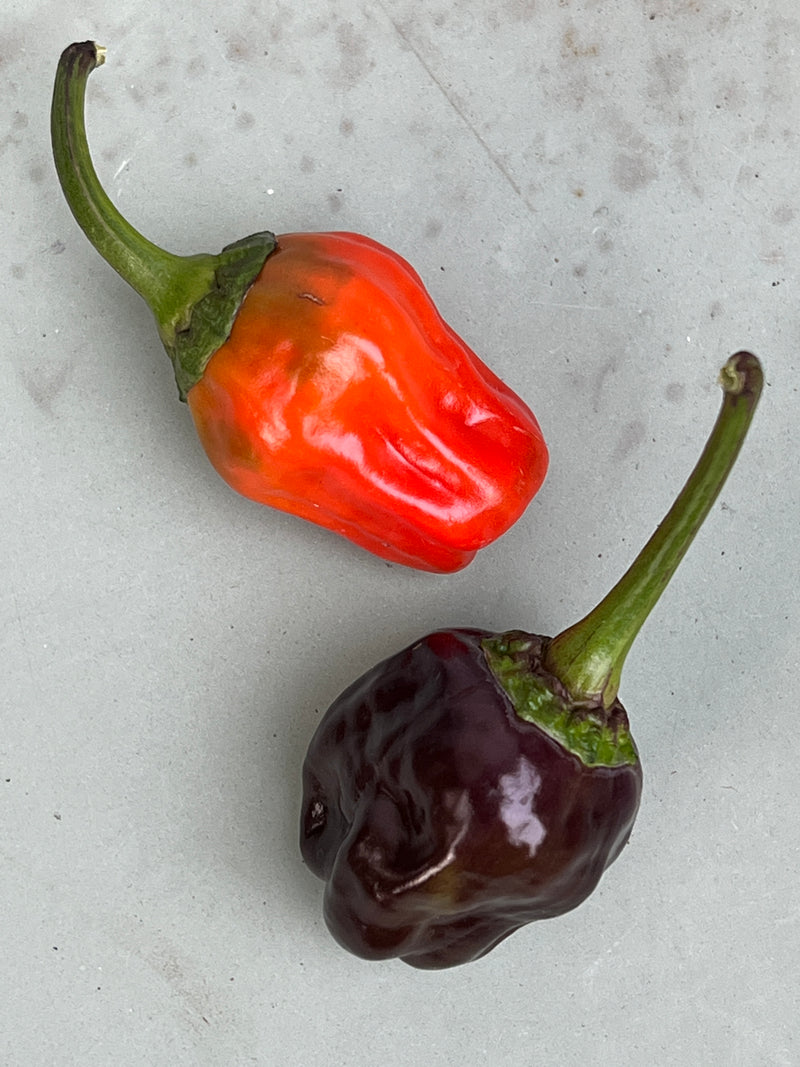
An ultra-rare ornamental chilli and a real showpiece - dark, dusky foliage and tongue-shaped pods that ripen from purple-black through gold to red, often tiger-striped in the sun. Surprisingly fruity, properly hot, and beautiful in the garden.
About this variety
Capsicum annuum 'Black Scorpion Tongue' A dramatic, dark-leaved ornamental chilli with a dazzling colour show
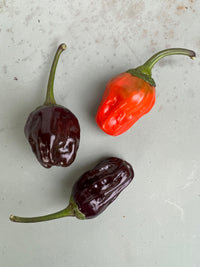
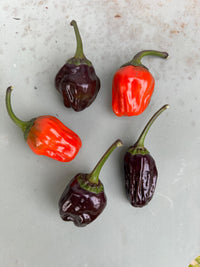
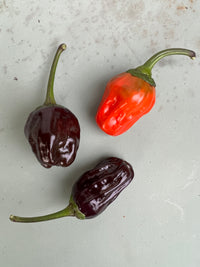
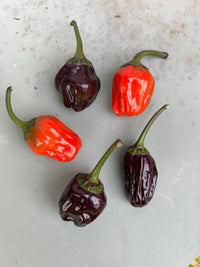
One of the most spectacular-looking chillies you can grow, and a real showpiece for the garden or greenhouse. Black Scorpion Tongue is an ultra-rare ornamental variety from the United States, prized above all for its drama: dark, dusky, often near-purple foliage, purple-flushed flowers, and a remarkable parade of colour on the pods themselves. The little tongue-shaped fruits begin a deep, glossy purple-black, then ripen through cream, yellow, and orange to a final rich red — and in strong sunshine many develop extraordinary tiger-stripe markings along the way. At the height of the season a single plant carries pods at every stage at once, a living jewel-box of purple, gold, and scarlet.
Don't let the "Scorpion" in the name alarm you, mind — this is no million-Scoville superhot. Black Scorpion Tongue sits at a friendly, usable 50,000 to 100,000 Scoville units, a genuine hot kick in the same territory as a fiery bird's eye, but a world away from the searing scorpions and reapers it's named after. And the flavour is a real surprise: behind a bright, jalapeño-style upfront heat comes a fruity, almost apple-like sweetness with floral notes and a pleasing crunch. It's as good in the kitchen as it is in the border.
It belongs to Capsicum annuum — the easygoing species of jalapeños and cayennes — so it's more straightforward and quicker to grow than the slow, warmth-hungry superhots, and it crops generously. It makes a handsome, bushy plant of around 2 to 3 feet, and because it's so productive the branches can grow heavy with fruit, so it appreciates a stake or two for support. Give it the sunniest spot you can: strong light is what brings out the deepest colours and the best of those dramatic stripes.
A note on growing
Sow indoors from February to April, about six to eight weeks before the last expected frost. As an annuum it germinates more readily than the superhots — a heated propagator or warm windowsill at 22–28°C will usually see seedlings up within one to three weeks. Sow on the surface or barely covered, and keep the compost moist but not wet.
Prick out into 9cm pots once the seedlings have two true leaves, and grow on in good light at a minimum of 18–20°C to keep them sturdy. Pot on progressively to a generous final pot — this is a sizeable, productive bush that's perfectly happy in a large container. Black Scorpion Tongue grows best with the long, warm season of a greenhouse, polytunnel, or conservatory in the UK, but it also does well in a warm, sheltered, sunny spot outdoors once all danger of frost has passed. Wherever you grow it, give it as much direct sun as possible: the more light it gets, the darker the foliage and the more striking the pod colours and stripes.
Water consistently and feed weekly with a balanced or high-potash tomato food once the first flowers set. Stake or cane the plant as the pods build up, so the laden branches don't snap, and pinch out the growing tip early to encourage a bushier, heavier-cropping shape. Harvest from late summer into autumn, picking the pods at whatever stage takes your fancy — they're usable from the purple stage onward, but at their fruitiest and hottest when fully ripened to dark red. Regular picking keeps the plant producing right up to the first frosts. As with any hot chilli, it's sensible to wash your hands after handling the cut fruit and to keep it away from your eyes.
Where it shines
This is a chilli grown as much for the eye as the plate — but it earns its place in the kitchen too. Its fruity, apple-sweet, floral flavour and lively heat make it excellent in fresh salsas, hot sauces, marinades, and spicy condiments, where it brings both colour and character. The small pods dry well, keeping their fierce heat for grinding into flakes or powder, and the whole plant is so ornamental that it's just as at home on a sunny patio, a bright windowsill, or among the borders as it is in the vegetable garden. For a grower who likes a chilli to be beautiful as well as useful, few varieties deliver on both counts so generously.
In the garden, it's a genuine showstopper — the dark foliage, purple flowers, and ever-changing rainbow of pods make it one of the most ornamental chillies there is, and a guaranteed talking point.
At a glance
- Heat: hot, 50,000–100,000 SHU — a proper kick, but not a superhot despite the name
- Flavour: surprisingly fruity and apple-sweet, with floral notes and a crunch
- Looks: dark, often purple foliage and pods ripening purple to red, with tiger-stripes in strong sun — highly ornamental
- Plant: bushy, 2–3ft, very productive — usually needs staking; great in containers
- Sow: February to April, 22–28°C
- Harvest: late summer to autumn, any colour stage
- Give it full sun for the deepest colours and best stripes
- Best for: salsas, hot sauces, drying, and sheer ornament
Plant alongside
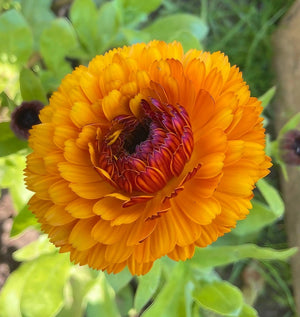
Chillies do well with companions that draw in pollinators and help keep pests down. Plant alongside French Marigold 'Spanish Brocade' to deter aphids and whitefly, and Calendula 'Neon' to attract beneficial predators. Basil is a classic greenhouse companion that enjoys the same warmth and sun, and makes a natural culinary partner too.
Plant alongside
Black Scorpion Tongue Chilli pairs beautifully with these kitchen garden companions