

African Birds Eye Chilli
The piri piri pepper - small, fiery and intensely flavoured
The little pepper behind piri piri. Small upward-pointing scarlet pods with a bright, clean, fruity heat - the classic Mozambican-Portuguese sauce chilli, and easier to grow than the Caribbean superhots.
About this variety
Capsicum frutescens 'African Bird's Eye' The piri piri pepper — small, fiery and intensely flavoured
The little pepper behind piri piri. African Bird's Eye — also known as peri peri, pili pili, or the African Devil — is the chilli that gives Mozambican and Portuguese piri piri sauces their distinctive bright, biting heat, and the one most people have tasted without ever knowing its name. Descended, like all chillies, from plants of the Americas, it has grown wild across East and southern Africa for centuries and is now cultivated commercially from Malawi to Mozambique. It carries real cultural heritage in a very small package.
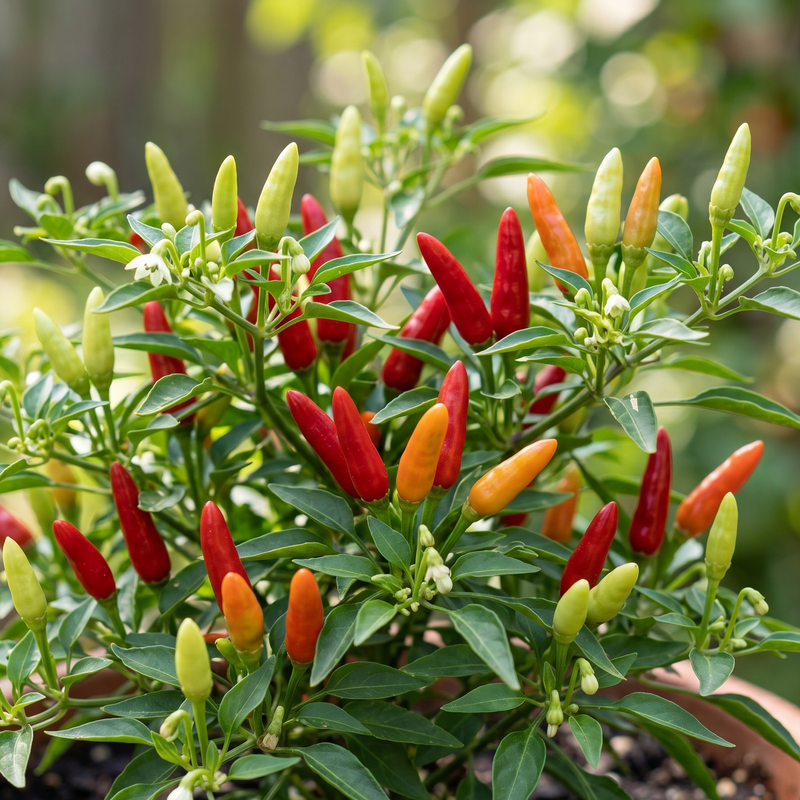
The fruits are tiny but mighty: slim, thin-walled pods just 2–5cm long, tapering to a blunt point, ripening from green to a brilliant glossy red. Unusually, they point jauntily upward from the plant rather than dangling down — one of the easiest ways to tell a true bird's eye from its lookalikes, and part of what makes the plant so ornamental when it's covered in dozens of upright scarlet fruits at the height of summer. The heat is serious but not punishing — firmly in the "very hot" range, a good notch below the searing superhots, with a clean, bright, fruity flavour that explains why it's prized for sauces rather than just shock value.
African Bird's Eye belongs to Capsicum frutescens — the same species as the Tabasco and Malagueta peppers, and a slightly different branch of the family from the habaneros and Scotch bonnets (which are Capsicum chinense) or the jalapeños and cayennes (Capsicum annuum). In practice, frutescens chillies are wonderfully productive bushy plants, and this one is no exception: expect a naturally bushy habit anywhere from 45cm to over a metre tall, generous enough to fill a large pot and produce a heavy crop of pods over a long season.
This is a more forgiving chilli to grow than the Caribbean superhots — it germinates and crops more readily, and its compact bushy form makes it genuinely suited to container growing on a sunny patio, windowsill, or in the greenhouse. It still appreciates warmth and a long season, but it is a realistic and rewarding chilli for a keen grower who isn't ready to take on a 7 Pot.
A note on growing
Sow indoors from late January to March in a heated propagator at 22–28°C. As a frutescens chilli the seed germinates more readily than the superhot chinense types, usually within 14–21 days, though warmth and patience always help.
Prick out seedlings into 9cm pots once they have two true leaves, and grow on at a minimum of 18–20°C with bright light to keep them sturdy. Pot on progressively to final 25–30cm pots, and either keep under glass or move to the sunniest sheltered spot outdoors once all danger of frost has passed in late May or June. The bushy, compact habit makes this variety particularly happy in containers, so it's a good choice if you don't have a greenhouse.
Water consistently but never let the roots sit waterlogged, and feed weekly with a high-potash tomato food once the first flowers appear. Pinch out the growing tip at around 20–25cm to encourage the dense, branching growth that carries the heaviest crop. Harvest from August through October, picking the pods once they have turned fully red — though they are perfectly usable green if you'd like a sharper, grassier heat earlier in the season. As with any hot chilli, it's sensible to wash your hands well after handling the cut fruit and to keep it away from your eyes.
Where it shines
In the kitchen, African Bird's Eye is the chilli for anyone who loves piri piri. Blitz the fresh red pods with garlic, lemon, red wine vinegar, smoked paprika, oregano, and olive oil to make a proper homemade piri piri sauce or marinade — outstanding on grilled or roast chicken, prawns, and fish. The bright, clean heat also works beautifully in Mozambican and Portuguese cooking, in chilli oils and vinegars, and dried and crushed into flakes for sprinkling over almost anything. Because the fruits are small and thin-walled, they dry quickly and easily on a sunny windowsill or in a dehydrator, keeping their colour and flavour well for year-round use.
In the garden, a single well-grown plant produces a remarkable number of pods, and the upward-pointing scarlet fruits against dark foliage make it as ornamental as it is useful — a genuinely handsome thing on a late-summer patio.
At a glance
- Heat: very hot, around 100,000–175,000 SHU
- Flavour: bright, clean and fruity — the classic piri piri profile
- Plant: bushy, 45cm to over 1m, excellent in containers
- Fruit: small 2–5cm pods pointing upward, ripening green to red
- Sow: late January to March, propagator at 22–28°C
- Harvest: August to October, red (or green for a sharper heat)
- Easier to grow than the Caribbean superhots
- Also known as: piri piri, peri peri, pili pili, African Devil
Plant alongside
Chillies do well with companions that draw in pollinators and help keep pests down. Plant alongside French Marigold 'Spanish Brocade' to deter aphids and whitefly, and Calendula 'Neon' to attract beneficial predators. Basil is a classic companion that enjoys the same warmth and sunshine, and makes a natural culinary partner too.