
Radish Sparkler
Heritage red-and-white round salad radish
The cheerful little radish that grows in just 25 days from seed to plate - red-and-white roots, peppery flavour, the most rewarding quick-return crop for new gardeners and children.
About this variety
Raphanus sativus 'Sparkler' Heritage red-and-white round salad radish, fast-growing
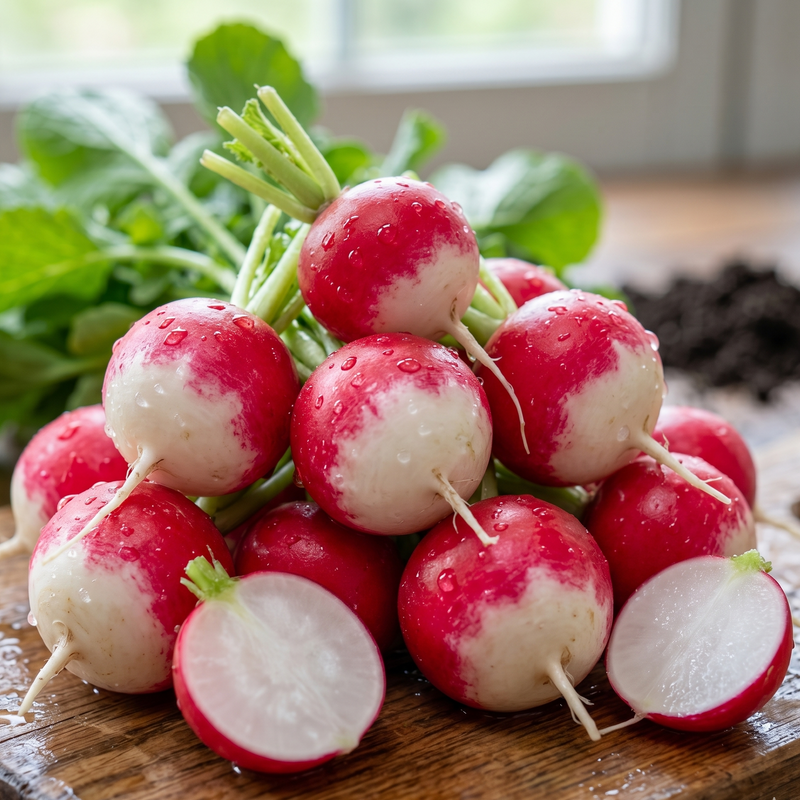
The cheerful little salad radish that every kitchen garden should make room for. Sparkler produces small round roots in a bright cheerful red, tipped with a clean white base — the colour pattern that gives the variety its name and makes it instantly recognisable on the plate. The flavour is the proper radish profile: crisp, mildly hot, refreshing, with that distinctive peppery bite that makes radishes the perfect summer-afternoon snack with butter and salt.
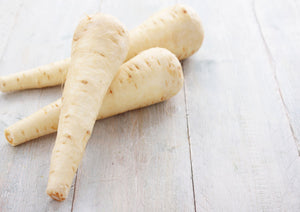
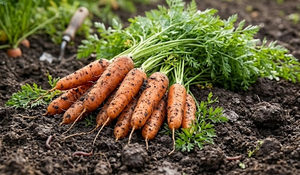
The single most important thing to know about Sparkler — and what makes it more useful than almost any other vegetable for new gardeners and impatient growers — is the speed. From sowing to harvest takes just 25–30 days. Less than a month from seed packet to crunchy red radish on the plate. No other commonly-grown vegetable produces such instant results, which makes Sparkler the perfect first crop for children, the perfect quick-return crop for beginners, and the perfect "marker crop" for sowing alongside slow-germinating vegetables like parsnips and carrots (the radishes mark the row, deter pests slightly, and are harvested before the slower crop needs the space).
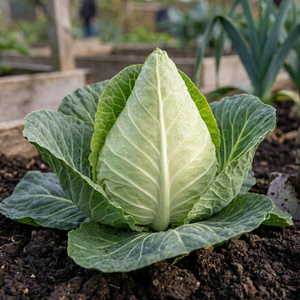
Sparkler is also the original "intercrop" vegetable. Sown between rows of slower vegetables — in the gaps between brassicas, peppers, sweetcorn, or pumpkins — the radishes mature and are eaten long before the slower crops fill in. This makes them genuinely useful for maximising productivity in small gardens where every square metre matters.
Sparkler is open-pollinated heritage. Seed saved from second-year flowering plants will grow true the following year.
A note on growing
Direct sow outdoors from March through to September. Sow seed thinly at 1cm depth in rows 15cm apart. Germination takes 5–10 days — one of the fastest germinating vegetables. Thin seedlings to 2–3cm apart once they emerge; the thinnings make excellent baby leaf salad.
Water consistently. Drought-stressed radishes become woody, fibrous, and excessively hot — not the mild peppery character that defines a properly-grown radish. The single most common reason for unpleasantly hot radishes is inconsistent watering.
Succession sow short rows every two weeks from March through August for continuous summer supply. Radishes don't stay perfect in the ground for long — ten days past peak and they become woody and split — so multiple small sowings work much better than one large one.
Harvest from late April onwards by pulling individual roots from the soil when they reach 2–3cm in diameter. Don't leave them too long — the entire growth cycle from sowing to peak quality to over-the-hill is less than six weeks. Twist or cut the foliage off after harvesting and use the roots within a few days for the best texture.
Where it shines
In the kitchen, Sparkler is the perfect simple summer ingredient. Eat raw whole with butter, sea salt, and a glass of cold rosé (the classic French aperitif). Slice thin into salads. Pickle in vinegar and sugar for instant Asian-style pickles. Roast at high heat with olive oil and herbs (radishes become surprisingly sweet when cooked). Use in spring soups. Top open-faced sandwiches. Garnish gazpacho and other cold summer soups. The young leaves are also edible — they have a mildly peppery rocket-like flavour and can be added to salads or wilted into pasta.
In the garden, Sparkler is the universal companion crop. Sow alongside slow carrot or parsnip rows as a marker crop. Sow between rows of slower vegetables to maximise space. Sow as a quick-turnaround crop in any bed that's resting between main crops. For children's gardens, Sparkler is genuinely the most engaging vegetable on the market — the 25-day cycle from seed to colour-popping radish maintains attention in a way that slower vegetables cannot.
Plant alongside
Radish is a universal companion crop — quick to mature, mild on soil, and useful as a marker for slower seeds. Plant alongside almost any slow-growing vegetable: parsnips, carrots, beetroot, brassicas. Calendula 'Neon' attracts beneficial predators. Avoid planting near brassicas if you have a flea beetle problem (radishes attract flea beetles, which may then spread).
Plant alongside
Radish Sparkler pairs beautifully with these kitchen garden companions