

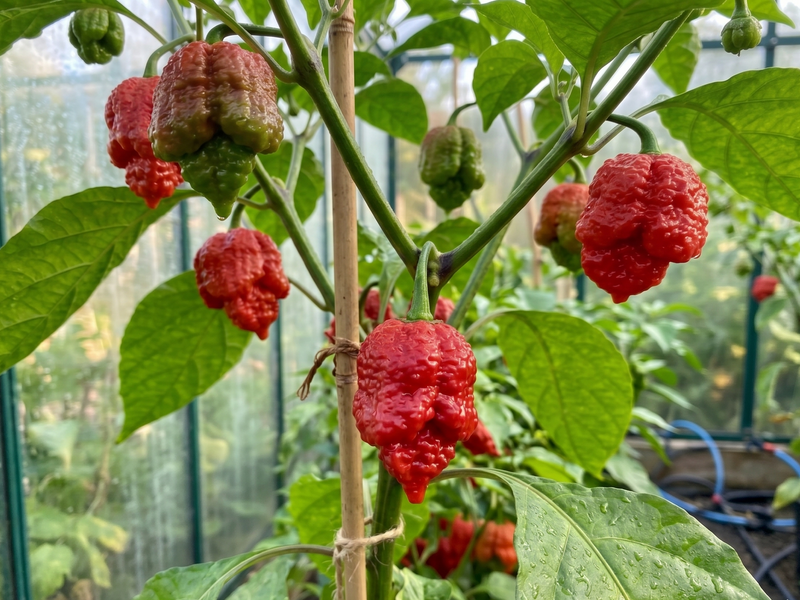
7 Pot Infinity Chilli
British-bred superhot chilli, former Guinness World Record holder (Feb 2011)
The British-bred superhot that briefly held the Guinness World Record - bred by Nick Woods in Grantham, Lincolnshire, with over a million Scoville units and a surprisingly complex, fruit-forward flavour beneath the heat.
Handle with care — this is a superhot chilli
This variety is exceptionally hot. The capsaicin in superhot chillies can cause real discomfort and even burns to skin and eyes, so a few simple precautions make all the difference when handling the fresh or dried fruit:
- Wear disposable gloves whenever you cut, deseed, or handle the fruit
- Keep your hands well away from your eyes, nose, and face while working
- Never touch contact lenses with hands that have handled the fruit
- Work in a well-ventilated space — the fumes from cooking or drying can irritate the lungs and eyes
- Wash hands, knives, and boards thoroughly with soapy water afterwards
- Keep fresh and dried fruit well out of reach of children and pets
The plants themselves are perfectly safe to grow and handle — these precautions apply to the ripe fruit and its seeds.
About this variety
Bred in Grantham by Nick Woods of Fire Foods, and for a fortnight in February 2011 the hottest pepper in the world. The Naga Viper took the Guinness record off it two weeks later, but the name has stuck in chilli circles ever since, partly for the British connection and partly because the heat does what the name suggests. It builds. The first second is sweet and fruity, almost floral. Then it climbs for half a minute and settles into a burn that can sit with you for twenty minutes.
The fruits are 4 to 6cm, glossy deep red, gnarled and pitted, often finishing in a pointed scorpion tail. At over a million Scoville units it is around two hundred times a jalapeño. It needs a greenhouse or polytunnel here. This is a Capsicum chinense, so the seed germinates slowly and sulks without steady warmth, and outdoor cropping in Britain only works in the warmest southern summers.
Seed saved from your best fruits will come largely true, though as a recent selection the line is still settling and you may see some variation in pod shape. One plant supplies most households for a year. Wear gloves and eye protection when picking and processing the fruit.