




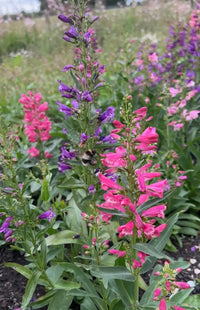
Penstemon Cambridge Mix
Penstemon 'Cambridge Mix' -- Borderline Hardy Perennial
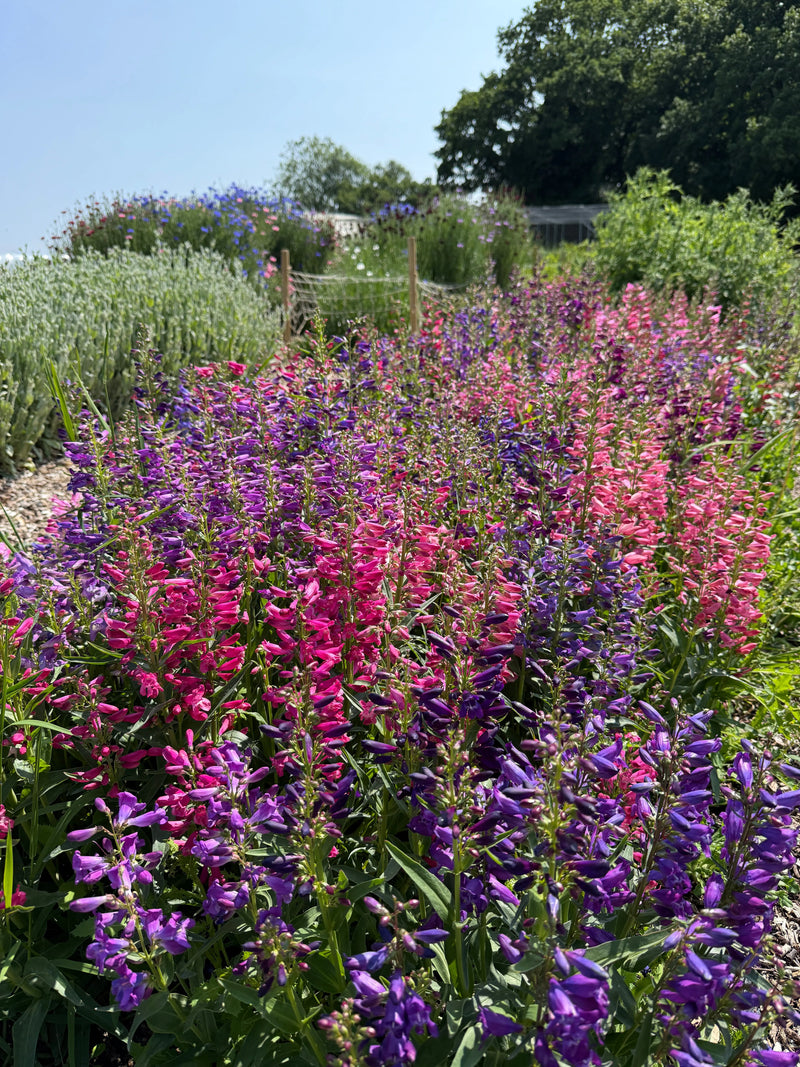
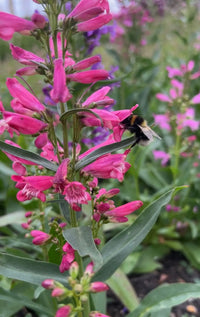
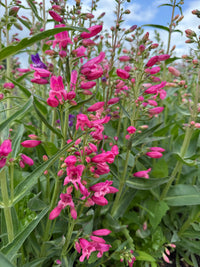
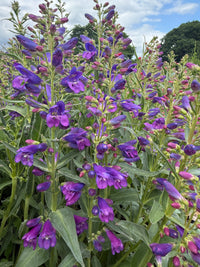
Tall jewel-toned tubular bells in crimson, purple, pink and blue with white throats — the perennial that bridges summer to winter, flowering June often through December.
About this variety
Slender spikes of tubular foxglove-like bells in crimson, deep purple, bright pink and cool blue, most with a contrasting white throat, at 60 to 80cm. It starts in June and, deadheaded consistently, will often still be going in November and sometimes December.
That season is the whole argument for it. Lupins are over in June, delphiniums in July, and most perennials are winding down by August. Penstemon is only getting going, and the flowers in October are the same size and quality as the ones in June. It flowers in its first year from seed, which is unusual for a perennial. Deadheading is not optional: cut a spent spike back to the next healthy lateral bud and a new one replaces it in a fortnight, but stop and the plant turns to seed and the season closes early.
Two things kill penstemon over winter, and neither is cold. The first is wet ground, so give it sharp drainage and add grit on clay. The second is autumn tidying. Do not cut it back in autumn; the old dry stems insulate the crown, and a plant cut hard back to bare soil is the one that does not come through. Leave the growth standing until April.
Plant alongside
Penstemon Cambridge Mix pairs beautifully with these cottage garden classics



RHS Plants for Pollinators
This plant has been assessed by the Royal Horticultural Society and recommended as especially beneficial to bees, butterflies and other pollinators. Growing plants like this directly supports UK pollinator populations — something close to our hearts at Salle Moor Hall Farm, where we see the difference a cottage garden full of the right plants can make.
Learn more at RHS.org.uk →